BDSM whips are among the most recognized impact-play tools but they’re also one of the most misunderstood. Many people associate whips only with pain or extreme scenes when in reality they can be used in a wide range of ways from gentle sensation play to more intense experiences. The difference depends on the type of whip the skill of the person using it and most importantly the consent and comfort of everyone involved.
Whether you’re completely new to BDSM or simply curious about how different impact tools work learning the basics before trying any whip is essential. Understanding the various types, materials, techniques and safety practices helps create a more enjoyable and responsible experience.
In this guide, you’ll learn what BDSM whips are, how they differ from other impact toys which styles are best for beginners and how to use them safely. You’ll also discover practical tips for choosing your first whip, caring for it properly and avoiding common beginner mistakes.
A BDSM whip is an impact-play tool designed to deliver controlled physical sensations during consensual BDSM activities. Depending on its design and how it is used a whip can create anything from a light teasing sting to a stronger more intense sensation.
Unlike everyday objects BDSM whips are specifically designed with balance, flexibility and control in mind. Different styles produce different sensations making it important to choose the right whip based on experience level and intended use.
Some whips are made for beginners who prefer gentle sensation play, while others are intended for experienced practitioners with advanced handling skills.
Although many people think all BDSM whips are the same, there are significant differences between them. A single-tail whip behaves very differently from a flogger, riding crop or dragon tail. Each has its own purpose, technique and learning curve.
At its core, a BDSM whip is not simply about striking someone. It is a communication tool used within negotiated scenes where trust, consent, and mutual respect come first.
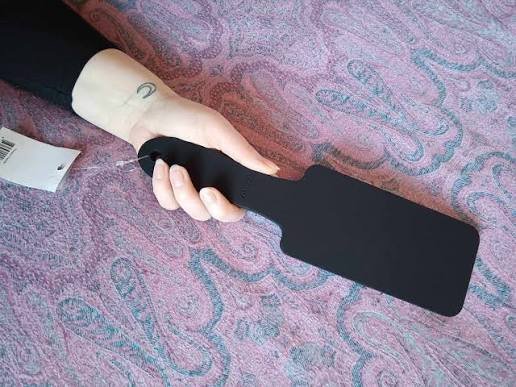
Impact play is a form of BDSM where one partner deliberately strikes another using either their hands or specially designed tools.
These tools may include:
Each tool creates a different physical sensation. Some produce a sharp sting, while others spread the force across a wider area to create a deeper heavier feeling.
Many people enjoy impact play for reasons beyond physical sensation. For some, it enhances trust and emotional connection. Others appreciate the psychological aspects the anticipation or the structured power exchange involved in a negotiated BDSM scene.
Because everyone’s preferences and pain tolerance differ, there is no “correct” level of intensity. Every scene should be customized to the individuals involved.
No.
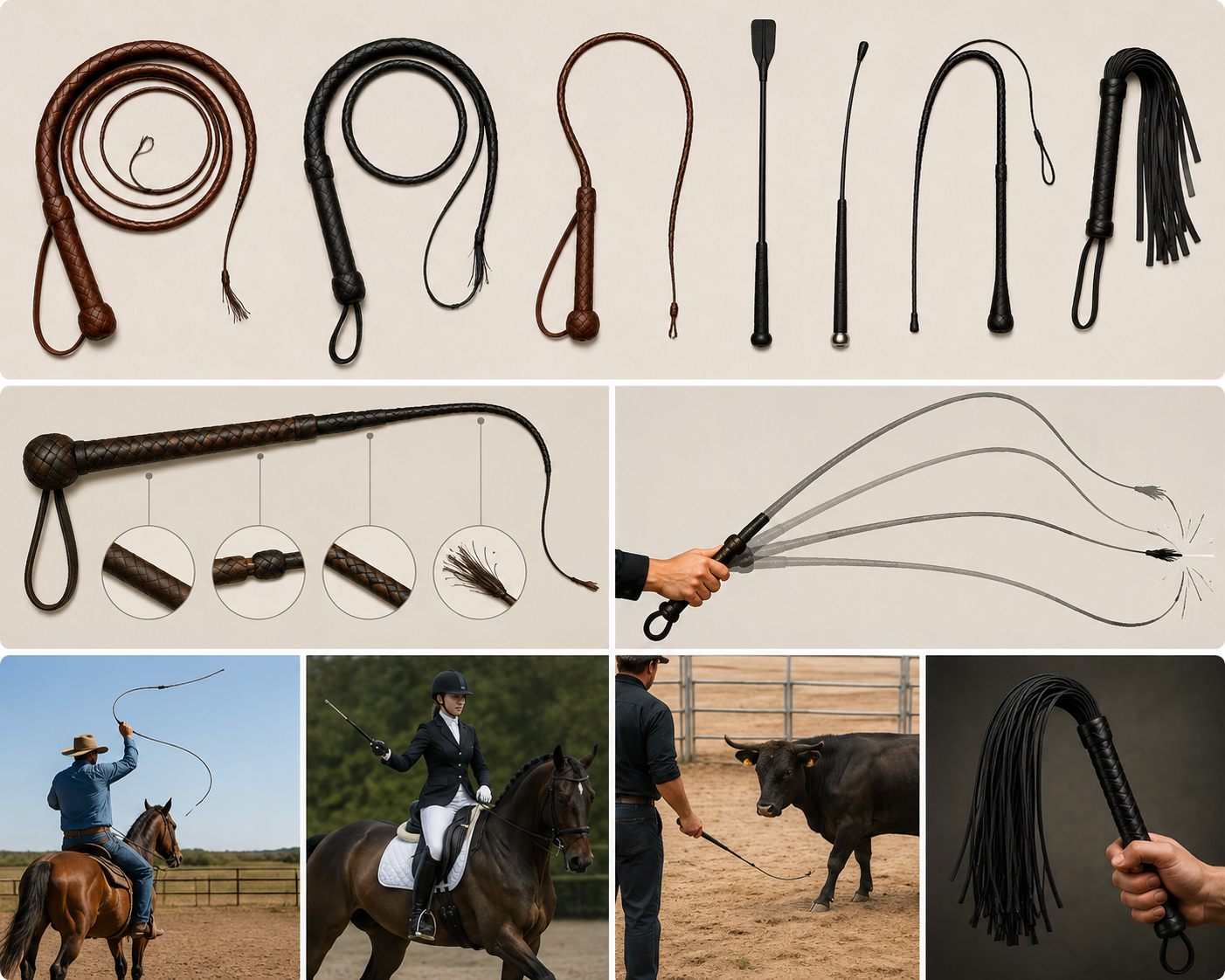
While both may look similar a BDSM whip is designed differently from working whips used for livestock handling, sport or performance.
General-purpose whips are often built for distance, speed or practical outdoor use. BDSM whips are designed with greater emphasis on control, precision, balance and predictable handling during consensual scenes.
For example:
| BDSM Whip | Traditional Working Whip |
|---|---|
| Designed for consensual impact play | Designed for animal handling or sport |
| Often shorter and easier to control | Frequently longer with greater reach |
| Available in many sensation levels | Intended for functional outdoor use |
| Built for precision and comfort | Built for performance and utility |
Although some experienced practitioners use bullwhips or signal whips within BDSM, these require advanced training and should never be considered beginner tools.
People use BDSM whips for many different reasons and those reasons vary from person to person.
For some couples, impact play adds excitement and variety to intimacy. Others enjoy the contrast between gentle teasing and stronger sensations. Some are drawn to the emotional trust that develops through careful communication and negotiated boundaries.
Common reasons include:
It’s important to remember that no one should feel pressured to use a whip. BDSM is entirely voluntary, and every activity should be based on informed consent.
Although styles vary, most BDSM whips share several important features.
The handle provides grip and control. Many are wrapped in leather, rubber, or braided materials to improve handling.
The body determines how the whip flexes during use. Longer bodies generally generate more momentum, while shorter designs offer greater precision.
On single-tail whips, the fall is the flexible section near the end that transfers energy toward the tip.
Some whips include a replaceable cracker or popper that creates the familiar cracking sound. Not every BDSM whip includes this feature.
Not all whips feel the same.
Several factors influence the sensation:
For example:
A soft suede flogger typically creates a broad, thuddy sensation.
A thin signal whip often creates a sharper sting.
A dragon tail delivers an entirely different feeling because of its wider leather body.
This is why experienced educators recommend testing any new toy on yourself first to understand how it behaves before using it with a partner.
One of the biggest misconceptions about BDSM is that the equipment matters more than communication.
In reality, communication is far more important than the whip itself.
Before any scene, partners should discuss:
Consent should be enthusiastic, informed and ongoing. Anyone can pause or stop a scene at any time, regardless of previous agreements.
Without consent a BDSM whip is simply an object. With clear communication and mutual agreement, it becomes one of many tools that can be used responsibly within consensual BDSM.
Whips have existed for thousands of years long before they became associated with BDSM. Throughout history, they were practical tools used in farming, horseback riding, hunting and livestock management. Over time, some types of whips also became symbols of authority, discipline and ceremonial traditions in different cultures.
The modern BDSM community adopted certain whip designs because they offered different sensations and could be used with precision during consensual impact play. Today’s BDSM whips are often handcrafted with comfort, balance and control in mind rather than utility.
It’s important to distinguish between the historical use of whips and their role in BDSM. In BDSM whips are used only within the framework of informed consent, negotiated boundaries and mutual trust.
Not every whip is suitable for every person. Some are ideal for beginners because they are easier to control, while others require significant practice before they can be used safely.
Below are the most common types you’ll encounter.
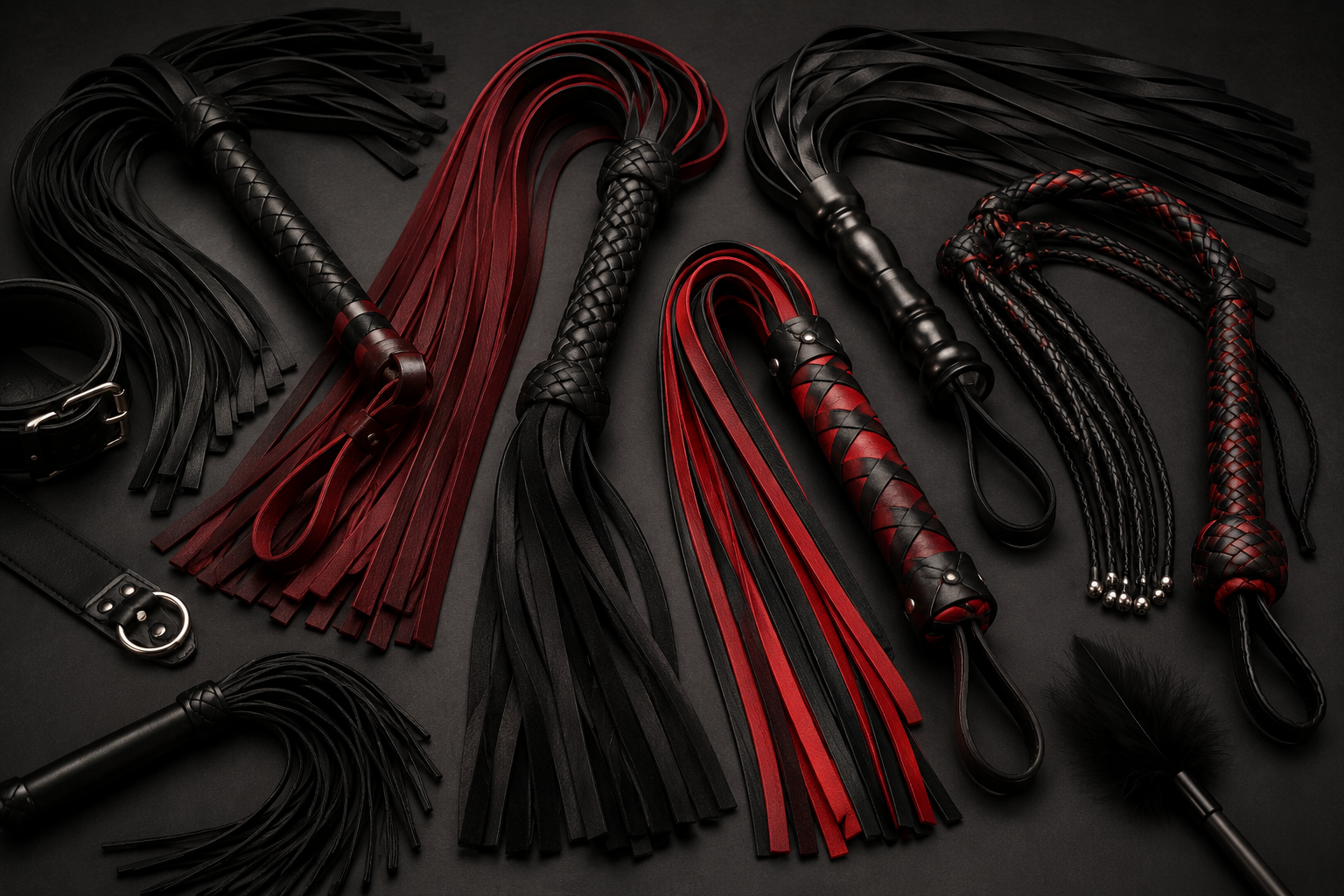
A flogger is one of the most beginner-friendly impact toys.
Instead of having a single striking tail, it features multiple leather, suede, rubber or silicone falls attached to a sturdy handle. Because the impact is spread across several tails, the sensation is usually softer and more forgiving than that of a single-tail whip.
The bullwhip is one of the most iconic whip designs.
It consists of a braided body that gradually tapers into a flexible fall and a replaceable cracker. When swung correctly, the tip can travel faster than the speed of sound, producing the familiar cracking noise.
While visually impressive, bullwhips demand excellent accuracy and should not be considered beginner equipment.
A signal whip resembles a bullwhip but has no rigid handle.
Instead, the braided body itself forms the grip, making it shorter, more compact, and easier to carry.
Many experienced whip enthusiasts appreciate the speed and flexibility of signal whips.
A snake whip also lacks a rigid handle but is generally heavier than a signal whip.
Its flexible construction allows it to move differently, creating unique handling characteristics.
Because of its weight distribution, it often delivers a deeper impact than lighter whip styles.
The dragon tail is very different from a traditional braided whip.
Instead of a narrow braid, it uses a wide strip of leather that tapers toward the end.
This wider striking surface distributes force differently, producing a distinctive sensation that many people describe as both stingy and heavy.
Although technically not a whip, the riding crop is often included in BDSM impact tools.
It has a firm shaft with a small leather flap at the end.
Because it is relatively short, users often find it easier to control than longer whips.
A quirt is another compact impact tool originally associated with horseback riding.
It combines a short handle with braided leather and a broad striking end.
Its smaller size makes storage and handling convenient.
Single-tail whips include several advanced whip designs, such as bullwhips, signal whips and snake whips.
Unlike floggers, they concentrate force into a much smaller striking area.
This creates significantly more intensity and requires much greater control.
For this reason, most BDSM educators recommend that beginners avoid single-tail whips until they have received proper instruction and gained experience with easier impact toys.
| Type | Beginner Friendly | Typical Sensation | Difficulty |
|---|---|---|---|
| Flogger | Yes | Thuddy | Easy |
| Riding Crop | Yes | Sharp Sting | Easy |
| Dragon Tail | Moderate | Sting + Thud | Medium |
| Quirt | Moderate | Focused Impact | Medium |
| Snake Whip | No | Sharp & Heavy | Hard |
| Signal Whip | No | Sharp | Hard |
| Bullwhip | No | Very Sharp | Advanced |
The material plays a major role in durability, flexibility, maintenance and the sensations produced.
Leather remains one of the most popular choices.
High-quality leather offers excellent flexibility, durability, and a classic appearance. With proper care, a leather whip can last for many years.
Suede is softer than finished leather.
Many beginner floggers use suede falls because they create gentler sensations.
Silicone is non-porous and easy to clean.
It is often chosen by people who prioritize hygiene or prefer modern materials.
Rubber falls can produce a noticeable sting while remaining flexible.
Some players enjoy the unique snap that rubber provides.
Synthetic leather offers an affordable alternative to genuine leather.
Quality varies widely, so premium versions generally last much longer than inexpensive options.
Yes.
The length of a whip changes both control and intensity.
Weight influences how a whip feels during use.
A lightweight whip usually produces quicker movements and lighter impacts.A heavier whip carries more momentum, often creating deeper sensations with less effort.However, heavier does not automatically mean better. The ideal weight depends on experience, technique, and personal preference.
Many first-time buyers focus only on how a whip looks.
In reality, craftsmanship matters much more.
When evaluating a BDSM whip, look for:
A well-made whip offers better control, lasts longer, and is generally safer to use than a cheaply manufactured alternative.
Buying your first BDSM whip can feel overwhelming because there are many styles, materials and sizes available. Instead of choosing the most visually impressive option, focus on finding one that matches your experience level and intended use.
A beginner-friendly whip should be comfortable to hold, easy to control and forgiving if your technique isn’t perfect. For most people a suede or soft leather flogger is an excellent starting point because it delivers broader, less concentrated impact and allows you to practice your aim without the precision required by single-tail whips.
When shopping for your first whip, consider the following factors:
Be honest about your experience. If you’ve never used an impact toy before, avoid advanced single-tail whips such as bullwhips or signal whips. Starting with beginner-friendly equipment helps you build confidence and technique safely.
Choose a material that matches the type of sensation you’re looking for.
Shorter whips are generally easier to control. Longer whips generate more momentum but require additional space and better technique.
A heavier whip can create deeper sensations, while lighter designs often feel quicker and more responsive. Neither is automatically better it depends on personal preference and experience.
The handle should feel secure in your hand without slipping. A comfortable grip improves accuracy and reduces fatigue during longer scenes.
Preparation is just as important as the scene itself.
Before any impact play begins, partners should have an open discussion about expectations, comfort levels, and boundaries.
Topics worth discussing include:
Having these conversations before play helps build trust and reduces misunderstandings.
A safe word is a pre-agreed word or phrase that allows anyone involved to pause or stop a scene immediately.
Many people use the traffic light system because it is simple and easy to remember.
| Safe Word | Meaning |
|---|---|
| Green | Everything feels good. Continue. |
| Yellow | Slow down or reduce intensity. |
| Red | Stop immediately. |
For situations where someone may be unable to speak, partners should also agree on a non-verbal signal, such as dropping an object or tapping repeatedly.
Good technique is developed through patience and practice.
If you’re using a whip for the first time, avoid aiming directly at another person. Instead, practice your movements in an open space using a pillow, folded blanket, or other safe target.
As you become more comfortable with the weight and movement of the whip, you’ll gain better control over where it lands.
Keep your movements smooth rather than forceful. Accuracy is much more important than power.
Different areas of the body respond differently to impact.
Many experienced educators recommend focusing on areas with more muscle and avoiding vulnerable parts of the body.
Generally safer areas include:
Areas that should generally be avoided include:
Every person’s body is different, so communication throughout the scene remains essential.
One of the biggest mistakes beginners make is assuming stronger impact creates a better experience.
In reality, gradually increasing intensity allows both partners to remain comfortable and communicate honestly about what feels enjoyable.
Begin with gentle strikes and ask for feedback regularly.
Questions like:
help maintain clear communication throughout the scene.
Communication isn’t limited to spoken words.
Pay attention to body language, breathing, facial expressions, and muscle tension.
Signs that someone may need a pause include:
Checking in frequently helps ensure that both partners continue enjoying the experience.
Everyone starts somewhere, but avoiding common mistakes can make learning much easier.
Many beginners purchase a bullwhip because it looks impressive.
Unfortunately, single-tail whips require precision and practice. Starting with a flogger or riding crop is usually safer.
Never assume your partner enjoys the same level of impact that someone else might.
Discuss expectations before every scene.
Safe words only work if everyone respects them immediately.
If someone says “Red,” the scene should stop without hesitation.
Controlled movement creates a much better experience than excessive force.
Accuracy is always more important than power.
Many beginners think the scene ends after the final strike.
In reality, aftercare is an important part of BDSM and should never be overlooked.
Aftercare refers to the physical and emotional care partners provide each other once a BDSM scene has ended.
Everyone’s aftercare needs are different.
Some people enjoy quiet conversation.
Others appreciate:
Checking in later that day or even the next day can also help partners discuss what they enjoyed and what they might change in future scenes.
Proper care extends the life of your equipment.
Leather whips should be cleaned gently with a soft cloth after use and conditioned periodically using products designed specifically for leather.
Avoid exposing leather to excessive moisture or direct sunlight for long periods.
Silicone and rubber toys should be cleaned according to the manufacturer’s instructions using appropriate toy cleaners or mild soap and warm water when suitable.
Always allow equipment to dry completely before storing it.
Store your whip in a cool, dry location away from direct sunlight.
Avoid folding leather tightly, as repeated bending may damage the material over time.
Many owners hang leather whips vertically to help them maintain their natural shape.
Inspect your equipment regularly.
Replace a whip if you notice:
Damaged equipment may behave unpredictably and should not be used until repaired or replaced.
People often use the terms whip, flogger, paddle, and crop interchangeably, but they create very different sensations and require different levels of skill. Understanding these differences will help you choose the right tool for your experience level and desired type of play.
| Impact Toy | Best For | Sensation | Skill Level |
|---|---|---|---|
| Flogger | Beginners | Soft to medium, thuddy | Easy |
| Riding Crop | Beginners to Intermediate | Sharp, focused sting | Easy |
| Paddle | Beginners to Advanced | Deep, broad impact | Easy |
| Dragon Tail | Intermediate | Sting with some thud | Medium |
| Signal Whip | Experienced Users | Sharp, precise | Hard |
| Bullwhip | Advanced Users | Intense, focused | Advanced |
If you’re new to BDSM, a flogger or riding crop is generally a better starting point than a single-tail whip.
There isn’t a single “best” whip for everyone, but some options are more forgiving than others.
For most beginners, a soft suede or leather flogger is an excellent first choice because it:
As your confidence and skills improve, you may choose to explore other types of impact toys based on your interests.
Developing good technique takes time. Before introducing a whip into a scene with another person, spend time practicing in a safe environment.
You can practice by:
Many experienced educators recommend practicing regularly before attempting more advanced techniques.
The equipment you use is only one small part of BDSM.
The most enjoyable scenes usually involve:
A high-quality whip cannot replace these essential skills.
Fact: Many beginner-friendly options, such as floggers and riding crops, are designed specifically for people who are new to impact play.
Fact: More force does not necessarily create a better experience. Technique, communication, and consent matter much more than intensity.
Fact: Not everyone enjoys intense impact. Some people use whips for light sensation play, role-play, or psychological dynamics rather than strong physical stimulation.
Fact: While quality craftsmanship is important, the most expensive whip isn’t automatically the best choice. The right whip is one that matches your experience level, goals, and comfort.
Fact: Every consensual BDSM relationship is unique. Preferences, techniques, and intensity levels vary from one partnership to another.
If you’re just getting started, keep these practical tips in mind:
Remember, confidence comes from practice not from rushing into advanced equipment.
A BDSM whip is an impact-play tool used during consensual BDSM activities. Depending on its design and how it is used, it can create sensations ranging from gentle stimulation to more intense impact.
Some are. Floggers and riding crops are generally easier for beginners because they offer more control and have a gentler learning curve than single-tail whips.
A whip typically has a single striking tail that concentrates force into one point. A flogger has multiple falls, spreading the impact over a wider area and creating a softer, more diffused sensation.
There is no universal answer. Leather is valued for its durability and classic feel, suede offers a softer sensation, silicone is easy to clean, and rubber provides a sharper snap.
Yes. Regular cleaning, proper storage, and routine inspections help keep your whip in good condition and extend its lifespan.
Bullwhips require considerable practice and precision. Most beginners are better served by learning with simpler impact toys before attempting advanced single-tail whips.
Consent is the foundation of all BDSM activities. Every participant should freely agree to the activities, understand the risks, and have the ability to stop the scene at any time.
Aftercare is the support partners provide after a BDSM scene. It may include hydration, rest, conversation, reassurance, cuddling, or simply checking in with each other emotionally and physically.
Look for durable materials, even stitching, secure braiding, a comfortable handle, and balanced construction. High-quality craftsmanship improves both safety and longevity.
Books, workshops, educational communities, and experienced instructors can all provide valuable guidance. Always rely on reputable educational sources rather than assumptions or fictional portrayals.
A BDSM whip is far more than a striking tool it is an instrument that requires responsibility, communication, and mutual trust. Whether your goal is light sensation play or developing advanced impact techniques, taking the time to understand different whip styles, materials, and safety practices will help you make informed decisions.
If you’re new to BDSM, remember that confidence comes from learning, not rushing. Start with beginner-friendly equipment, communicate openly with your partner, establish clear boundaries, and prioritize consent at every stage.
The best BDSM experiences are built on respect, patience, and continuous learning. By choosing the right whip, practicing proper technique, and embracing aftercare as an essential part of every scene, you can explore impact play in a way that is both enjoyable and responsible.