Bullwhip Explained: History, Materials, and How to Choose the Right One
The crack of a bullwhip is one of the most recognisable sounds in the world. Most people have heard it. Very few understand what actually produces it or what goes…
The crack of a bullwhip is one of the most recognisable sounds in the world. Most people have heard it. Very few understand what actually produces it or what goes into making the tool that creates it.
A bullwhip tip moves fast enough to break the sound barrier. That crack is a miniature sonic boom. The physics are remarkable. But what’s equally remarkable is the craft required to build a whip capable of producing that sound consistently, reliably and safely in the hands of a skilled user.
Whether you’re buying your first bullwhip, upgrading from a beginner piece or simply want to understand what separates a quality leather bullwhip from a cheap imitation, this guide covers everything. History, materials, plait counts, lengths, construction quality all of it explained clearly so you can make a confident, informed decision.
What Is a Bullwhip?
A bullwhip is a single-tail whip one continuous tapered length extending from a rigid handle to a fine tip designed to be cracked by swinging it through an arc that accelerates the tip to supersonic speed. That acceleration produces the characteristic crack: a small sonic boom created as the tip passes the speed of sound (approximately 1,235 km/h at sea level).
The bullwhip is distinct from other whip types primarily by its construction: an integrated handle (the thong begins directly at the handle end) a precise mathematical taper from handle to tip and a layered internal structure that allows efficient energy transfer from the user’s wrist and arm through to the tip.
The History of the Bullwhip From Working Tool to Cultural Icon
Early Origins
Long leather whips have been used for livestock management and animal driving for thousands of years. Ancient Egyptian tomb paintings depict overseers with whips. Roman sources describe their use in agriculture and animal management. The fundamental principle using a cracking sound to direct animals without physical contact has been understood across multiple civilisations for millennia.
The whip as a precision craft object, however built in layers, plaited with tapered strands to produce consistent performance is a product of more recent centuries. The techniques that define the modern bullwhip developed progressively through the eighteenth and nineteenth centuries as leather craft knowledge became more sophisticated.
The American Cattle Era
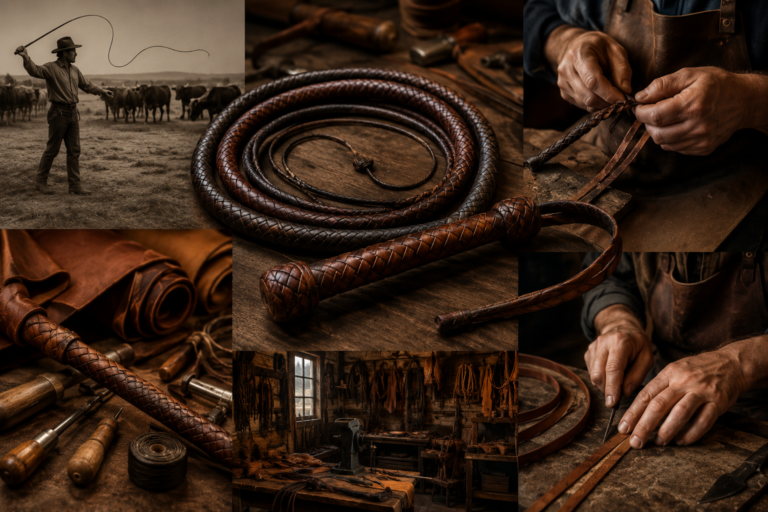
The American bullwhip tradition took its most distinctive form during the era of the great cattle drives roughly 1860 to 1900. Drovers moving large herds across the Great Plains and through the American South required tools capable of directing animals over significant distances. A well-placed crack near a specific animal, without touching it, was the primary technique.
American whip making during this period centred on cowhide the most readily available quality leather on the continent. Regional variations in construction emerged with subtle differences in handle length, tail configuration and overall weight between makers in different areas. The basic form, however, was consistent: an integrated handle a tapered plaited thong, a short leather fall and a replaceable cracker at the tip.
Whip making became a recognised trade craft. Individual makers developed reputations for specific qualities balance, durability, crack volume and their pieces were sought across regions.
The Australian Stockwhip Parallel
While American whip traditions were developing around cowhide and integrated handles, Australia was building a parallel tradition centred on a different construction and a different material.
The Australian stockwhip differs from the bullwhip in one key structural way: the handle and thong are separate pieces connected by a flexible keeper loop rather than an integrated unit. This gives the stockwhip a distinctive swing characteristic and allows for longer, more rigid handles better suited to the Australian station work of directing cattle on horseback over open terrain.
Australian makers also developed what many consider the pinnacle of whip leather: the use of kangaroo hide. Kangaroo leather has a higher tensile strength per millimetre than cowhide. This allows makers to cut thinner strands, achieve higher plait counts and produce lighter, faster more responsive whips than cowhide allows at equivalent length. Australian 12-plait and 16-plait kangaroo hide stockwhips set a standard of craft that remains the global benchmark for premium whip making.
The Bullwhip in Film and Pop Culture
Through the twentieth century the bullwhip migrated from working tool to cultural symbol with remarkable speed. Wild West shows brought whip cracking to urban audiences in the late nineteenth century. Circus performers developed whip work as a standalone performance art. Film serials in the 1930s and 1940s made the whip a shorthand for frontier skill and authority.
The definitive cultural moment came in 1981 with Indiana Jones and the Raiders of the Lost Ark. Harrison Ford’s bullwhip a 3-metre, 16-plait nylon whip custom-made by David Morgan of Seattle became one of the most iconic props in cinema history. The film created a generation of whip enthusiasts and remains one of the strongest single influences on bullwhip interest to this day.
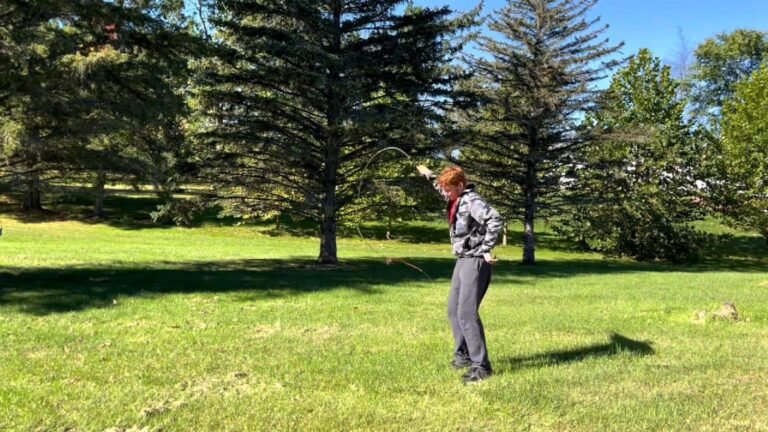
Beyond cinema, bullwhip cracking has developed into a recognised competitive sport. The International Whip Crackers Association and organisations in Australia, the United States and Europe hold competitive events with standardised disciplines accuracy, speed and artistic categories drawing participants from around the world.
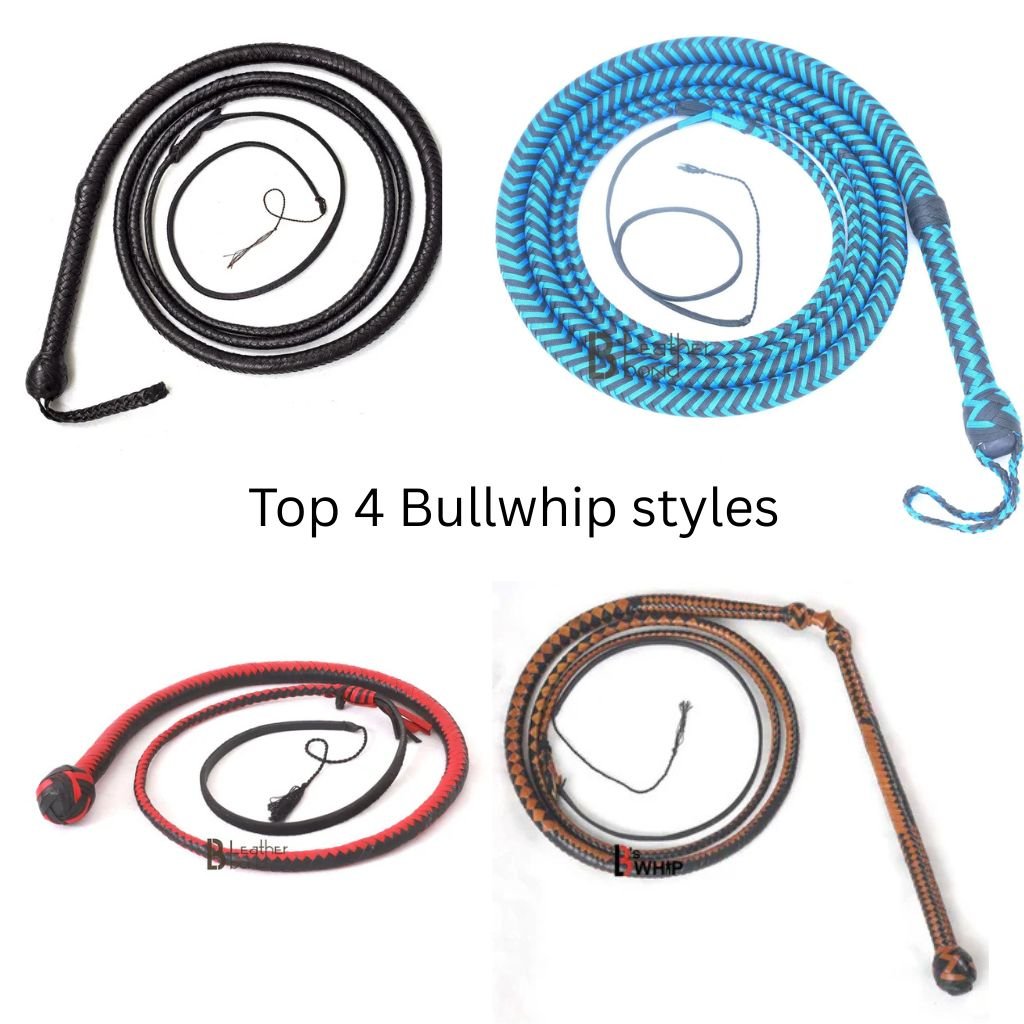
Bullwhip vs Other Whip Types
Understanding where the bullwhip sits among related tools helps clarify what you’re buying.
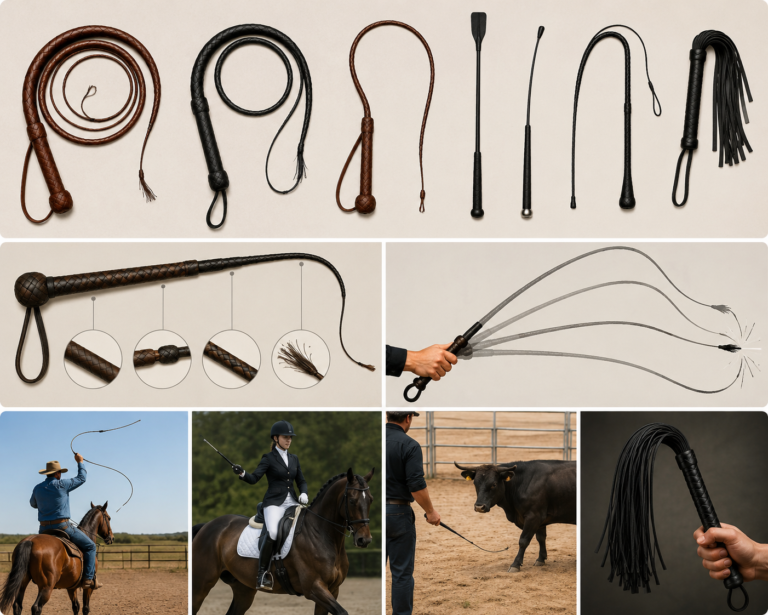
Bullwhip: Integrated handle. Tapered plaited thong. Designed for cracking at range. The American style. Typical lengths 1.5 to 4.5 metres.
Stockwhip: Separate handle connected to thong via a keeper. The Australian style. Longer, more rigid handles. Favoured for mounted work and traditional Australian station use.
Signal whip: Short typically under 1.5 metres. No leather fall the cracker attaches directly to the end of the thong. Fast and precise. Favoured by performance crackers for speed work.
Snake whip: No rigid handle the handle section is also plaited leather. Completely flexible from end to end. More portable and packable. Slightly less power transfer than a rigid-handled bullwhip.
Quirt: Short, rigid-handled tool with two flat leather falls. Used for direct contact rather than cracking at range. A working tool, not a cracking whip.
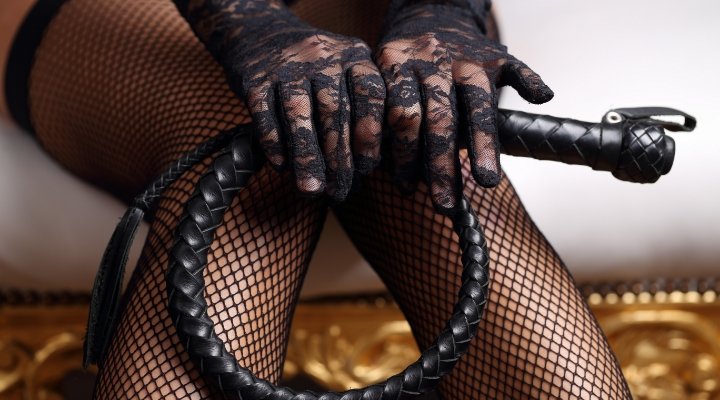
Flogger: Multiple tails, no cracking capability. A BDSM and sensation play tool. Categorically different from any single-tail whip despite surface visual similarities.
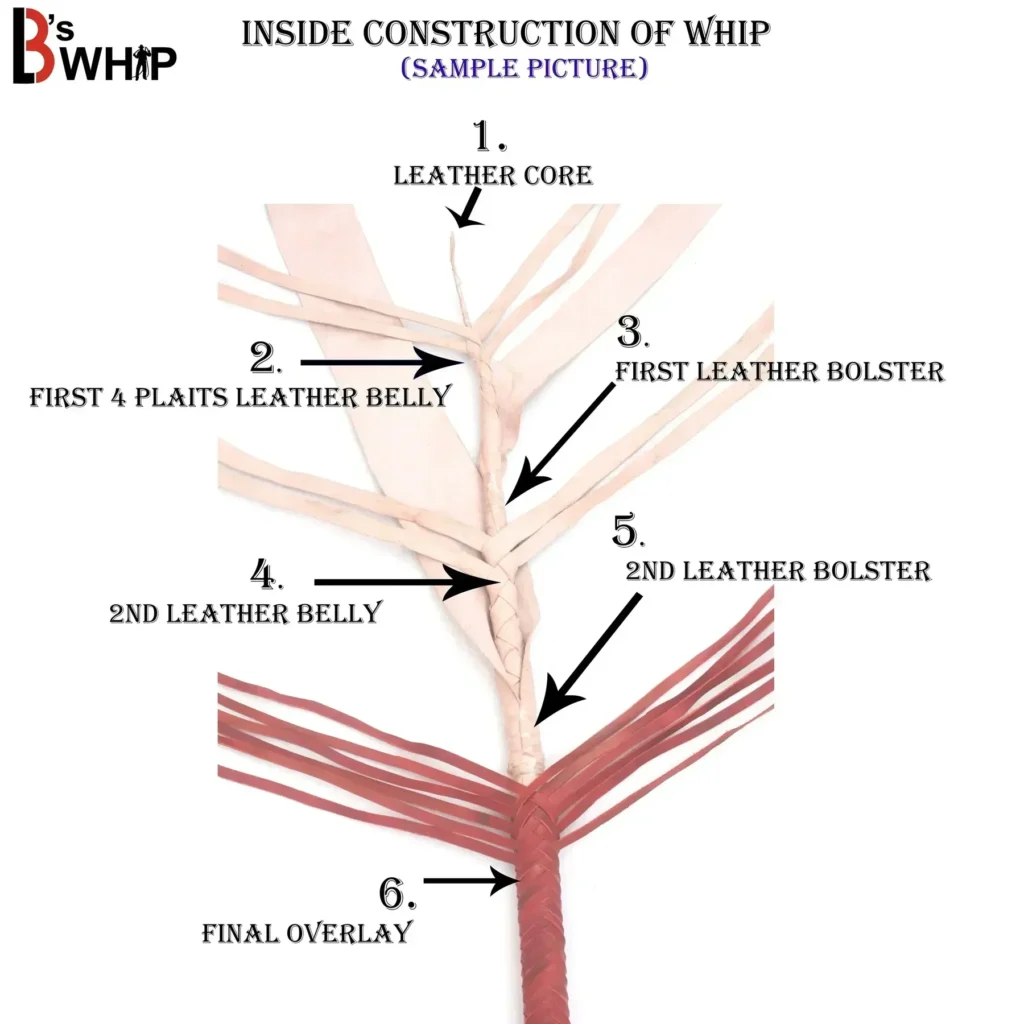
The Anatomy of a Bullwhip Every Part Explained
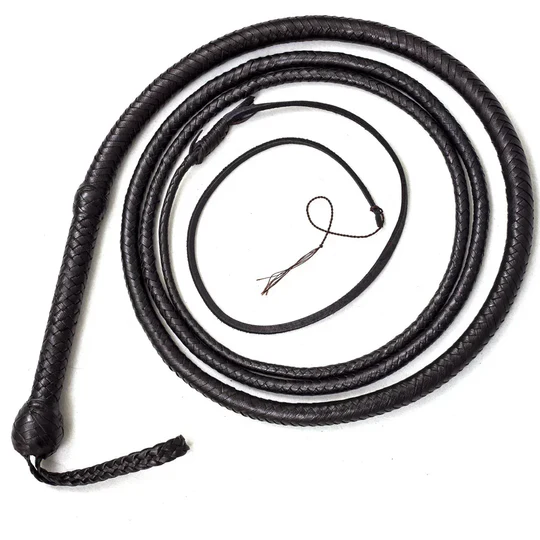
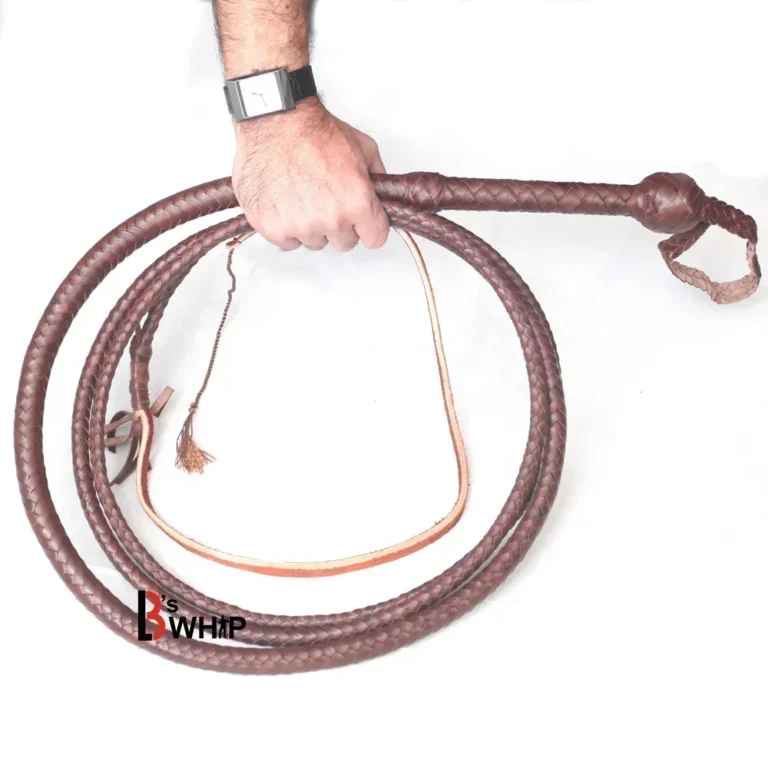
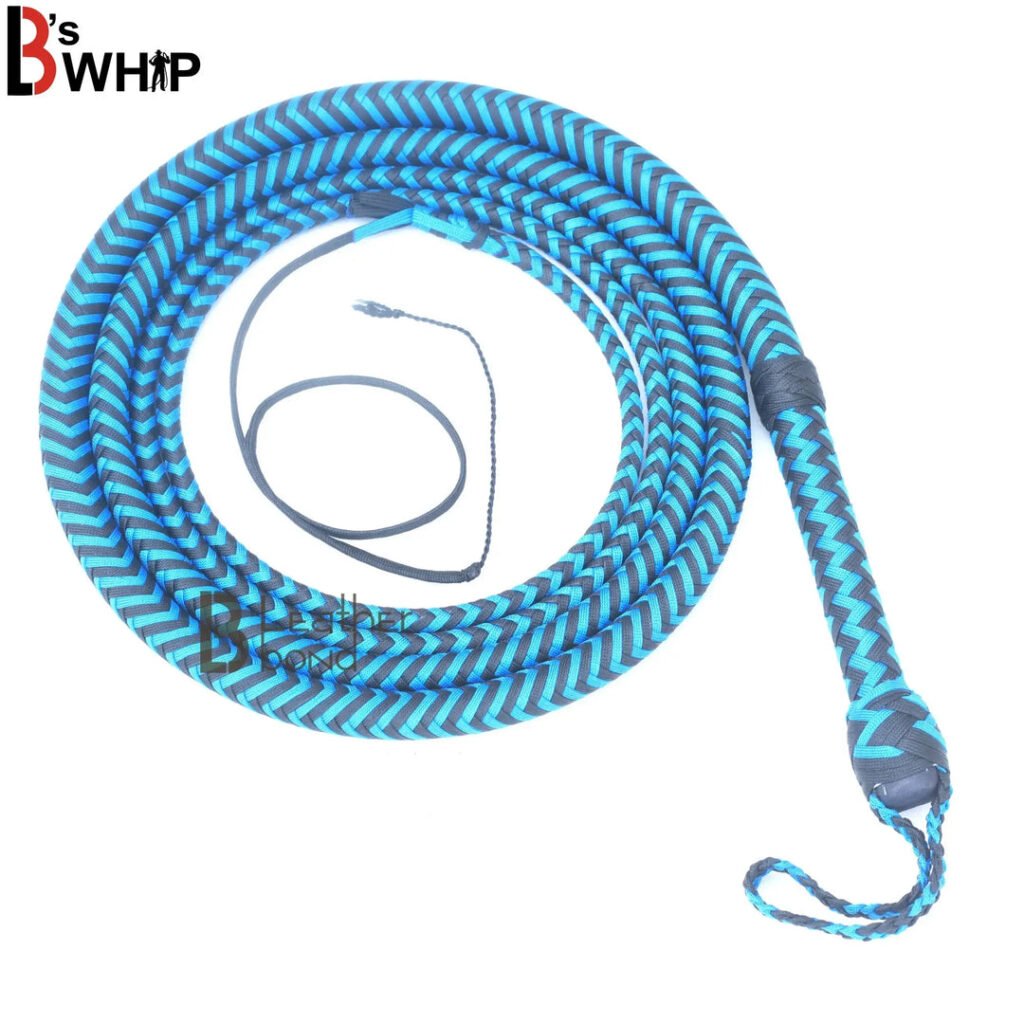
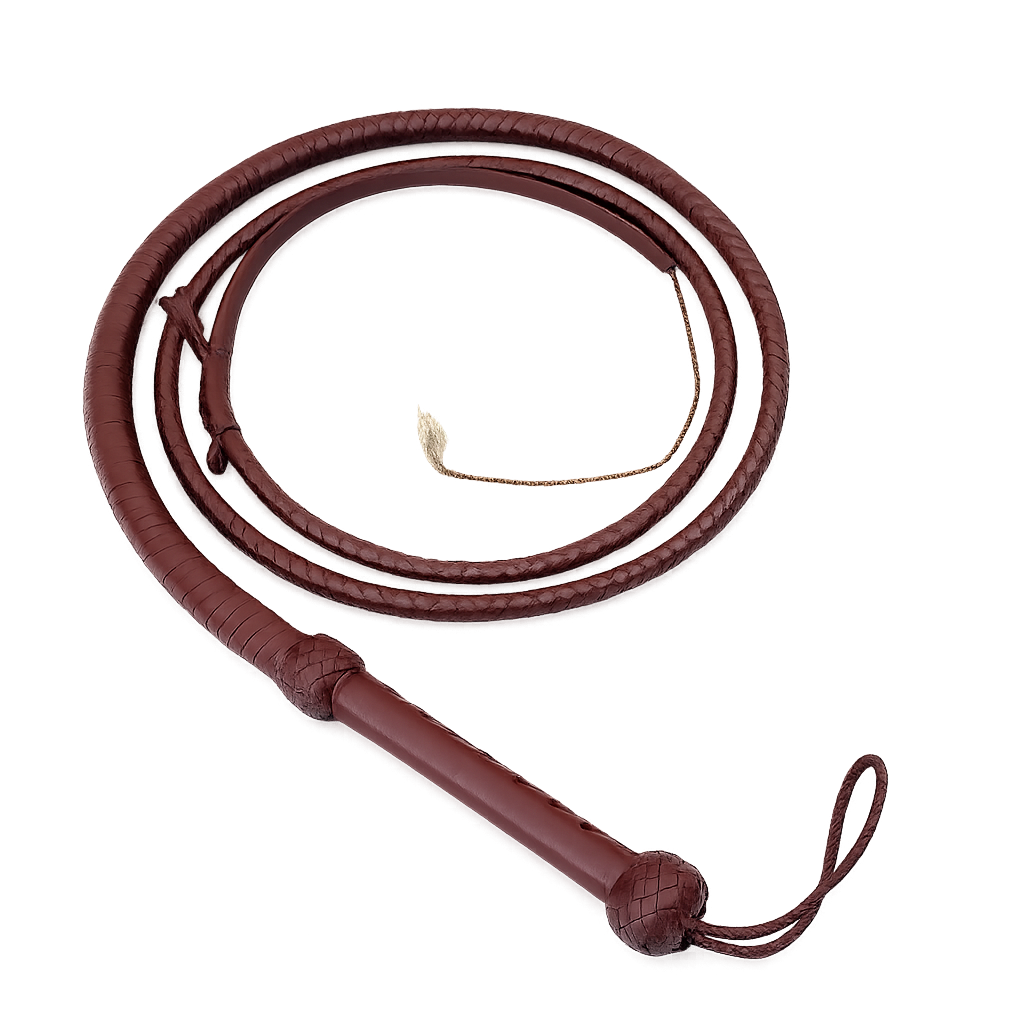
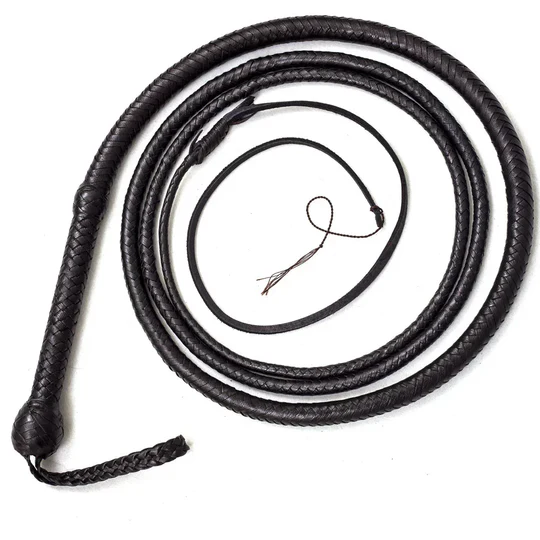
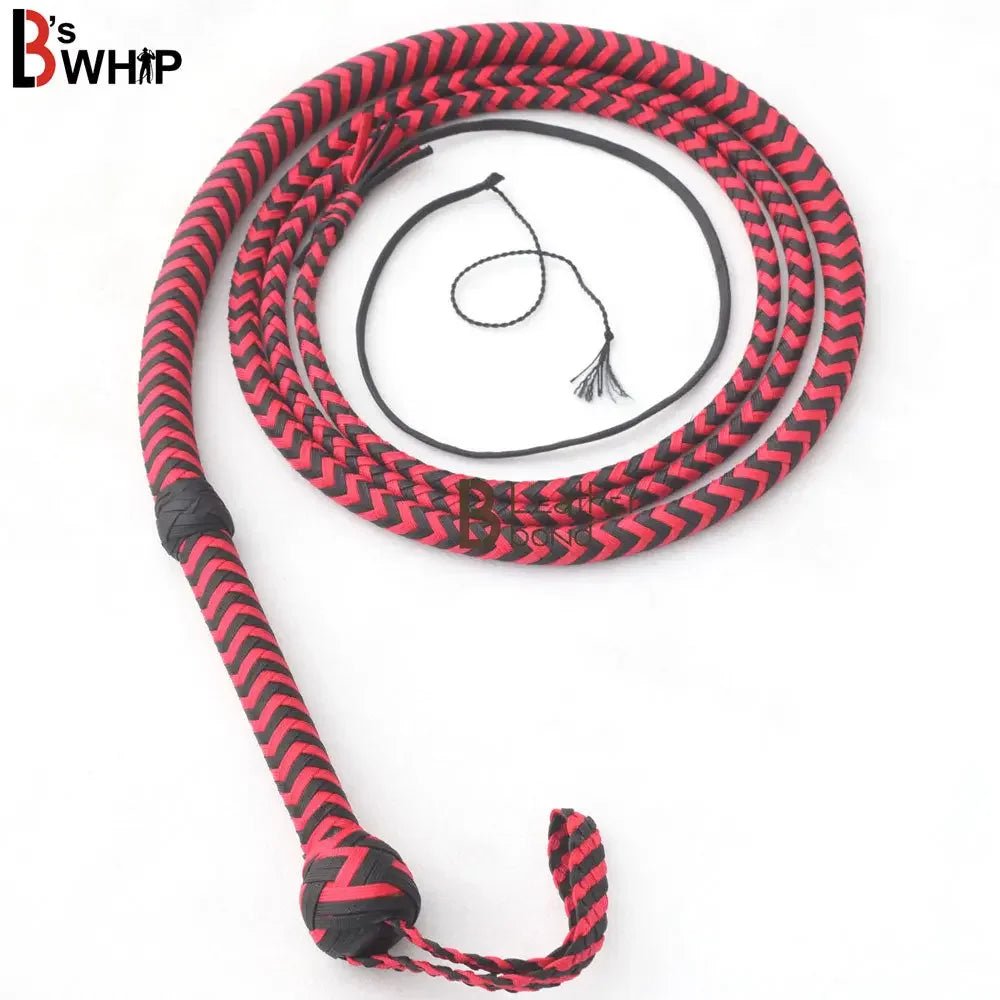
Handle: The rigid grip section, typically 20–30 cm long. Built around a core of wood, fibreglass or tightly packed leather, wrapped in plaited leather. The handle must transfer energy efficiently into the thong while maintaining comfortable grip. Weight and balance of the handle significantly affects the feel of the finished whip.
Transition: The connection point between rigid handle and flexible thong. Must be structurally strong this area takes enormous stress with every crack while allowing smooth energy flow. A well-made transition is barely perceptible in use.
Thong: The main body of the whip, tapering continuously from handle width to near nothing at the fall attachment. Built in layers: an internal core, bolster wrappings to shape the taper and a plaited outer overlay. The quality of the taper how smooth and precise the reduction in diameter is determines the quality of energy transfer and the consistency of the crack.
Fall: A single strand of leather, typically 30–50 cm attached to the end of the thong. The fall is a replaceable component it takes significant wear and is cheaper to replace than the full thong. Falls are usually made from a single strip of quality leather.
Cracker (Popper): A short length of nylon cord at the very tip. This is the component that actually breaks the sound barrier. Crackers wear out with regular use and are the most frequently replaced component of any whip. A quality cracker is tied so it can be replaced by the user.
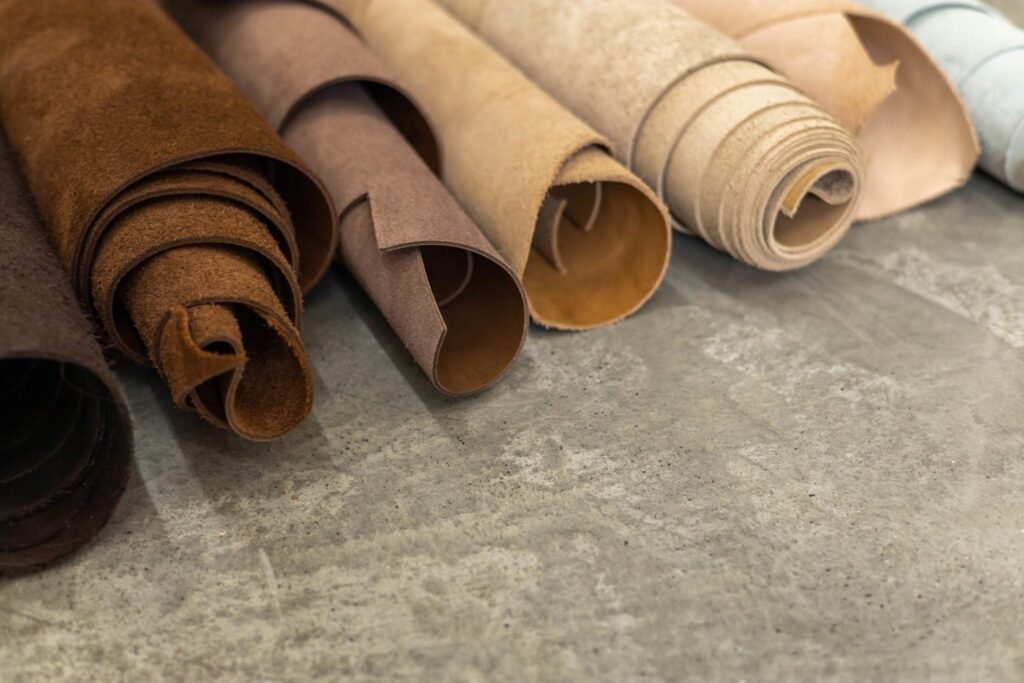
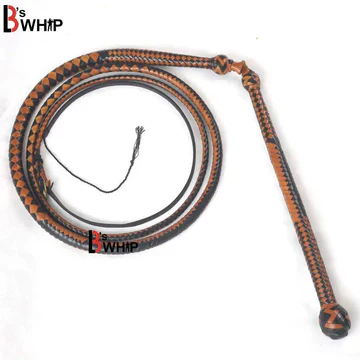
Bullwhip Materials Which Leather Is Best?
Kangaroo Leather
Kangaroo leather is widely regarded as the finest material available for bullwhip construction. Its tensile strength per millimetre exceeds cowhide meaning thinner strands can carry equivalent loads. This allows makers to cut finer strand widths, achieve higher plait counts and produce whips that are lighter more supple and more responsive than cowhide allows at the same specifications.
Kangaroo hide is fine-grained with minimal surface variation, producing a smooth, consistent surface quality that takes vegetable tanning particularly well. The finished material has a density and spring that cowhide simply cannot replicate.
The trade-off is cost. Kangaroo hide is significantly more expensive than cowhide, and the finer strand cutting requires more time and greater skill. A quality kangaroo hide bullwhip costs more than a cowhide equivalent and is worth it.
Cowhide
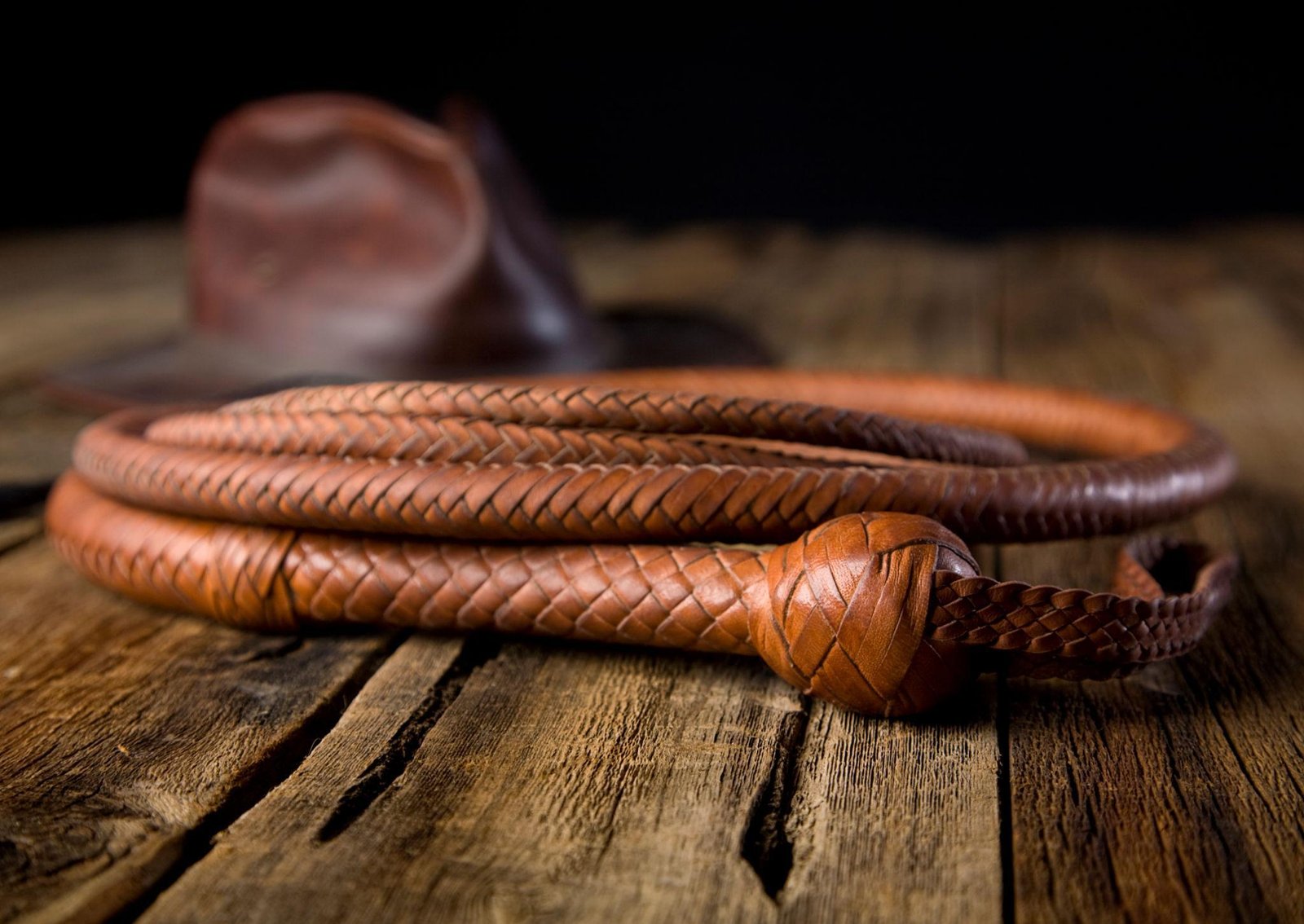
Cowhide is the traditional American bullwhip material and still the most common leather used in quality whip making worldwide. Well-selected, vegetable-tanned cowhide produces excellent bullwhips durable, characterful, and capable of outstanding performance in the hands of a good maker.
The key qualifier is vegetable tanning. Chrome-tanned cowhide the most common commercial leather is too soft and stretchy for quality bullwhip construction. It doesn’t hold its shape under repeated dynamic load and degrades quickly at stress points. Vegetable-tanned cowhide is stiffer when dry, settles into greater suppleness over time and holds its structural integrity under sustained use.
Nylon
Nylon paracord whips are a legitimate option for practice, outdoor use and all-weather applications. Nylon is highly consistent in width and strength, waterproof and significantly cheaper than leather. Performance whips made from nylon can crack cleanly and are used in competitive cracking disciplines.
What nylon lacks is character. It doesn’t develop a patina. It doesn’t have the weight distribution nuances of a leather piece. And it doesn’t represent the craft tradition that makes a handmade leather bullwhip a meaningful object. For pure function in rough conditions, nylon has merit. For everything else leather is the correct choice.
What to Avoid
- Bonded leather composite scraps material that delamitates under repeated dynamic load
- Chrome-tanned leather labelled as “genuine leather” performs poorly and degrades quickly in whip use
- PVC or synthetic “leather-look” materials no structural integrity under dynamic load
- Unspecified “leather” if a seller cannot tell you the type and tanning of the hide, the quality is unknowable
Plait Count Why It Matters More Than Most Buyers Realise
Plait count refers to the number of strands woven in the outer overlay of the thong. It is one of the most reliable indicators of quality in a bullwhip.
8-plait: Entry level. Faster to make, lower cost, noticeably open weave. Functional but not refined. The surface has visible gaps between strands.
12-plait: A significant step up. The weave is tighter, the surface smoother and the performance more consistent. A good 12-plait cowhide whip is a genuinely capable instrument.
16-plait: Mid-to-premium range. The gold standard for many experienced users. Surface is dense and smooth. Performance is consistent and refined. A well-made 16-plait piece in kangaroo hide is an exceptional tool.
24-plait and above: Premium and bespoke work. Each additional plait level requires exponentially more strand cutting more time and more skill to maintain even tension across the overlay. 24-plait and 32-plait whips represent the highest expression of the whip maker’s craft.
Higher plait counts also produce a slightly heavier denser thong at the same diameter which affects the feel and swing of the finished piece. Most experienced crackers develop a preference for a specific plait count as their technique matures.
Bullwhip Length Guide — Finding the Right Size
| Length | Best Application | Skill Level | Space Required |
|---|---|---|---|
| 1.5 m | Indoor practice, small spaces, absolute beginners | Beginner | Minimal |
| 1.8 m | General learning, indoor and outdoor | Beginner | Small room |
| 2.1 m | Standard all-round use, most common first serious whip | Beginner–Intermediate | Medium room |
| 2.4 m | Extended outdoor use, building technique | Intermediate | Outdoor or large space |
| 3 m | Performance, experienced crackers | Intermediate–Advanced | Outdoor |
| 3.7 m + | Competition, display, expert use | Advanced | Open outdoor space |
For a first leather bullwhip, 1.8–2.1 metres is the most practical choice for the majority of buyers. This length is manageable in a range of spaces, allows full technique development, and produces satisfying crack volume without requiring an expert level of skill.
Handmade vs Machine-Made Bullwhips
This distinction matters more for bullwhips than for almost any other leather product.
Handmade bullwhips are built strand by strand with tapered cuts, individually maintained tension throughout the plaiting process and a maker’s judgement at every stage. The taper is mathematically precise because the maker cuts each strand to achieve it. The balance is intentional djusted through the core construction to suit the length and intended use.
Machine-made bullwhips use machine braiding applied over a tapered core. Machine braiding cannot replicate hand-plaited taper the braid pattern is uniform regardless of the diameter of the core beneath it. The result is a whip that looks similar from a distance but performs inconsistently, lacks the energy transfer of a properly tapered piece, and degrades significantly faster under use.
Machine-made whips also typically use chrome-tanned leather or synthetic materials the cheapest options that still look like leather in a product photograph. Under use, these materials show their limitations quickly.
Ask any seller directly: is this hand-plaited with tapered strands, or machine-braided? A genuine handmade whip maker will answer that question in detail. A drop-shipper of factory products typically cannot.
How to Choose the Right Bullwhip Buyer’s Checklist
Use these questions before any purchase:
- What leather is the thong made from? (Kangaroo hide, vegetable-tanned cowhide or other?)
- Is it hand-plaited with tapered strands or machine-braided?
- What is the plait count of the outer overlay?
- What is the core construction? (Shot-loaded, leather bolsters, number of layers?)
- What is the total length including the fall?
- Is the fall replaceable? Is the cracker replaceable?
- Who made it? Can the seller describe the maker’s background and construction process?
Any seller who cannot answer these questions confidently is not selling a quality handmade piece.
How to Break In a New Bullwhip
A new leather bullwhip even a well-finished piece benefits from a break-in period before serious use.
Week one: Handle and flex the whip daily. Run it through your hands repeatedly working the leather. Do not crack it at full effort yet.
Dressing: Apply a light coat of neatsfoot oil or leather conditioner to the thong. Work it in with your hands. The warmth from friction aids absorption. Allow to rest overnight before use.
First cracks: Begin with slow, controlled cracks at reduced effort. The goal is to work the leather layers together and allow the internal structure to settle. Do not attempt complex techniques until the whip has been through 20–30 crack sessions.
Ongoing: The whip will continue to improve in suppleness and responsiveness over the first few months of regular use. A quality leather bullwhip genuinely gets better with use as the material works in and the layers settle together.
Bullwhip Comparison Table
| Feature | Kangaroo Hide | Cowhide (Veg-tan) | Nylon | Machine-Made |
|---|---|---|---|---|
| Performance | Exceptional | Excellent | Good | Poor–Fair |
| Weight | Very light | Medium | Light–Medium | Variable |
| Plait quality | Finest possible | Very good | Consistent | Uniform braid |
| Durability | Very high | High | High | Low–Medium |
| Character / feel | Exceptional | Excellent | Functional | None |
| Price | Premium | Mid–High | Low–Medium | Low |
| Best for | Performance, premium use | General serious use | Practice, outdoors | Novelty only |
Caring for Your Bullwhip
After every use:
- Wipe down the full length of the thong with a clean, slightly damp cloth
- Remove dirt from plait grooves a soft brush helps
- Allow to dry fully at room temperature before storing
Every few months:
- Apply neatsfoot oil or quality leather conditioner to the full thong and handle
- Work in with hands friction warmth improves absorption
- Wipe away excess allow to rest before storage or use
Storage:
- Coil loosely never kink or sharply fold the thong
- Store in a breathable bag or wrap not sealed plastic
- Keep away from direct sunlight and heat sources
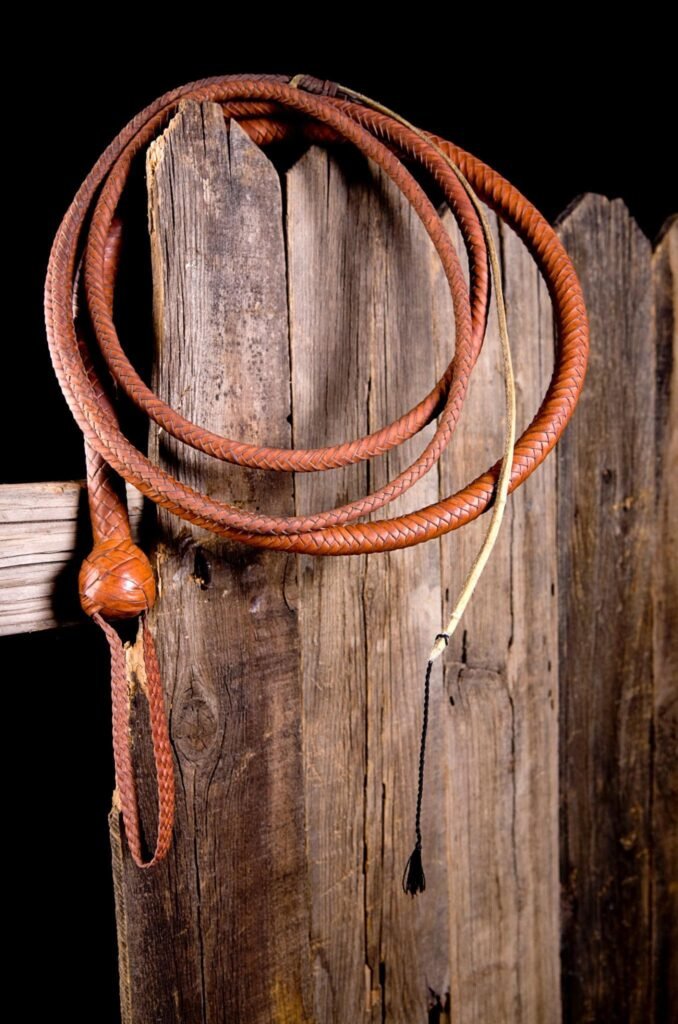
- Store horizontally or hanging from the handle, never with the thong bearing weight
Crackers:
- Replace when frayed or when crack response diminishes
- Keep spares they are inexpensive and straightforward to replace
- A whip that won’t crack properly with a fresh cracker may need re-dressing
FAQ
What is the best bullwhip for a complete beginner?
A 1.8–2.1 metre, 12-plait vegetable-tanned cowhide bullwhip is the ideal starting point. It offers genuine quality and consistent performance at a price point that reflects the craft involved without reaching premium kangaroo hide territory. Avoid 8-plait whips the performance difference over a 12-plait piece is significant for a relatively small price difference.
Is kangaroo hide really worth the extra cost?
For serious practitioners whether performance crackers, competitive crackers, or collectors yes, unequivocally. The difference in responsiveness, weight and feel between a well-made kangaroo hide whip and an equivalent cowhide piece is real and noticeable. For a first whip where technique is still developing a quality cowhide piece is a more sensible entry point.
How do I replace the cracker on my bullwhip?
The cracker attaches to the end of the fall with an overhand knot or a small loop. To replace: untie or cut the old cracker, thread the new cracker through the fall loop
and tie securely with an overhand knot. Pull firmly to seat the knot. Most quality whips come with spare crackers included or available from the same supplier.
Can a bullwhip be used indoors?
A 1.5 to 1.8 metre bullwhip can be cracked indoors in a room with adequate ceiling height (at least 2.7 metres) and clear horizontal space. Standard crack techniques require the tip to travel through a horizontal or diagonal arc ensure there are no people, animals or fragile objects within that arc. Longer whips are outdoor tools.
What is the difference between a bullwhip and a flogger?
They are categorically different tools. A bullwhip is a single-tail precision instrument designed to be cracked at range the tip travels at supersonic speed to produce a sound. A flogger has multiple flexible tails and is used in BDSM impact play by striking the body directly. Floggers do not crack. They require completely different technique and serve a different purpose entirely.
Where can I buy a quality handmade leather bullwhip in the USA?
LeatherBond stocks a curated range of handmade leather bullwhips specified by plait count, leather type, length, and construction. Every piece is sourced from makers who construct by hand with tapered strands and quality vegetable-tanned or kangaroo leather. Browse our full leather bullwhip collection for the complete range with detailed specifications.
Final Word
A bullwhip is one of the most technically interesting objects in the entire leather craft tradition. The physics of its operation are remarkable. The craft required to build one well the strand cutting, the mathematical taper, the hours of hand plaiting under consistent tension represents a genuine tradition of skilled work.
Understanding what goes into a quality leather bullwhip makes the difference between buying something that performs and buying something that looks the part until it falls apart.
Start with the right material, the right plait count, and the right length for your space and skill level. Buy from a maker who can tell you exactly how the piece was built. Break it in properly. Maintain it consistently.
At LeatherBond, every bullwhip in our range is specified in full and sourced from makers who build by hand. Explore our handmade bullwhip range and find the piece that suits your purpose.
A well-made bullwhip is a precision instrument. Its performance depends on the quality of the hide used, the accuracy of the taper, the skill of the plaiting, and the balance of the finished piece. A poorly made bullwhip regardless of how it looks will never perform consistently or safely.