You want a whip that feels right in your hand. Not one that stiffens up after a week, snaps in half after ten swings or costs a fortune and still feels cheap.
That’s the trouble with a lot of bullwhips on the market. Cowhide models are heavy and stiff. Synthetic ones have no real feel to them. Cheap imports fall apart fast, right when you’re starting to get the hang of it.
Kangaroo hide solves that problem. It’s thinner, stronger and lighter than cowhide, so the whip moves the way it’s supposed to move. This guide covers what a kangaroo hide bullwhip actually is, why so many whip makers reach for this material and how to pick one that lasts.
Kangaroo Hide
Kangaroo hide is light weight and has super strength. This is why kangaroo hide is known world wide as the best choice for the multi strand 8 and 12 plaited whips. My kangaroo hide bullwhips and stock whips are all custom built hand crafted to fit you and your needs; custom made to suit your hand size, your body weight, your height, if right or left handed and is also loaded and balanced to suit the type of usage you specify.
Kangaroo Hide for its weight is the strongest leather in the world. Its lightweight and strength is ideal for whips. A whip is like a chain, the more links a chain has the more fluidly it will move, therefore the more strands that a whip has the more fluidly it will respond. More time is taken when plaiting with multi strands, therefore they are the more expensive whips.
Kangaroo hide, because of its strength, is the most suitable leather for multi strands. Australia’s whips are truly the best in the world. This is not necessarily due to the fact that we have some of the best whip makers in the world, but also because we have the best leather for whips kangaroo hide. Indeed Australia is known as the great unfenced country with cattle stations in the hundreds of thousands of acres the size of some small countries where cattle men and women use whips daily.
Colour selection for kangaroo hide or you can select any two-tone combination.

Cowhide, buffalo hide and synthetic materials all show up in whip making. Each one handles differently in the hand.
Cowhide is the most common choice. It’s affordable and easy to source, but it needs more material to reach the same strength as kangaroo hide, which makes the finished whip heavier.
Buffalo hide sits between the two. It’s tougher than cowhide but still heavier than kangaroo leather and it doesn’t taper as smoothly.
Synthetic whips cost less upfront. They don’t stretch or wear the way leather does, but that also means they lack the responsive feel most experienced users want.
| Material | Weight | Strength | Feel | Price Range |
|---|---|---|---|---|
| Kangaroo hide | Light | High | Responsive | Higher |
| Cowhide | Heavy | Moderate | Stiff | Low to moderate |
| Buffalo hide | Moderate | High | Firm | Moderate |
| Synthetic | Light | Low to moderate | Flat | Low |
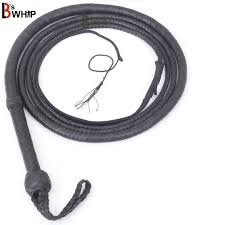
A bullwhip has several parts, and each one affects how it performs.
The handle, sometimes called the stock, is what you grip. Some bullwhips have a rigid handle, and others use a flexible plaited grip instead.
The belly is the main body of the whip. It tapers down from the handle to the thinner sections near the tip.
The fall is the final section before the tip. It takes the most wear during use, so replacing it is normal, expected maintenance.
The cracker, also called the popper, is a short piece of string at the very end. That small piece is what breaks the sound barrier and makes the crack.
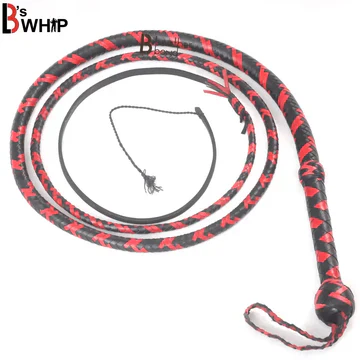
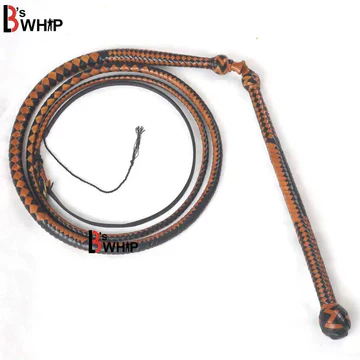
Bullwhips started out as herding tools. Stockmen in Australia and the American West used them to move cattle without laying a hand on the animal.
The word “bullwhip” comes straight from that job. It was a whip built for handling bulls and cattle at a distance.
Kangaroo hide entered the picture because of what Australian stockmen already had on hand. Kangaroo leather was local, strong, and thin enough to plait tightly.
The same qualities that made it useful for herding cattle are why whip makers still reach for it today, whether it’s for whip cracking sport or impact play.
The crack of a whip isn’t the leather hitting anything. It’s a small sonic boom.
When you swing the whip, the motion travels down the tapering belly and speeds up as it goes. By the time it reaches the thin cracker at the tip, that section is moving faster than the speed of sound.
That burst of speed is what produces the crack. It’s also why plait quality and taper matter so much. A poorly plaited whip won’t transfer that energy cleanly, and the crack will sound flat.
Not every bullwhip looks or handles the same way. Here are the main styles you’ll run into.
Signal whips are short, usually under four feet, with no taper at the handle. They’re a common starting point for beginners learning basic technique.
Stock whips have a stiff handle joined to a shorter, flexible thong by a connector called a keeper. They’re built for close-range control while herding or working an animal.
Single-tail whips are the long, tapered style most people picture. This is also the type most often used for impact play.
Snake whips sit between a signal whip and a single tail. They’re shorter overall, with a quick, snapping action that suits tight spaces.
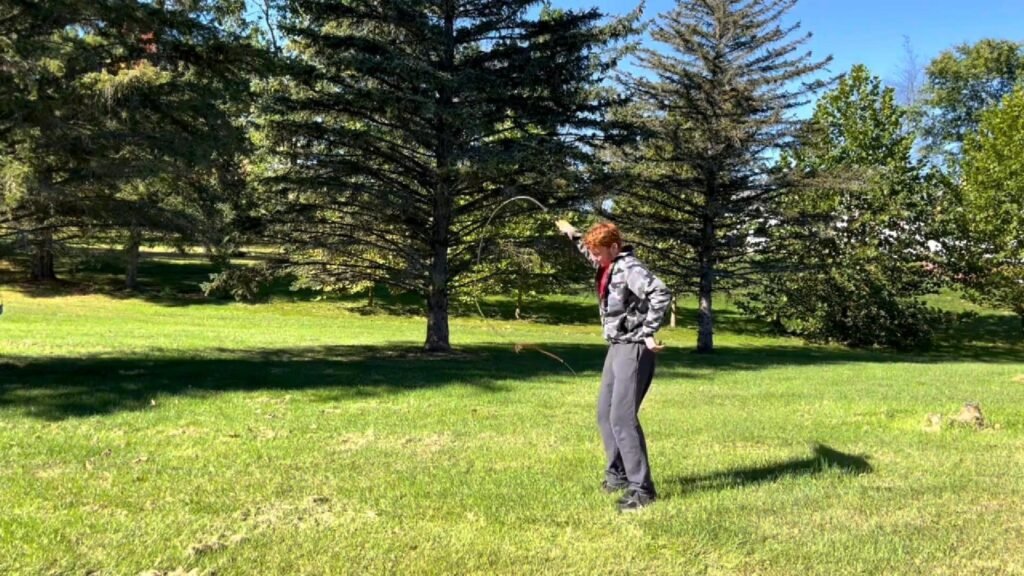
Length matters more than most first-time buyers expect. A whip that’s too long is hard to control and one that’s too short limits your reach and rhythm.
Start with a whip between four and six feet if you’re new to this. Anything shorter makes it hard to build proper technique and anything longer takes real practice to control safely. A shorter whip also lowers the risk of hitting an unintended target while you’re still learning.
Weight depends mostly on plait count, meaning how many strands make up the belly. More strands generally mean a heavier, more durable whip, but also a steeper learning curve for a new user.
Match the whip to your current skill level first. You can always move up to a longer or heavier model once the basic crack feels natural.
A few details separate a well-made whip from a weak one. Check these before you buy.
Look at the stitching and plait tightness first. Loose plaiting means the whip will lose its shape fast and won’t transfer energy well.
Check the taper from handle to tip. A smooth, even taper is what gives the whip its accuracy and its crack.
Ask about the fall and cracker. These parts wear out and need replacing, so a maker who sells them separately is worth trusting.
Read reviews from other buyers when you can find them. A whip maker with a track record of consistent quality is a safer bet than an unknown seller with no history.
A bullwhip is a serious tool, and it deserves serious respect. A few rules keep things safe for everyone involved.
Clear your space first. You need the whip’s full length plus your arm’s reach in every direction, with nothing breakable nearby.
Aim for large muscle groups only, like the back, thighs, or buttocks. Avoid the head, spine, kidneys and joints entirely.
Talk with your partner before you start. Agree on a safeword, a target area, and a pace you’re both comfortable with.
Practice your technique on a fixed target first, not a person, until your aim is reliable. A whip that’s out of control can injure someone fast.
Kangaroo hide holds up well over time, but it still needs regular upkeep.
Condition the leather every two to three months with a leather-specific conditioner, not general oil. Too much oil makes the plait heavy and can loosen the weave over time.
Store the whip loosely coiled, not tightly wound. Tight coils create stress points that weaken the leather.
Keep it away from direct heat and sunlight. Both dry out the hide and make it brittle over time.
Replace the fall and cracker as soon as they show wear. These parts take the most stress and are meant to be swapped out, not stretched past their limit.
Most new whip owners run into the same handful of problems.
Buying too long a whip is the biggest one. It looks impressive, but it’s genuinely harder to control than a shorter model.
Skipping practice on a fixed target is another common mistake. Build a consistent, controlled crack before you try anything near a partner.
Over-oiling the leather is a frequent care mistake. It feels like it’s helping, but it actually shortens the whip’s lifespan.
Ignoring a worn fall or cracker until it snaps mid-use rounds out the list. Check both before every session.
Is kangaroo hide the best material for a bullwhip?
Kangaroo hide is widely considered the top choice among serious whip makers and users. It offers a higher strength-to-weight ratio than cowhide, meaning a thinner, lighter whip that still holds up to regular use. That combination gives it better control and a longer working life than most other materials.
Cowhide and buffalo hide both work, but they ask for a trade-off in weight or flexibility that kangaroo hide doesn’t require.
How long should a beginner’s bullwhip be?
A beginner should start with a bullwhip between four and six feet. This length is long enough to build real technique but short enough to stay in control while learning. Once the basic crack feels natural, moving up in length is a simple next step.
Can a kangaroo hide bullwhip be used for impact play?
Yes, kangaroo hide bullwhips are a common choice for single-tail impact play. Their light weight and responsiveness give more precise control than heavier materials allow. That precision matters for aiming accurately and keeping a scene safe from start to finish.
How often should I condition a kangaroo hide whip?
Conditioning every two to three months is a reasonable starting point for regular use. Climate and frequency of use both affect that schedule, and drier climates usually call for more frequent conditioning. Watch the leather itself for dryness or stiffness as your best guide.
Do kangaroo hide bullwhips cost more than cowhide ones?
Yes, kangaroo hide bullwhips typically cost more than cowhide models. The hide itself is harder to source and process, and the finer plaiting takes more skill and time. Most buyers find the added control and lifespan worth the higher price.
A kangaroo hide bullwhip costs more than a cowhide one, and it’s worth it if you plan to use it regularly. The material gives you a lighter, more responsive whip that holds its shape and its crack for years.
Start with the right length, learn on a fixed target, and take care of the leather. Do that, and a well-made kangaroo hide bullwhip will outlast almost anything else in your collection.
Looking for the same standard of leather work in other pieces? Check out LeatherBond’s handmade leather goods for the same attention to material and build quality.