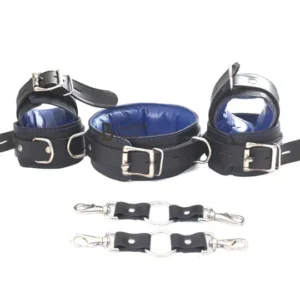
Advanced restraint play is one of the most technically demanding areas of BDSM practice. Done with proper knowledge, quality gear and a rigorous approach to safety, it can be an extraordinarily intense and rewarding experience. Done carelessly, it is one of the few areas of BDSM that carries a genuine risk of serious, lasting physical harm.
This is not a guide for complete beginners. If you have not yet explored basic restraint leather cuffs, bondage tape, simple spreader bars start there. Build experience. Build trust with your partner. Then return here.
For those who are ready: this guide covers every major category of advanced restraint system the anatomy of real risk, how to set up a safe play space and exactly what to look for when choosing gear that will perform safely under serious use.
Extreme restraints are bondage systems that go beyond simple wrist or ankle cuffs. They involve full or near-full body immobilisation, complex multi-point attachment systems, positional restraint over extended periods, or load-bearing configurations such as suspension.
The word “extreme” here is relative to standard beginner practice not to intensity of sensation. Many advanced restraint systems produce very little direct sensation on their own. The intensity comes from the psychological experience of complete immobility, vulnerability and the trust required to enter that state with another person.
What makes these systems “advanced” is not their drama. It is their technical requirements: the anatomical knowledge needed to use them safely, the equipment quality required to perform reliably under load and the communication skills needed to manage risk in real time.
This guide is for practitioners who already have solid experience with basic bondage, understand safeword protocols thoroughly and are ready to explore more complex restraint systems with a trusted partner.
It is also for experienced players who want to systematically review their safety knowledge a useful practice regardless of how long you have been active.
It is not appropriate for anyone in their first months of BDSM exploration. Advanced restraint requires a foundation of experience, communication and mutual trust that cannot be shortcut.
At the advanced level, safety protocols are not a checklist you complete before the fun begins. They are continuous, active and embedded into every part of the scene. The complexity of advanced restraint systems creates multiple additional risk vectors that simply do not exist in basic bondage.
Negotiation for advanced restraint scenes needs to be more thorough, not less. Cover:
At the advanced level, both partners should also have a prior discussion not in the heat of the scene about how the dominant will respond to signs of physical distress that the restrained partner may not be aware of. Tingling, colour change, laboured breathing: the dominant must act on these even if the submissive says they are fine.
For any scene involving suspension, load-bearing hardware, complex rigging or positions that compromise the restrained partner’s ability to self-protect a third person in the spotter role is strongly recommended. The spotter’s sole responsibility is safety observation. They do not participate in the scene. They watch for physical distress signs, monitor time and are prepared to intervene immediately.
The NCSF (National Coalition for Sexual Freedom) and established BDSM community organisations consistently recommend a spotter for suspension and advanced rigging work.
Every advanced restraint scene requires prepared emergency protocols not improvised on the spot.
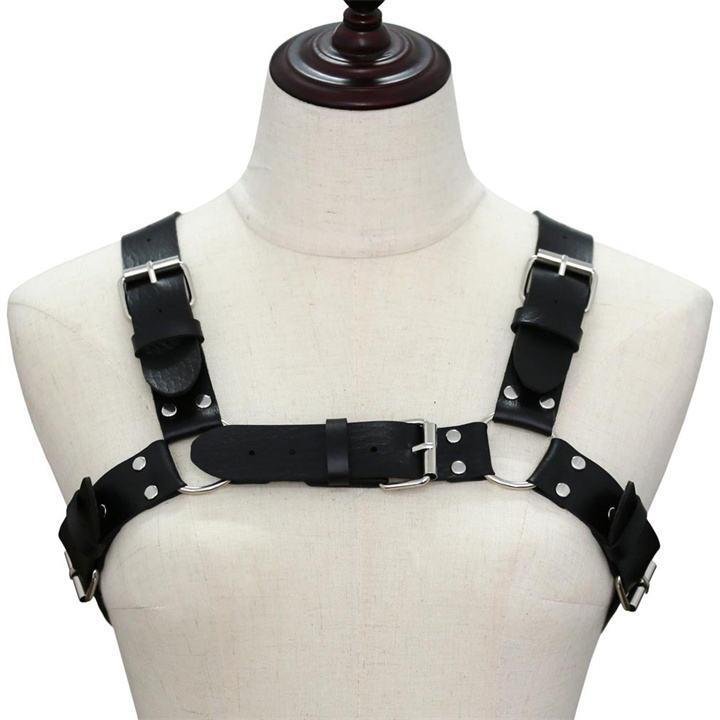
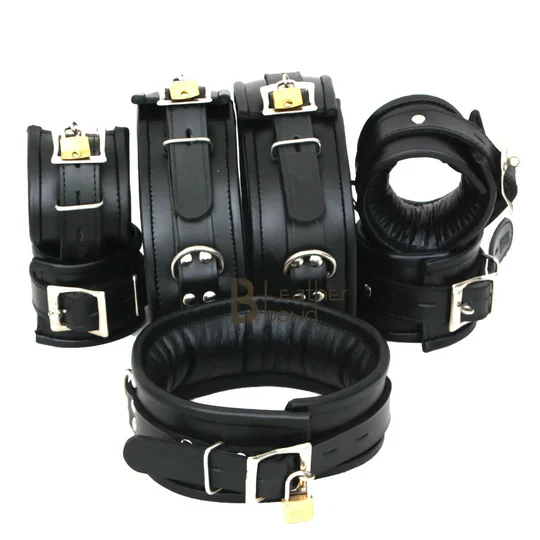
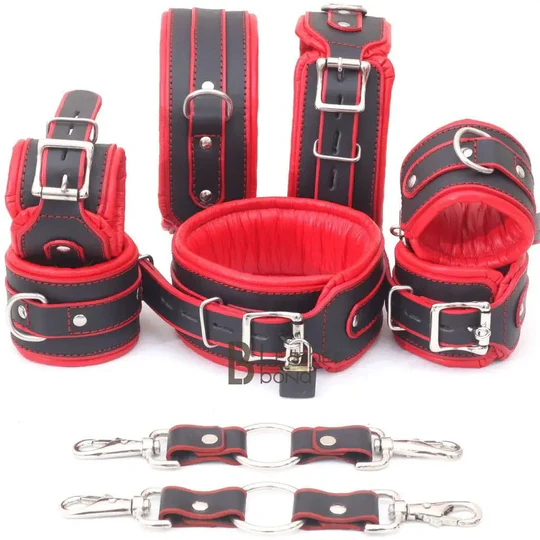
Full-body systems combine multiple restraint points wrists, ankles, thighs, upper arms, waist into a single coordinated configuration. Leather body harnesses with integrated restraint points combined with cuffs connected to each other and to a central anchor allow the dominant to position and hold the submissive in highly specific configurations.
The advantage of a coordinated system over individual pieces is consistency each element is designed to work with the others, reducing the risk of incompatible hardware or unexpected load distribution. LeatherBond’s advanced restraint systems use D-rings rated for consistent load across connection points, with locking buckles that hold securely but release cleanly.
Key considerations:
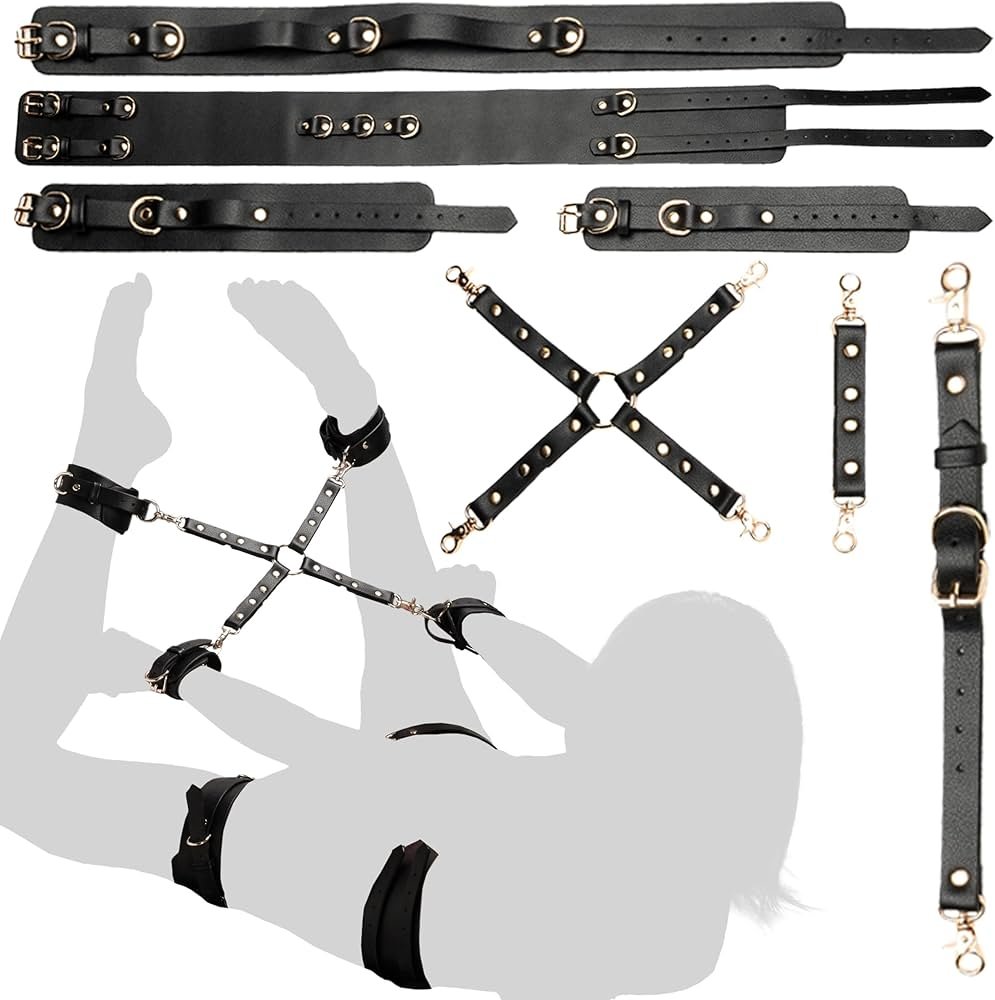
A hogtie position connects the wrists and ankles behind the back bringing them together toward the centre of the body. A hogtie connector a rigid or adjustable rod or clip system holds them in place.
This position creates significant immobility and is psychologically intense. It also carries specific physical risks:
Maximum recommended time for beginners to hogtie: 10–15 minutes. Build duration incrementally as experience develops. Never exceed 30 minutes without extensive experience and ongoing active monitoring.
Spread eagle positions fix the wrists and ankles at four separate anchor points typically the corners of a bed frame, a bondage frame or wall-mounted anchor points with the body stretched between them.
This is one of the more accessible advanced configurations. The position is less anatomically demanding than a hogtie, allows comfortable breathing and gives the dominant good visual access to the entire body.
The primary risks are:
Under-bed restraint systems run beneath a mattress with webbing or straps emerging at the corners or sides. They allow any standard bed to function as a restraint anchor system without permanent installation. They’re one of the most practical and discreet advanced restraint options available.
Quality under-bed systems use heavy webbing rated for sustained load with metal D-ring connectors and adjustable straps. Cheap alternatives use narrow webbing and plastic buckles that fail under real load a significant safety risk.
What to look for:
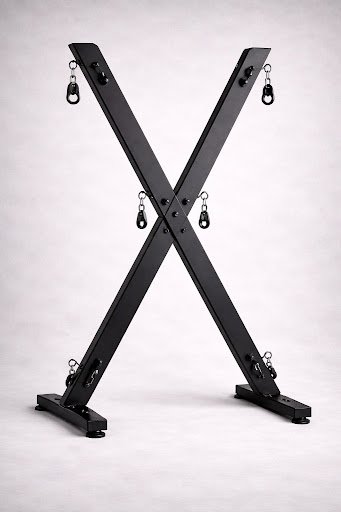
A bondage frame typically a free-standing wooden or metal structure with anchor points for restraint at multiple heights is a dedicated piece of bondage furniture designed for advanced restraint play. The St. Andrew’s Cross is the most iconic design: an X-shaped frame to which the restrained partner is secured spread-eagle, facing the frame or facing outward.
Bondage furniture allows consistent, repeatable restraint positions with purpose-built anchor points rated for the loads involved. A quality St. Andrew’s Cross has anchor rings rated for significant load, non-slip feet for stability, and adjustable attachment points to accommodate different body heights.
The primary risks are structural cheap bondage furniture fails. Verify load ratings before use. Build quality over aesthetics when selecting bondage furniture.
Suspension bondage where part or all of the restrained partner’s weight is borne by the rigging is the highest-risk category of restraint play. It requires dedicated training, purpose-built hardware, and structural anchor points rated for dynamic load.
This guide will not provide suspension rigging instructions. Suspension requires in-person training from an experienced teacher. Reading about it is not a substitute for supervised practice.
Minimum requirements before attempting any suspension:
The NCSF provides guidance on suspension safety resources and reputable training sources.
A BDSM straitjacket typically made from leather or heavy canvas restrains the arms fully against the body, creating near-total upper body immobility. Combined with leg restraints, a straitjacket creates comprehensive full-body restriction.
The primary risks are respiratory a tightly fitting straitjacket compresses the chest. Always fit with enough room for full comfortable breathing. Verify this before the scene begins by having the restrained partner take several deep breaths.
Heat is also a significant concern. Full enclosure restraints generate significant body heat. Monitor for overheating, particularly in warm environments.
Mummification involves wrapping the body comprehensively typically in cling film, bandages or a combination to create near-total immobility and full sensory restriction. It is one of the most psychologically intense restraint experiences available.
The risks are primarily thermal (significant overheating risk), respiratory (never wrap the face without leaving the nose and mouth fully clear) and claustrophobia-related. Mummification should never be left unattended for even a moment. The dominant must remain actively engaged throughout.
Always keep cutting tools immediately ready. Full wrap removal in an emergency must be possible in under one minute.

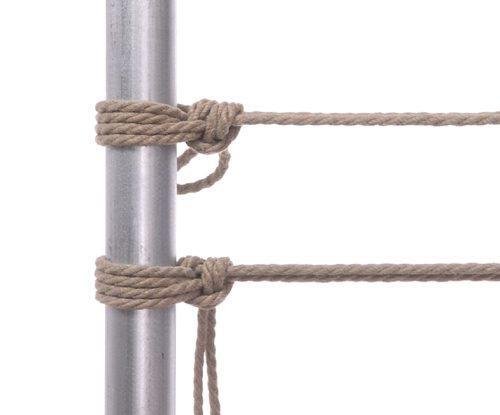
Regardless of which restraint system you use, these concepts apply universally at the advanced level.
Load distribution: Force should always be spread across as much surface area as possible. Narrow restraints concentrate force on small areas of skin and tissue, accelerating circulation restriction and nerve compression.
Gravity awareness: In any position other than lying flat, gravity creates load on restraint points. A standing spread eagle, for example, places continuous downward load on wrist restraints. Size, duration and hardware rating must all account for gravitational load.
Dynamic vs static load: Static load is the weight of a resting body. Dynamic load the force created when a restrained person moves, pulls or shifts position can be several times higher. All hardware and anchor points must be rated for dynamic load, not just static.
Release hierarchy: Every complex rigging configuration should have a mental release hierarchy a planned sequence for releasing restraints in an emergency. Know the order before the scene begins.
Nerve damage and circulation restriction are the two primary physical risks of advanced restraint. Both are time-sensitive early signs are reversible; prolonged restriction causes permanent harm.
Signs of circulation restriction:
Signs of nerve compression:
The rule: Any tingling, numbness or colour change in extremities means the restraint is adjusted or removed immediately. These are not sensations to push through. Radial nerve palsy “Saturday night palsy” is a documented consequence of sustained compression of the wrist area. It can cause weeks to months of partial hand paralysis.
Check circulation and sensation actively, verbally, every 10–15 minutes in any position restraint. Do not assume continued absence of complaint means everything is fine.
| System | Immobility Level | Risk Level | Skill Required | Beginner Suitable? |
|---|---|---|---|---|
| Cuffs with connector clips | Medium | Low | Minimal | ✓ Yes |
| Under-bed restraint system | Medium | Low–Medium | Minimal | ✓ With guidance |
| Spread eagle (bed-based) | High | Medium | Some | With care |
| Hogtie connector | Very High | Medium–High | Intermediate | ✗ Not yet |
| Full-body leather system | Very High | Medium–High | Intermediate | ✗ Not yet |
| St. Andrew’s Cross | High | Medium | Intermediate | ✗ Not yet |
| Straitjacket | Very High | Medium–High | Intermediate | ✗ Not yet |
| Mummification | Complete | High | Advanced | ✗ No |
| Partial suspension | Very High | Very High | Advanced + training | ✗ No |
| Full suspension | Complete | Extreme | Expert + training | ✗ No |
Hardware rating: Every D-ring, carabiner, anchor bolt and connector in your system must have a specified load rating. If the hardware has no rating, it has not been tested. Do not use it for restraint.
Material integrity: Leather restraint systems should be inspected at every stress point stitching, D-ring attachments, buckle connections before every single use. A restraint that holds during a light scene may fail under the sustained load of an advanced configuration.
Compatibility: Components from different systems are not always compatible. Mixing hardware from different manufacturers can create situations where one component is rated for significantly less load than others in the same configuration. Buy complete systems where possible or verify load ratings explicitly across every component.
Adjustability: Advanced restraint positions require fine adjustment of strap lengths and connection points. Gear with wide adjustability accommodates different body types, positions and scenes without improvisation.
Release mechanism: Every element of an advanced restraint system must have a clear fast release mechanism. Test the full release sequence before the scene begins. If any element cannot be released quickly under simulated stress, it is not appropriate for use.
The environment matters as much as the gear.
Floor surface: Padded or carpeted surfaces. If the restrained partner falls or needs to be lowered to the floor quickly a hard surface creates injury risk.
Clearance: Adequate space around all restraint furniture or anchor points. No sharp corners, protruding furniture or hazards within the movement range of a restrained person.
Temperature control: Advanced restraints restrict movement and can significantly affect body temperature regulation. Keep the room at a comfortable temperature. Have blankets available for post-scene aftercare.
Lighting: Adequate lighting for the dominant to observe the restrained partner’s skin colour, facial expression and physical condition throughout the scene. Dramatic low lighting that looks great in photographs is a practical safety compromise.
Tools within reach: Safety scissors, first aid kit, phone and any scene-specific items all within the dominant’s arm’s reach without needing to leave the restrained partner.
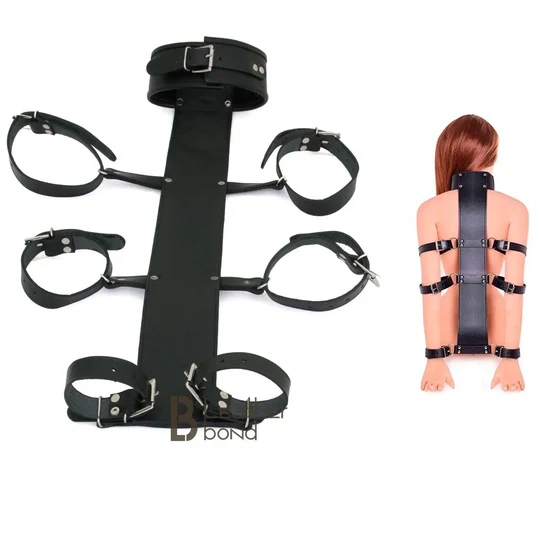
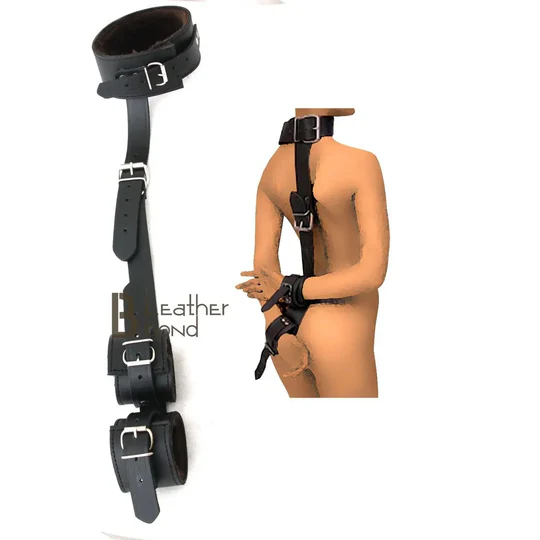
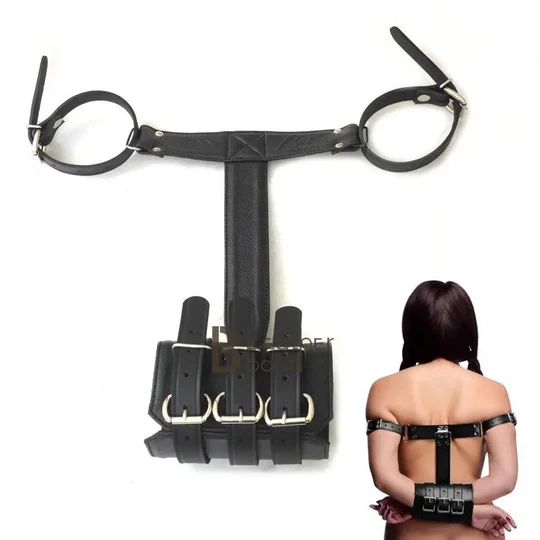
Advanced restraint gear carries greater load than basic cuffs and deteriorates at high-stress points faster as a result.
After every use:
Monthly:
Replace immediately if:
An under-bed restraint system or a spreader bar with quality cuffs in a spread eagle position are the most accessible next steps beyond basic cuffs. Both provide significantly increased immobility with manageable risk when used with proper check-in protocols and appropriate hardware. Hogtie configurations and full-body systems should come later after experience with these intermediate setups.
This depends entirely on the position. A comfortable spread eagle on a padded surface can be sustained longer than a hogtie. General guidance: actively monitor every 10–15 minutes regardless of position. For positions that compress the chest or put significant load on joints hogtie, kneeling positions, standing with overhead suspension keep initial sessions to 10–20 minutes and build duration incrementally over multiple sessions.
Avoid any hardware without a specified load rating this includes decorative D-rings on fashion harnesses, plastic buckles of any kind and carabiners not rated for dynamic load. Never use ratchet straps, zip ties or extension cords in restraint configurations. Do not use ceiling hooks installed for picture hanging or light fixtures as suspension anchor points they are not structurally designed for human body weight.
No. This is one of the clearest pieces of safety guidance in the BDSM community: suspension requires in-person training from an experienced teacher. Online resources including this guide can explain concepts but cannot teach the proprioceptive skills, real-time risk assessment and emergency response that suspension demands. Seek out in-person classes from qualified riggers.
Ask directly and specifically: “Can you feel your fingers?” “Any tingling in your hands?” Do not ask “Are you okay?” a submissive deeply in a scene will often answer yes reflexively. Ask about specific physical sensations in the extremities. Also watch for grip weakness if the submissive cannot make a firm fist or wiggle fingers freely, the restraint is affecting nerve function and must be adjusted immediately.
This should not happen every restraint configuration must be fully releasable in under 60 seconds as a prerequisite for use. If you find yourself unable to release a restraint, use safety scissors on any webbing, rope or tape immediately. For locked hardware you cannot open, call emergency services without hesitation. Never prioritise the gear over the person.
Advanced restraint play sits at the intersection of deep physical trust, technical knowledge and quality equipment. Get all three right and it opens experiences that are simply not available at a lower level of practice. Shortcut any one of them and the risk profile changes dramatically.
The progression is clear: build experience with basic restraint, develop thorough communication habits, invest in quality gear with verified hardware ratings, learn the anatomical risks and how to monitor for them and move to each new level only when the current one is fully comfortable.
At LeatherBond, our advanced restraint range is built with the hardware ratings, stitching quality and material integrity that serious restraint play demands. Every piece is inspected before shipping. Explore our advanced bondage restraint systems, leather bondage harnesses and restraint hardware and build your practice on gear that performs when it matters.