A leather flogger is a distinctive impact accessory recognized for its traditional craftsmanship, flexible leather tails, balanced handle and wide range of possible sensations. Whether someone is exploring impact accessories for the first time or comparing different designs, understanding how a flogger is constructed can make choosing the right option easier.
Not all floggers feel or perform the same way. Their characteristics depend on several factors, including leather type, tail width, thickness, flexibility, length, weight, and handle design. Some designs emphasize softer, heavier sensations, while others are associated with sharper, more focused impacts.
Beyond leather, modern floggers are also made using materials such as suede, nylon, rubber, paracord, rope, and other synthetic options. Each material has its own characteristics, maintenance requirements, and design possibilities.This comprehensive guide explores the construction, materials, handle styles, balance, and practical differences between various floggers. It also explains what to consider when comparing a leather flogger with other available options.
A leather flogger is an impact accessory traditionally constructed with a handle and multiple flexible leather strands attached to its end. These strands are commonly called tails, falls or tresses.Unlike a single-strand whip, a flogger distributes its tails across a wider area. The number, thickness, width, and flexibility of these tails influence how the accessory moves and feels. Leather floggers are available in different configurations, from lightweight designs with soft leather falls to heavier models made with thicker and denser leather.
Their construction generally includes three main elements:
Some models also include decorative knots, hanging loops, metal hardware, or interchangeable components.
A well-designed flogger considers more than appearance. Its construction, proportions, and material selection all contribute to its overall characteristics.
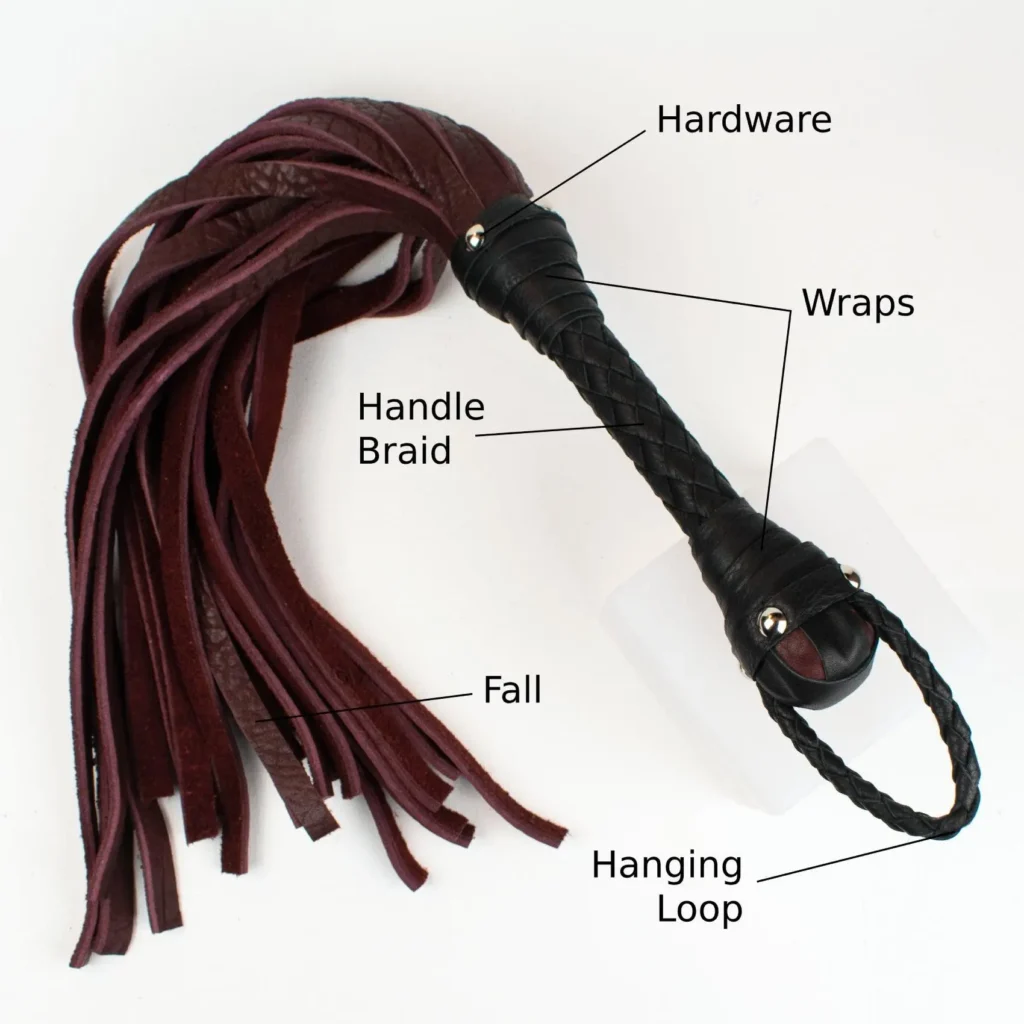
Before comparing different designs, it helps to understand the individual components of a traditional flogger. Each part has a specific purpose and contributes to the accessory’s construction.
The butt is the uppermost part of the handle. It can feature decorative knots, leather wrapping, or other finishing details.One traditional decorative option is the Turk’s head knot, which can cover the butt and neck. Some designs use different knot patterns, while others have a simpler appearance.
A hanging loop is generally positioned at the top of the handle. Its primary purpose is storage, allowing the flogger to hang when not in use. It should not be confused with a wrist restraint. A hanging loop is designed for hanging the accessory rather than securing it around the user’s wrist.
The shaft is the main elongated section of the handle. It provides the area where the user places their hand and establishes the grip. Handle length, shape, and weight influence how the flogger feels in the hand. A balanced design can also have its balance point along this section.
The neck connects the handle to the tails. It is frequently reinforced or covered with a decorative knot. This section helps keep the tails gathered together and contributes to the overall construction of the flogger.
The tails are the flexible strands attached to the neck. They can be made from different leather varieties and other materials. Their thickness, width, number, and flexibility influence the overall characteristics of the flogger.
For example, wider and softer leather falls generally create a different sensation from narrow, firm strands. Understanding these components makes it easier to compare different leather flogger designs and identify the construction features that matter most.
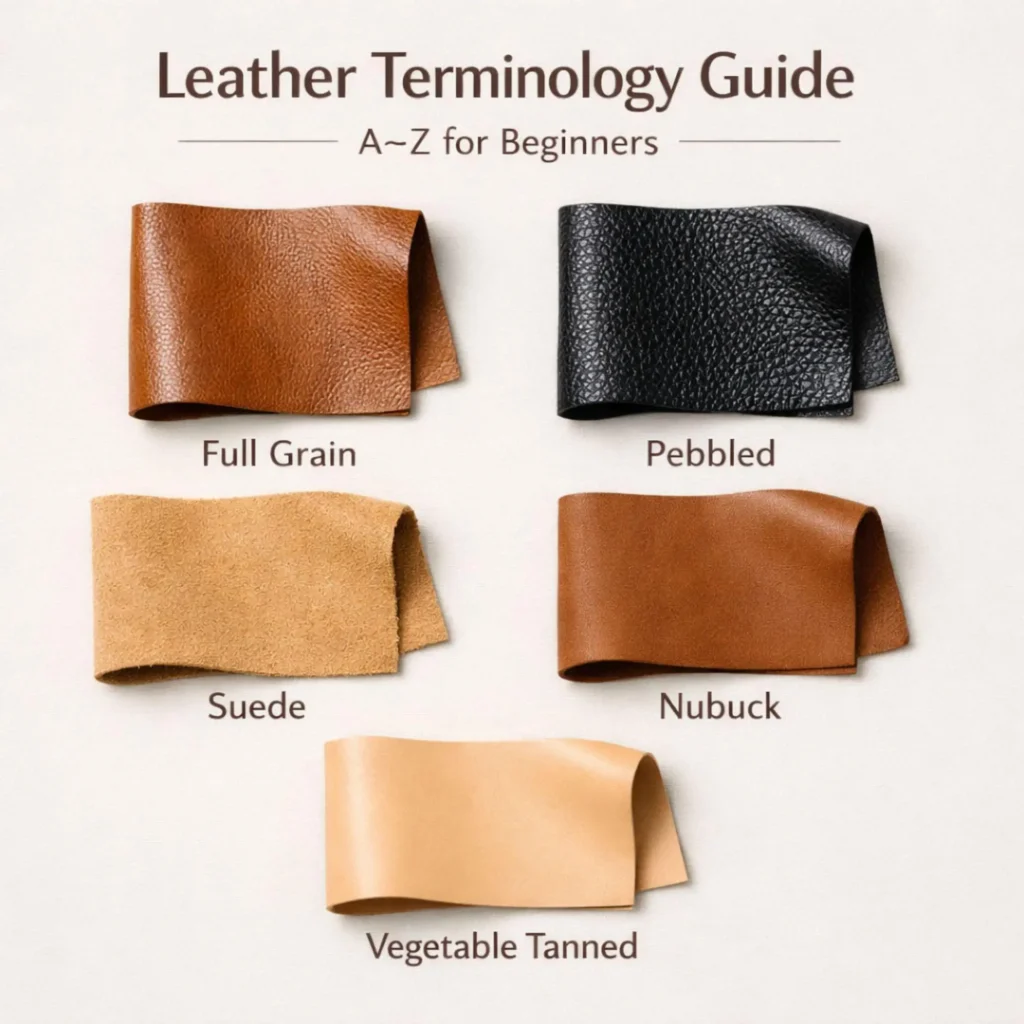
Leather selection plays an important role in the characteristics of a flogger. Different leather varieties have different thicknesses, textures, flexibility levels, and weights. Below are several commonly discussed leather options.
Buckskin is known for its lightweight construction and soft texture. It is generally one of the softer leather choices available for impact accessories. Its lightweight characteristics make it suitable for smaller designs and warm-up accessories. Larger designs can provide a softer, heavier feel.
Buckskin may come from animals such as deer, elk, and moose.
Key characteristics:
Cowhide is a versatile leather option used in a variety of impact accessories. It offers a balance between flexibility, thickness, and weight. Its characteristics can vary depending on the specific hide, finishing process, and thickness selected by the manufacturer. Some cowhide designs provide a combination of sting and thud characteristics. This makes cowhide a popular material to consider when comparing different leather constructions.
Cowhide is also available in multiple colors, making it suitable for different visual styles.
Key characteristics:
Pig suede features a soft, suede-like surface. Its general weight can be similar to cowhide, although its flexibility and texture may differ.The softer surface gives it a distinctive appearance compared with finished leather.One important consideration is maintenance. Suede and other unfinished leather surfaces can be more difficult to clean than finished leather.
Key characteristics:
Bullhide is generally thicker and heavier than standard cowhide. Its density makes it particularly relevant when comparing heavier leather flogger designs. Depending on how the falls are cut, bullhide can provide different characteristics. Wider falls can feel heavier, while thinner falls may produce a sharper sensation.
Its thickness also makes it visually distinctive compared with lighter leather options.
Key characteristics:
Bison leather is another heavy leather option. It is generally thicker than bullhide and is known for its softer, more flexible feel despite its substantial weight.
Its characteristics make it a material worth considering when comparing heavier leather accessories.
However, color availability can be more limited than with some other leather varieties.
Key characteristics:
Although leather is a traditional material, it is not the only option available.
Different materials provide different combinations of flexibility, weight, texture, maintenance requirements, and appearance.
Understanding these differences helps buyers make more informed comparisons.
Leather offers several variations depending on the type of hide and how the falls are cut.
Finished cowhide, suede, bullhide, buckskin, and bison can all have noticeably different characteristics.
Finished leather is generally easier to maintain than unfinished suede or nubuck. However, the specific cleaning instructions depend on the leather and its finish.
Nylon floggers are made using synthetic strands. Their characteristics depend on the strand construction and finishing details.
Some designs feature cracker-style strands, while others use raw nylon strands.
Nylon can provide a different sensation from traditional leather and offers another option for people comparing materials.
Paracord is a synthetic cord material used in different flogger configurations.
The number of strands, their arrangement, and their finishing details affect the design.
For example, 24-strand and 48-strand designs can differ in coverage, density, and overall weight.
Braided paracord constructions are another variation, offering a different visual appearance and structural arrangement.
Rubber floggers are available in different strand thicknesses and configurations.
Thinner strands and thicker strands can have different characteristics. Some rubber designs are also easier to clean than certain leather alternatives.
Rubber is worth comparing for people who prioritize synthetic materials and straightforward maintenance.
Rope floggers can use synthetic materials such as MFP rope.
The ends can be finished differently, including knotted or fluffed configurations. These finishing choices influence the appearance and general feel of the tails.
Rope also offers a different visual and textural experience from leather.
Jute is a natural fiber with a distinctive rough texture and earthy appearance.
It is often considered by people who appreciate natural materials and traditional rope aesthetics.
However, its texture and cleaning requirements differ from those of finished leather.
One of the most important distinctions when comparing floggers is the difference between stingy and thuddy sensations.
These terms describe different impact characteristics rather than simply indicating whether one flogger is stronger than another.
A stingy flogger is generally associated with a sharper, more focused sensation.
Several construction details can influence this characteristic:
Finished leather can sometimes feel stingier than softer unfinished leather, depending on its construction.
A thuddy flogger is generally associated with a deeper, heavier sensation.
Softer and more flexible materials, particularly when used in wider falls, are commonly associated with thuddy characteristics.
Leather thickness and density also matter.
For example, buckskin is lightweight and soft, while thicker bullhide and bison leather offer different weight characteristics.
Tail stiffness is an important factor when comparing floggers.
A wide leather tail is not automatically thuddy, and a narrow tail is not automatically stingy. The material’s flexibility, thickness, and density all contribute to its characteristics.
Consider the difference between a soft fabric strip and a firm leather strip. Even if they have similar widths, their flexibility can make them behave differently.
This is why examining the complete construction is more useful than judging a flogger by its appearance alone.
Balance is another important feature to understand when comparing traditional floggers.The balance point is the position where the handle and tails can rest in equilibrium when supported on one or two fingers. A balanced design can feel more manageable during movement because the handle and tails distribute their weight around a central point.
Balance can influence:
However, not every flogger is designed around a traditional balance point.
Finger floggers and ball-handle floggers have different constructions. Their shorter or alternative handle designs do not provide the same counterweight arrangement as traditional long-handled models.
Their movement characteristics are therefore different by design.
A balanced traditional flogger and an alternative handle design should be evaluated according to their intended construction rather than assuming that one format is universally better.
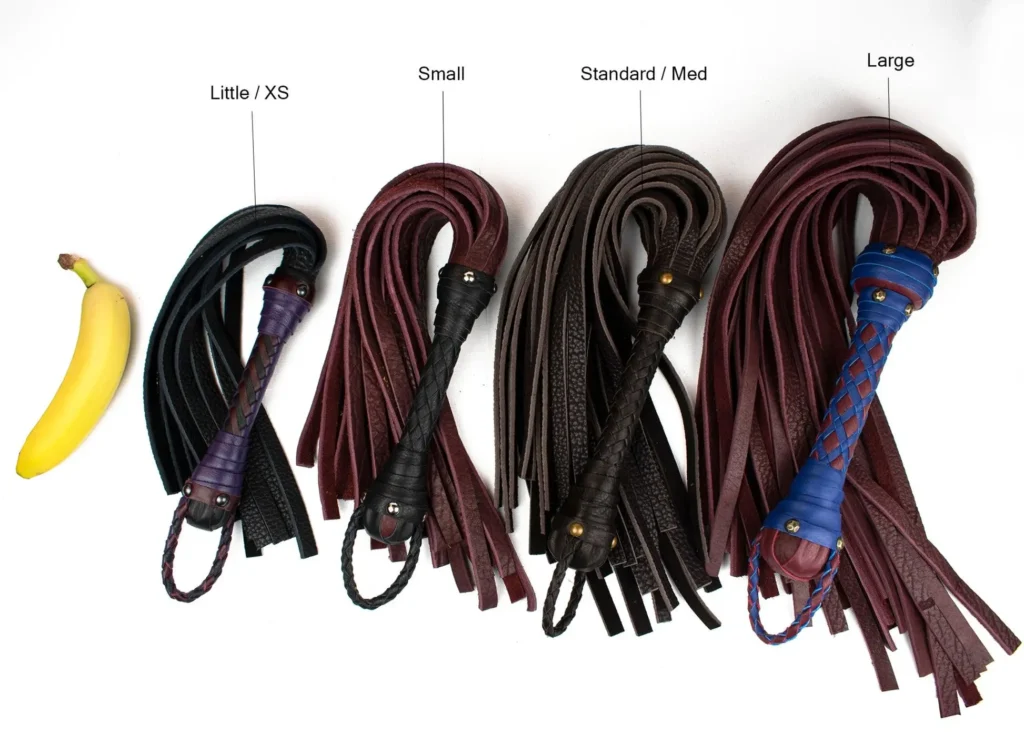
The handle is an important part of a flogger because it influences grip, handling, and overall design.Several handle styles are available.
Traditional handled floggers feature an elongated handle that provides a familiar grip.Many people find this construction easier to understand because it resembles the handles found on other everyday tools.The longer handle also provides a different balance arrangement compared with finger-based designs.When comparing traditional handles, consider their length, shape, grip surface, and overall weight.
Finger floggers, sometimes called poi floggers, use finger loops instead of a conventional long handle.Many designs include two loops. Depending on the construction, users may position them on different fingers.
Finger floggers can initially feel unfamiliar to people accustomed to traditional handles. Their control characteristics also require time to understand.Some models include swivels, which allow additional rotational movement. Swivel designs introduce another construction element that buyers should consider when comparing different models.
T-handle floggers offer an alternative between traditional handles and finger-loop designs.Their construction provides a different grip arrangement while retaining a more compact handle shape.Some designs are intended to offer a compromise between the stability of traditional handles and the alternative positioning of finger floggers.
Ball-handle floggers use a rounded handle design rather than a long traditional shaft. This changes how the accessory is held and how its weight is distributed. Like other alternative handle formats, ball-handle designs should be compared according to their intended construction and individual handling preferences.
Flogger length can influence handling and overall comfort.
A useful starting point when evaluating traditional floggers is comparing the accessory’s length with the user’s arm length, measured from the shoulder to the fingertips.This provides a general reference point rather than a universal sizing rule.A design that is too short or too long can present different handling challenges.
Shorter floggers have less distance between the handle and the ends of the tails. Their compact construction can make them easier to store, but a shorter design is not automatically safer or easier to control.
Longer floggers provide more length and can be more challenging to manage.Their extended tails require attention to movement and positioning.The important consideration is finding a suitable length for the intended design and the user’s physical proportions.
No. Length alone does not determine safety.
A shorter flogger can still create risks, while an excessively long design can make positioning and control more difficult.Comfort, construction, experience, and awareness are all important considerations. People should also be mindful of their own physical limitations. Repeated movements can place strain on the elbow, wrist, shoulder, and back.
Some floggers use additional hardware to create different handle configurations or allow interchangeable components.Hardware quality is an important consideration because these components connect different parts of the accessory.
Trigger snaps are spring-loaded connectors that open when their release mechanism is pressed.Some designs include a built-in swivel.Their strength, construction, and symmetry are important when evaluating hardware quality.
A weak or poorly constructed connector may become a failure point.
Eye-to-eye swivels are connectors that do not open like trigger snaps.
They provide a different attachment arrangement, although permanently attached components can be less convenient to replace.
The construction of the connected finger loops should also be considered.
Some designs use swivels originally associated with nunchaku-style hardware.
Ball-bearing construction can provide smooth rotational movement.
These designs may use quick links or other connecting components.
Some finger floggers include chain links between the loops and tails.Chain construction, link quality, and attachment strength should all be considered.Not all chains are manufactured for the same purposes. Decorative chains and stronger hardware-style chains can have very different structural properties.
When comparing floggers with metal components, buyers should examine the overall construction rather than focusing only on appearance.
Modularity is another feature found in some flogger designs.
A modular system uses interchangeable components that can be connected or replaced.For example, certain configurations allow different finger loops or handles to connect to the same tail assembly.This approach can provide more flexibility when comparing different designs.However, compatibility is important. Not every connector or hardware arrangement works with every flogger.
Before purchasing a modular design, check:
A well-designed modular system should have compatible components and reliable connections.
Choosing a leather flogger involves more than selecting a color or attractive design.The material, construction, length, weight, handle, and maintenance requirements should all be considered.Here are some important factors to evaluate before making a purchase.
Start by understanding the differences between available leather varieties.Buckskin offers a lightweight and soft construction, while cowhide is a versatile middle-ground option.Bullhide and bison provide heavier leather alternatives.Suede offers a distinctive surface texture but generally requires more careful maintenance.
The best material depends on the characteristics you want from the accessory.
Tail width and thickness influence how a flogger is constructed.Wide, flexible tails generally have different characteristics from narrow, stiff tails.Do not assume that all leather floggers made from the same material will feel identical.
The way the leather is cut and finished matters just as much as the material name.
Traditional handles, finger loops, T-handles, and ball handles each have different constructions.
Consider the grip style, handle length, and overall weight before choosing.
A comfortable design should suit the intended handling style.
For traditional floggers, examine the relationship between the handle and the tails.
A well-balanced design can feel more manageable because its weight is distributed across the accessory.
However, alternative handle styles may intentionally use a different balance arrangement.
Pay attention to how the handle, neck, and tails are connected.
Check whether the stitching, knots, hardware, and attachments appear properly finished.
If the design includes swivels or metal connectors, examine those components carefully.
Different materials require different maintenance approaches.
Finished leather, suede, rubber, nylon, and rope should not automatically be cleaned using the same method.
Check the manufacturer’s care instructions before applying water or cleaning products.
Price is only one part of a purchase decision.
Consider the material, craftsmanship, construction, hardware, and maintenance requirements together.
A suitable leather flogger should meet your expectations for its design and intended use rather than being selected on price alone.
Proper maintenance helps preserve the appearance and condition of leather accessories.
However, cleaning methods depend on the material and finish.
Finished leather is generally easier to maintain than unfinished suede or nubuck.
Use a cleaning method recommended for the particular leather finish.
Avoid assuming that all leather products can be rinsed or soaked.
Suede and nubuck have different surface characteristics from finished leather.
Their unfinished surfaces can be more difficult to clean.
Use appropriate leather-care products and follow the manufacturer’s instructions.
Certain rubber floggers can be cleaned with mild soapy water.
However, the specific rubber compound and any attached hardware should be considered before cleaning.
Always follow the manufacturer’s recommendations.
Good storage practices can help maintain an accessory’s condition.
Taking care of the complete accessory, rather than only its leather tails, is important for long-term condition.
Understanding construction and handling is important when evaluating any impact accessory.
A flogger is not automatically safe because it is short, lightweight, or made from soft leather.
Different designs have different characteristics, and inappropriate handling can cause injuries.
A few general considerations are important:
Understand the equipment: Learn about the material, construction, length, and hardware before use.
Communicate clearly: Everyone involved should understand boundaries, preferences, and expectations.
Avoid wrist restraints: A hanging loop is intended for storage and should not be used as a wrist loop.
Consider physical limitations: Repeated movements can strain the elbow, wrist, shoulder, and back.
Inspect the hardware: Connectors, loops, and attachments should be checked for visible damage or weaknesses.
Pay attention to positioning: Flogger length and tail movement can affect where the tails land.
Prioritize consent: Any activity involving impact accessories requires clear, informed, and ongoing consent from everyone involved.
Responsible ownership includes understanding both the accessory and the people involved.
Leather continues to be an important material in the construction of traditional impact accessories.
Its appeal comes from the variety of available hides, textures, thicknesses, and finishing possibilities.A leather flogger can have a traditional appearance, a minimalist design, or a more elaborate handcrafted construction.Different leather varieties also allow manufacturers to create products with different weight and flexibility characteristics.For buyers, this variety makes it possible to compare several designs instead of choosing from one standard configuration.Some people prefer the natural appearance of suede, while others appreciate the versatility of finished cowhide or the substantial construction of heavier leather options.
Ultimately, the value of a leather flogger comes from the relationship between its material, construction, and intended design.
A leather flogger is more than a handle with attached leather strands. Its overall construction involves several important elements, including the leather type, tail configuration, handle design, balance, and finishing details.
Understanding these features helps buyers compare different products with greater confidence.Cowhide, buckskin, pig suede, bullhide, and bison each offer different material characteristics. Traditional handles, finger loops, T-handles, and ball handles also provide different construction options.When evaluating a leather flogger, focus on craftsmanship, material quality, suitable dimensions, reliable connections, and maintenance requirements.
Rather than assuming one design is best for everyone, compare the available options and identify the features that matter most to your preferences.
A carefully selected design should reflect the quality of its materials, the thought behind its construction, and the attention given to its finishing details.
A leather flogger is an impact accessory featuring a handle and multiple flexible leather tails. Its construction, material, and tail configuration influence its overall characteristics.
There is no single best leather for every design. Buckskin is lightweight and soft, cowhide is versatile, bullhide is heavier, and bison is known for its thick and soft construction. The right option depends on individual preferences.
Cowhide is generally a versatile middle-ground leather, while bullhide is typically thicker, denser, and heavier. Their characteristics also depend on the way the tails are cut and finished.
A thuddy flogger is generally associated with a deeper, heavier impact sensation. Softer and more flexible materials, wider falls, and material density can contribute to this characteristic.
A stingy flogger is associated with a sharper and more focused sensation. Tail stiffness, material density, thickness, and construction can influence this characteristic.
Suede floggers generally require more careful maintenance than finished leather designs. Their unfinished surface can make cleaning more challenging, so material-specific care instructions should be followed.
The main components include the butt, hanging loop, shaft, neck, and tails. Each part contributes to the accessory’s structure and overall design.
A balanced flogger is designed so its handle and tails distribute weight around a balance point. In traditional models, this point is commonly located along the shaft.
Traditional floggers feature an elongated handle, while finger floggers use finger loops. They have different grip arrangements, handling characteristics, and construction styles.
No. Length alone does not determine safety. Both short and long designs have different handling considerations, and proper control, positioning, and awareness remain important.
Other materials include nylon, paracord, rubber, silicone, jute, and synthetic rope. Each material has different construction, texture, and maintenance characteristics.
Store it in a clean, dry location away from excessive heat and moisture. Keep the tails properly arranged and inspect the handle and hardware periodically.
Consider the leather type, tail width, thickness, flexibility, handle design, overall balance, attachment quality, and cleaning requirements.
The hanging loop is designed to suspend the flogger for storage. It should not be used as a wrist restraint.
No. Leather type, thickness, flexibility, tail width, density, and overall construction can create noticeable differences between designs.