Curious about BDSM but not sure where to start? You are not alone. More people are exploring kink than ever before and understanding the basics is the first step toward safe, consensual play that can genuinely transform your sex life.
This guide covers everything a beginner needs: what BDSM actually means, where it came from, the different types of play and the safety practices that keep everyone protected.
BDSM stands for Bondage, Discipline, Sadism and Masochism. The term also folds in Domination and Submission, since the acronym overlaps with several related practices.
At its core, BDSM is a collection of sexual practices and fetishes built around control, sensation and power exchange. Satisfaction here does not always mean orgasm. It can be entirely mental, entirely physical or both. Many BDSM dynamics involve power play between a Dominant and a submissive, while for others it stays purely playful with no power exchange outside the bedroom.
The BDSM community tends to welcome people of any gender, age, body type or ability. Mainstream media has helped shift public perception in recent years, though the practice was once considered taboo and misunderstood.
Historical references to bondage and impact play go back centuries. Ancient Roman and Greek texts describe sexual activities involving restraint and spanking and the Kama Sutra includes guidance on different spanking techniques.
In the late 1800s, both homosexuality and BDSM were widely misunderstood and often pathologized. That stigma has faded considerably as understanding of consensual kink has grown.
Japan’s contribution to bondage history is especially well known through Kinbaku, meaning “tight bindings.” Where some see intricate rope work as purely functional restraint, Kinbaku treats it as an art form, with detailed knot work designed to be visually striking as well as restrictive.
There is no single reason people are drawn to kink. Some people are wired toward submission and want to feel owned or controlled. Others are drawn to domination and the responsibility of taking control. Many are simply looking to add variety to an otherwise conventional sex life.
Consent sits at the center of all of it. Both partners agree to what will happen, unless they specifically negotiate a consensual non-consent scenario. Most people in the community follow one of two consent frameworks: Safe Sane Consensual (SSC) or RACK (Risk-Aware Consensual Kink).
BDSM breaks down into three overlapping categories. A single scene can involve one, two, or all three at once.
One partner, the submissive or bottom, is physically or verbally restrained and controlled by the other, the Dominant or Top. Bondage can range from simple wrist restraints to elaborate rope work like Shibari or Kinbaku, and the appeal is often as much aesthetic as it is physical.
Discipline is not limited to in-person sessions. Depending on the structure of the relationship, a Dominant partner may set rules or expectations that extend into daily life outside of scenes.
Sadism and masochism describe the paired desire to inflict and to receive sensation, often pain. This is not pain in a general sense. Masochists respond to controlled, consensual impact from a trusted partner very differently than they would to an accidental injury. The distinction between sexual sadism and harmful behavior is consent: everything happening must be agreed upon in advance.
D/s dynamics exist across every gender combination. A Dominant may go by Dom, Top, Master, Mistress or Dominatrix. A submissive may go by sub, bottom, slave or little.
Some people identify as a Switch, meaning they move between Dominant and submissive roles depending on the partner or scene.
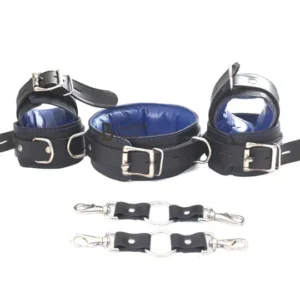
Beginners do not need a fully stocked dungeon to get started. A couple of well-chosen basics, like soft restraints or a beginner-friendly flogger are enough to explore what you enjoy before investing further.
Looking for a place to start? Browse our guide to the best BDSM starter toys for beginner-friendly picks or explore handcrafted leather restraints and impact toys built to last.
Safety is non-negotiable in BDSM. A few practices every beginner should adopt from the start:
If you are new to kink and want to bring it up with a partner, start with an honest conversation rather than jumping straight into a scene. Many couples find that talking openly about BDSM actually strengthens communication and trust in the relationship overall, even before any play begins.
What does BDSM stand for?
BDSM stands for Bondage, Discipline, Sadism and Masochism and often includes Domination and Submission as related practices.
Is BDSM safe?
Yes, when practiced with clear communication, agreed-upon safewords and mutual consent. Risk-aware practices like SSC or RACK help both partners stay safe.
Do I need special equipment to try BDSM?
No. Beginners can start with a few basic items, such as soft restraints, before exploring more advanced gear.
What is the difference between a Dominant and a submissive?
A Dominant (Dom, Top, Master, Mistress) takes control during a scene, while a submissive (sub, bottom, slave) relinquishes control. Someone who moves between both roles is called a Switch.
What is a safeword?
A safeword is a pre-agreed word or phrase that either partner can use to pause or stop a scene immediately, with no questions asked.
Ready to build your kit? Explore handmade leather BDSM gear at LeatherBond.co and shop pieces designed for comfort, durability and style.
Premium BDSM gear and bondage accessories for adults. Explore thoughtfully selected restraints, cuffs, collars and accessories with a focus on quality, privacy and discreet shopping.
If you have any questions or comment for us, fill out our Contact us form with all of your details or send us direct email.