You picked up a pair of cuffs once. Then you saw a spreader bar. Then a hood with a zip over the mouth. Your cart’s a mess and you have no idea what half of it does.
That’s normal. Bondage gear looks intimidating because nobody explains it in plain terms. Most guides either drown you in jargon or skip the practical stuff, like which pieces are actually safe for a first try.
This guide fixes that. I’ll walk through every major category of bondage gear, what it does, who it’s for and what to check before you buy. No fluff. No guesswork.
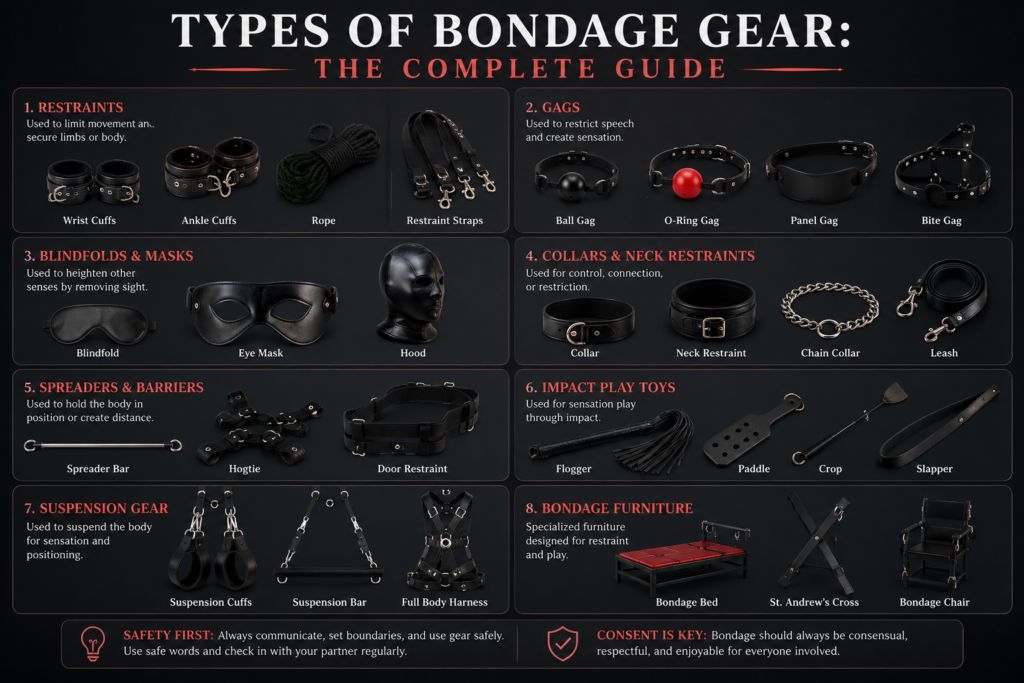
Bondage gear is any equipment designed to restrict movement, sensation, or sound during BDSM play. It includes restraints like cuffs and rope, sensory tools like blindfolds and gags and impact toys like floggers. Materials range from leather to metal to rope, each suited to different comfort levels and experience.
Think of it as a toolkit. Some tools hold your partner still. Some remove a sense, like sight or sound. Others add sensation through pressure or impact. Each category serves a different purpose and most people mix and match once they know what’s out there.
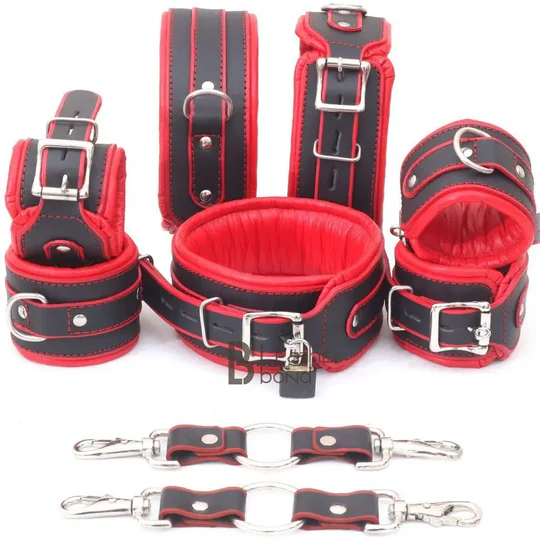
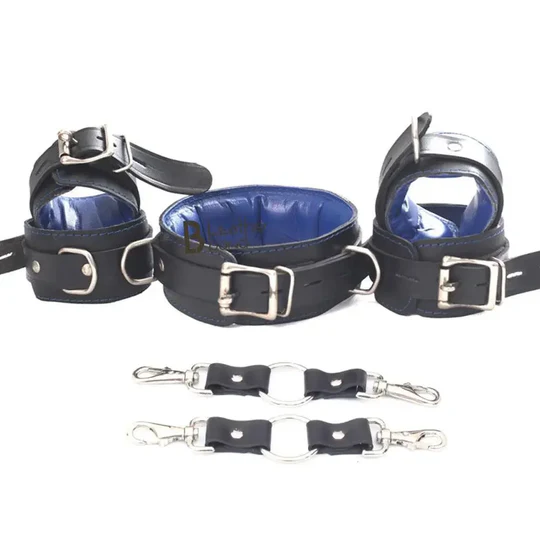
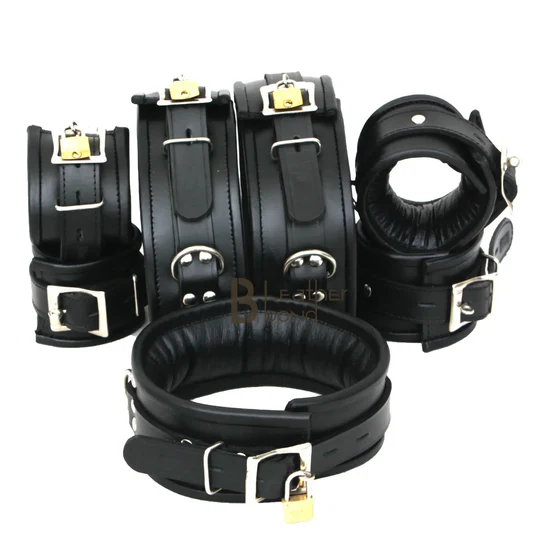
Cuffs are the starting point for almost everyone. They wrap around the wrist or ankle and attach to a bed, a partner, or a fixed point.
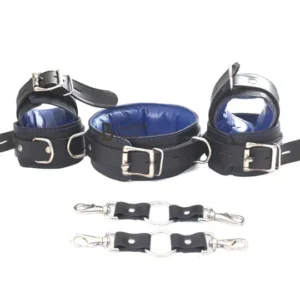
Leather cuffs last longer and feel better against skin than cheap vinyl. Look for padded lining and a metal D-ring for attaching a tether. Buckle closures give you more control than Velcro, which tends to wear out fast.
Rope bondage, often called shibari, is the most flexible option on this list. One length of rope can tie wrists, create harnesses, or suspend a body, depending on skill level.
It takes practice. Start with soft cotton rope, not jute or hemp, since those can bite into skin without proper technique. A beginner rope kit usually includes two to four lengths at 8 meters each
A spreader bar is a rigid pole, usually 18 to 24 inches, with cuffs attached at each end. It holds the wrists or ankles apart at a fixed distance.
Adjustable-length bars work better for couples of different heights or experience levels. Padded cuffs on the bar itself matter more here than on standalone cuffs, since the bar limits movement more completely.
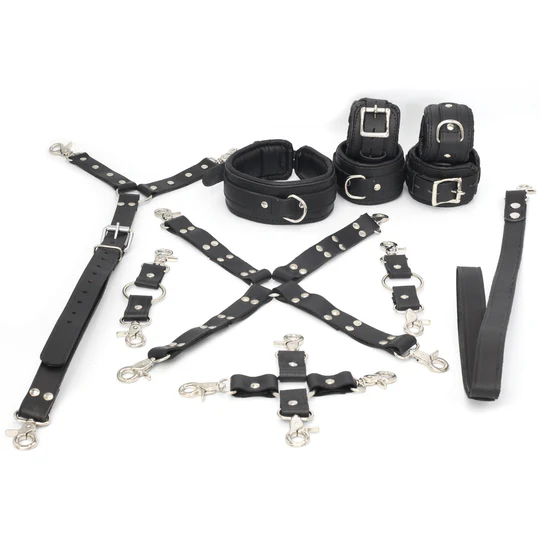
A collar marks a dynamic. It can be simple and decorative, or built with a D-ring for leash attachment during play. Buckle collars offer daily comfort for those who wear them longer term. Locking collars suit scenes where removal shouldn’t happen without a key. Leash length usually runs between 3 and 6 feet for close-contact control.
Removing sight sharpens every other sense. A blindfold is the simplest entry point, a strip of padded fabric or leather that blocks light without restricting breathing.
Hoods go further. Some cover the whole head, some include a mouth opening, some add ear coverage to block sound too. First-timers should stick with a basic blindfold before trying a full hood, since sensory overload can feel overwhelming fast.
Gags reduce or remove speech. Ball gags are the most recognized a rubber or silicone ball on a strap that sits between the teeth.
Ring gags keep the mouth open instead of filling it, which some people find more comfortable for longer scenes. Whatever the style, always agree on a non-verbal safe signal first, since the wearer can’t say “stop.”
These add sensation through controlled contact. A flogger has multiple leather tails, spreading impact across a wider area. A paddle concentrates it into one flat strike. A single-tail whip demands the most skill and carries the highest risk of injury if used incorrectly.
Beginners do best with a flogger or paddle. Both are easier to control and forgiving of a lighter hand while you’re still learning.
| Impact Toy | Sensation | Skill Level | Best For |
|---|---|---|---|
| Flogger | Spread, thuddy | Beginner-friendly | Warm-up, broad sensation |
| Paddle | Sharp, focused | Beginner-friendly | Targeted impact |
| Single-tail whip | Sharp, precise | Advanced | Experienced players only |
| Cane | Sting, precise | Intermediate | Controlled, targeted strikes |
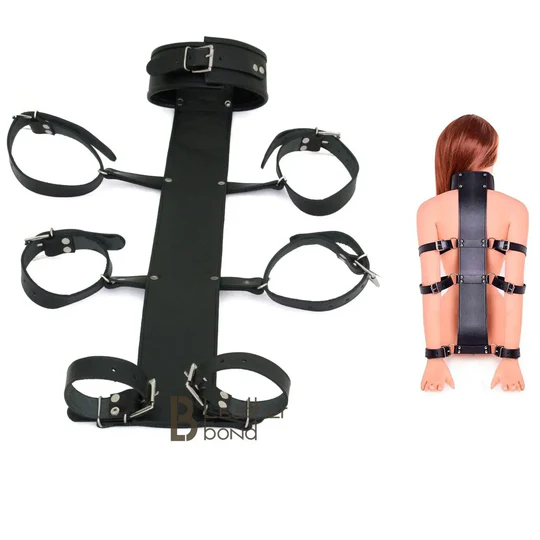
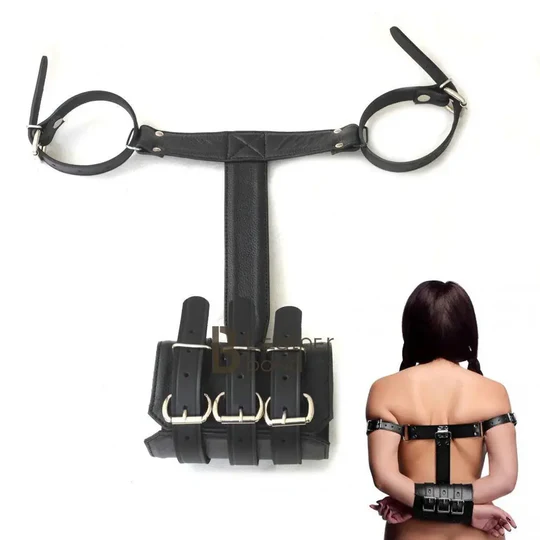
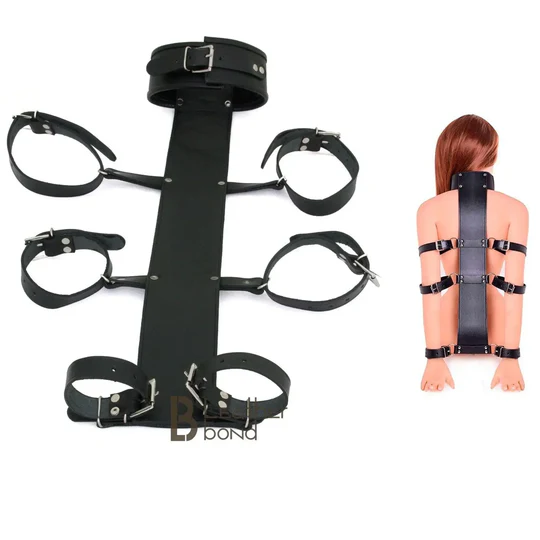
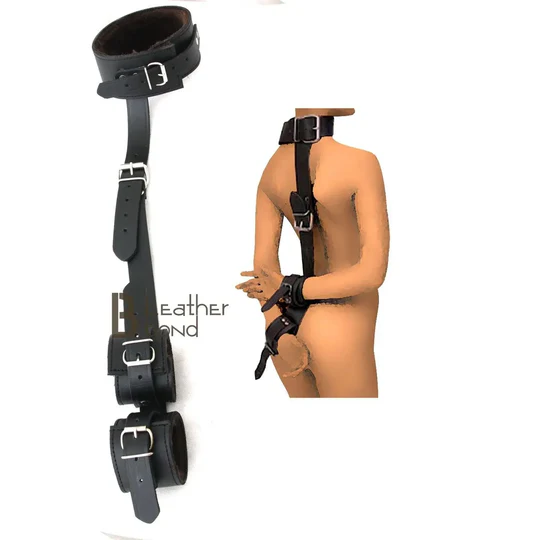
An arm binder pulls both arms behind the back into a single sleeve, usually laced or buckled along the length. It’s a step up from cuffs, since it removes almost all upper-body movement.
Fit matters more here than with any other gear. A binder that’s too tight can restrict circulation, so always check that fingers stay warm and pink during use.
For anyone building a permanent setup, furniture takes gear a step further. Think spanking benches, bondage tables or under-bed restraint systems that anchor cuffs to a bed frame without hardware.
These pieces cost more and take up space, so they suit people who play regularly rather than occasional users. Under-bed restraints are the most practical entry point, since they attach to a mattress you already own.
Leather offers the best mix of comfort and durability for most bondage gear. It molds to the body over time, resists wear and feels better against skin than vinyl or plastic. Metal suits collars and cuffs where rigidity matters, while rope offers the most flexible, low-cost option.
Vinyl and PVC gear cost less upfront but crack and peel within a year of regular use. Leather costs more initially but holds up for years with basic care, like wiping it down and storing it away from direct sunlight.
Metal cuffs and collars look striking and feel heavier, which some people want. They don’t flex, though, so sizing has to be closer to exact than with leather or fabric.
Start small. One set of cuffs and a blindfold covers most first experiences without overwhelming anyone.
Check three things before buying anything: padding, adjustability, and quick-release. Padding protects skin, adjustability means the gear fits more than one body and quick-release means either partner can end a scene fast if something feels wrong
Agree on a safe word before anything starts. “Red” for stop and “yellow” for slow down works for most people and avoids confusion during a scene.
Keep safety shears nearby whenever rope or tight restraints are involved. They cut through material fast if a knot won’t release or circulation becomes an issue.
Check skin color and temperature on any restrained limb every few minutes. Pale or blue skin means the restraint is too tight and needs loosening right away.
What’s the safest bondage gear for beginners?
Padded leather cuffs and a soft blindfold are the safest starting point. Both are adjustable, easy to remove quickly and low-risk compared to gags or full-body restraints.
Do you need a safe word for bondage play?
Yes, always. A safe word gives either person a clear way to pause or stop, especially once gags or hoods remove the ability to speak normally.
What’s the difference between a flogger and a paddle?
A flogger spreads impact across a wider area through multiple leather tails. A paddle concentrates impact into one flat surface, giving a sharper more focused sensation.
Is leather or synthetic bondage gear better?
Leather lasts longer, feels softer over time, and handles regular use better than synthetic materials. Synthetic gear costs less but wears out faster and can irritate sensitive skin.
How tight should bondage restraints be?
Tight enough to limit movement, loose enough to slide two fingers underneath. Check the color and warmth of skin below the restraint every few minutes to confirm circulation stays normal.