How to Care and Maintain Your Leather Bondage Gear for Longevity
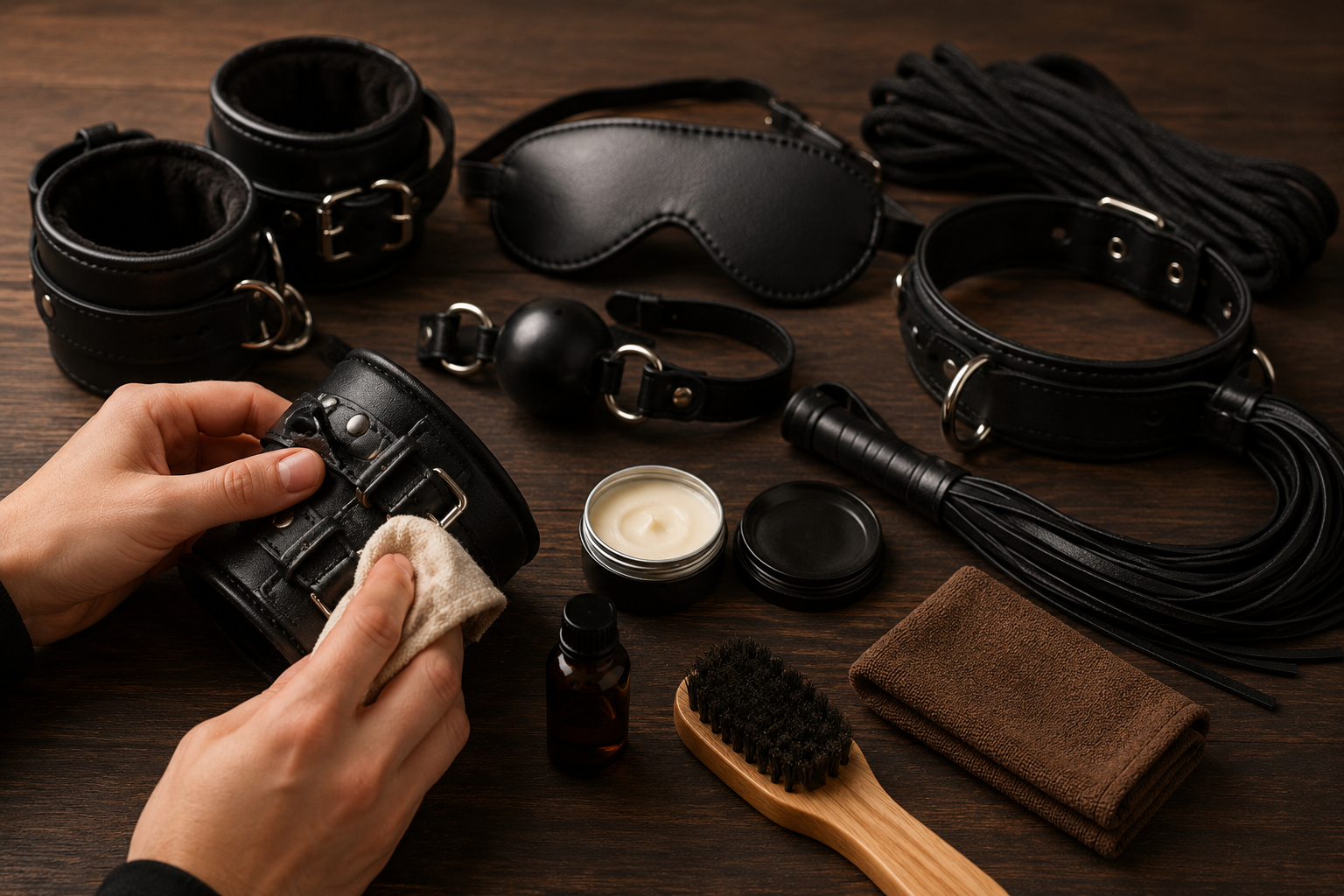
Quality leather bondage gear is an investment. A well-made leather restraint, collar or flogger can last a decade or more but only if it’s looked after properly. Neglect it for…
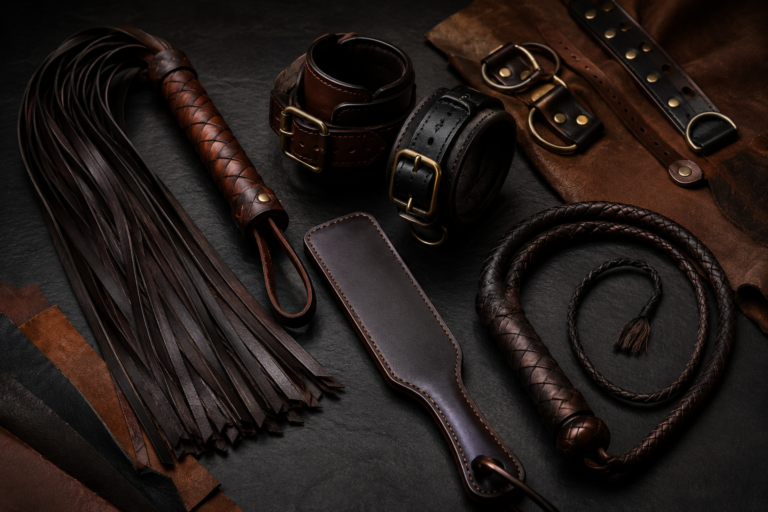
Quality leather bondage gear is an investment. A well-made leather restraint, collar or flogger can last a decade or more but only if it’s looked after properly. Neglect it for a few months and you’ll find cracked surfaces, stiff tails, weakened stitching and worse: gear that harbours bacteria and becomes unsafe to use against skin.
Most people who buy leather BDSM accessories either over-clean them with the wrong products or never clean them at all. Both approaches shorten the life of the gear and create hygiene risks that matter far more than most beginners realise.
This guide covers everything the right cleaning routine, how to condition leather properly, gear-specific care, correct storage, and how to handle the common problems that appear when leather isn’t maintained. Follow these steps and your leather bondage gear will stay supple, hygienic and beautiful for years.
Why Leather Bondage Gear Needs Regular Care
Leather is a natural material. It breathes, absorbs moisture, and reacts to its environment. During a scene, leather comes into contact with body oils, sweat, skin cells and sometimes lubricants. Left on the surface, these degrade the leather from the outside in softening the fibres, promoting bacterial growth and accelerating surface cracking.
At the same time, leather loses its natural oils over time simply through use and exposure to air. When those oils deplete, leather dries out, becomes stiff and eventually cracks. Once leather cracks deeply, it cannot be fully restored it can only be managed.
There’s also a direct safety argument for regular maintenance. Cracked leather creates sharp edges. Weakened stitching fails under tension. A restraint that degrades mid-scene is not just damaged gear it’s a safety risk. Regular care keeps every piece in the condition it needs to be in when it matters.
Understanding Your Leather Types and Why It Matters
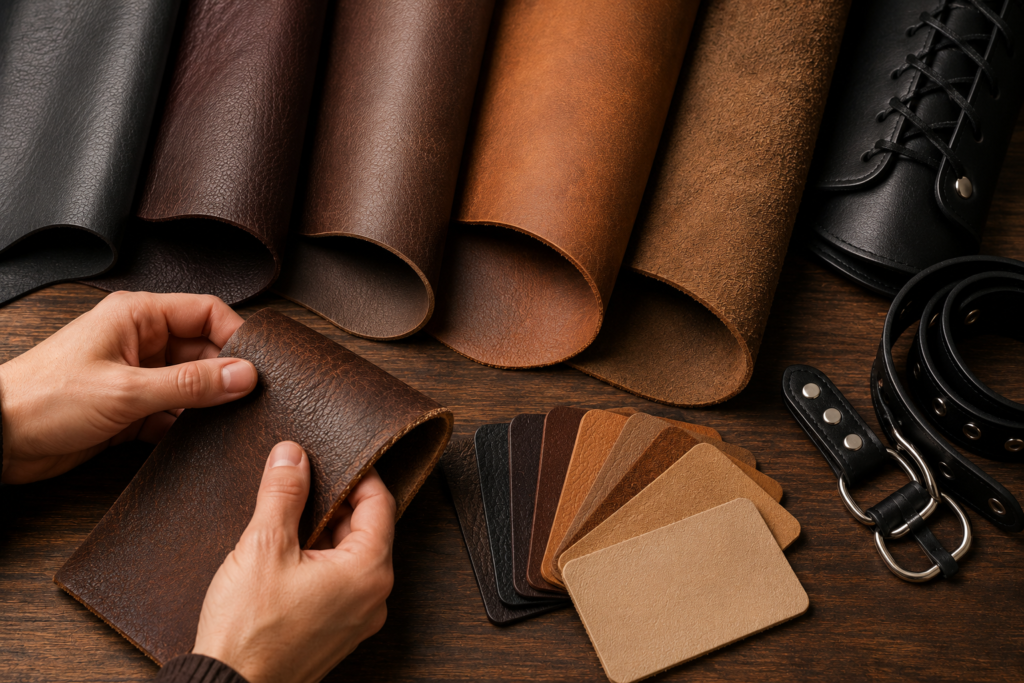
Not all leather responds the same way to cleaning and conditioning. Knowing what type of leather your gear is made from tells you exactly how to treat it.
Full-Grain Leather
Full-grain leather is the highest quality. It retains the complete outer surface of the hide the most durable, densest layer. It develops a patina over time, becoming richer and more characterful with age and use. Full-grain leather responds very well to conditioning and is the most forgiving material to care for.
Most premium BDSM gear including LeatherBond products uses full-grain or high-quality top-grain leather.
Top-Grain Leather
Top-grain leather has had the outermost layer lightly sanded or buffed to remove surface imperfections then usually treated with a surface coating. It’s still high quality and very durable. Care is similar to full-grain, though the surface coating means some conditioners absorb less readily.
Suede and Nubuck
Suede is split leather the inner side of the hide with a soft, napped texture. Nubuck is buffed top-grain leather with a similar surface feel. Both are softer and more absorbent than smooth leather. They require different cleaning tools (a suede brush rather than a cloth) and are more vulnerable to water damage and staining.
Do not use standard leather conditioners on suede or nubuck. Use products specifically formulated for these materials.
Bonded Leather What to Watch Out For
Bonded leather is not real leather. It’s a composite material made from leather scraps and fibres bonded together with polyurethane and pressed onto a backing. It’s used in budget gear to imitate the look of leather at lower cost.
Bonded leather peels, cracks and delaminates within months of regular use. It cannot be conditioned back to health once degraded. Standard leather care products have minimal effect on it.
If your gear is delaminating in layers rather than cracking, it is almost certainly bonded leather. The only solution is replacement.
The Essential Leather Care Toolkit
Before you start any cleaning or conditioning routine make sure you have the right products. Using the wrong cleaner is one of the most common ways people accidentally damage their gear.
What you need:
- Soft lint-free cloths for cleaning and applying conditioner. Microfibre cloths work well.
- Leather cleaner a pH-balanced, leather-safe cleaner. Saddle soap is a traditional option but can be too alkaline for some finished leathers if used too frequently. A purpose-made leather cleaner is safer for regular use.
- Leather conditioner beeswax-based or lanolin-based conditioners work best for bondage gear. Avoid petroleum-based products they can soften leather excessively over time.
- Suede brush a soft bristle brush specifically for suede and nubuck items. Never use a standard cloth on suede.
- Suede eraser for spot-cleaning marks on suede without wetting the surface.
- Leather protector spray an optional but useful addition, especially for gear used in environments with moisture.
What to avoid:
- Baby wipes or household wet wipes contain chemicals that strip leather’s natural oils
- Olive oil or coconut oil darken leather permanently and can turn rancid in the material
- Bleach or alcohol-based cleaners strip colour and dry out leather rapidly
- Washing machine destroys the structure of leather completely
- Hairdryer for drying heat dries leather too fast and causes cracking
Step-by-Step Cleaning Guide for Leather Bondage Gear
After Every Use
This should take no more than two to three minutes and should become automatic.
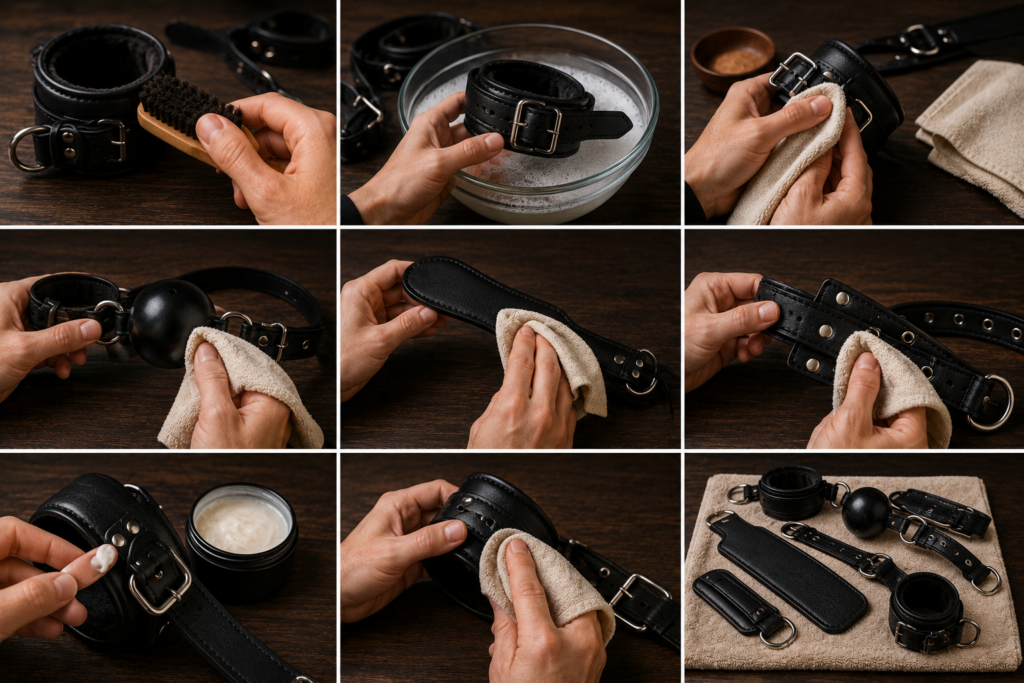
- Wipe down all leather surfaces with a clean, slightly damp lint-free cloth. Remove any visible body oils, sweat or residue from the surface.
- Pay particular attention to the inner surfaces of cuffs and collars these are in direct skin contact and accumulate the most oils and bacteria.
- Wipe the hardware buckles, D-rings, and snaps with a dry cloth to prevent tarnishing and corrosion.
- Allow the item to air dry completely at room temperature before storing. Never store leather while damp.
Deep Clean (Monthly or As Needed)
A full clean is needed roughly once a month for gear used regularly or whenever you notice a build-up of residue, a stiff texture or an odour developing.
- Apply a small amount of leather cleaner to a soft cloth never directly onto the leather.
- Work the cleaner into the surface in small circular motions, section by section.
- Pay extra attention to seams, buckle attachment points, and any area with visible residue.
- Wipe away the cleaner with a clean damp cloth.
- Allow to dry fully at room temperature away from heat sources and direct sunlight.
- Once dry, follow immediately with conditioning (see below).
How to Condition Leather Bondage Gear
Conditioning replaces the natural oils that leather loses through use, cleaning and exposure to air. It keeps leather supple, prevents cracking, and extends the life of every piece significantly.
How often: Every 2–3 months for regularly used gear. Every 3–4 months for items used occasionally. Always condition after a deep clean.
Process:
- Make sure the leather is completely clean and dry before conditioning.
- Apply a small amount of conditioner to a soft cloth. A little goes a long way start with less than you think you need.
- Work the conditioner into the leather in smooth, circular motions. Cover the entire surface evenly.
- Allow to absorb for 10–15 minutes.
- Buff away any excess with a clean dry cloth. Excess conditioner left on the surface attracts dust and can transfer onto skin.
- Allow to rest for an hour before use or storage.
A note on suede: Do not use standard leather conditioner on suede or nubuck. Use a suede-specific protector spray instead, applied lightly and allowed to dry fully.
Cleaning Specific Gear Types
Leather Restraints and Cuffs
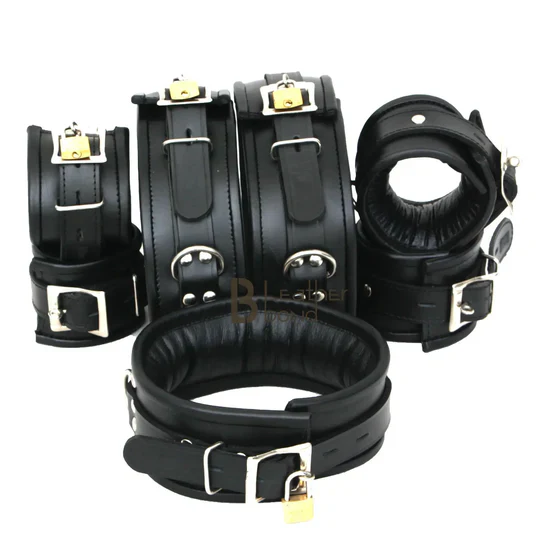
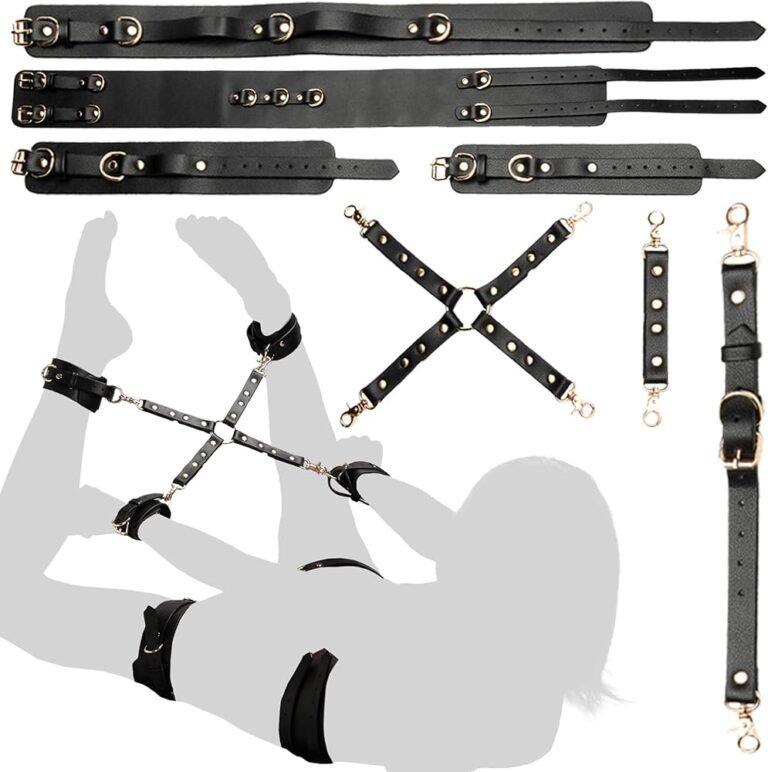
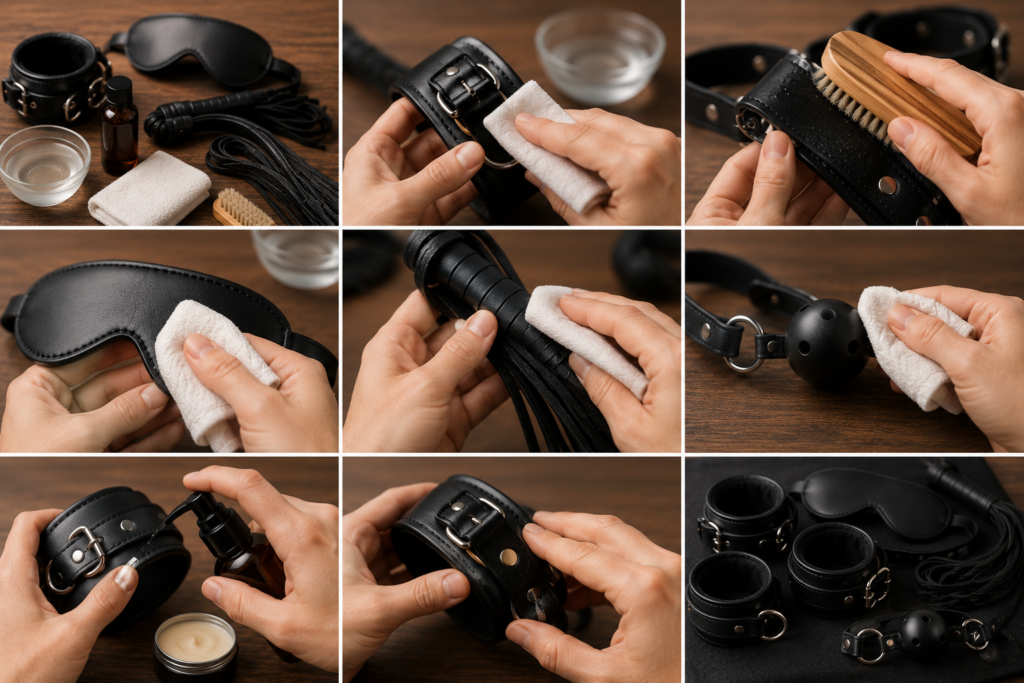
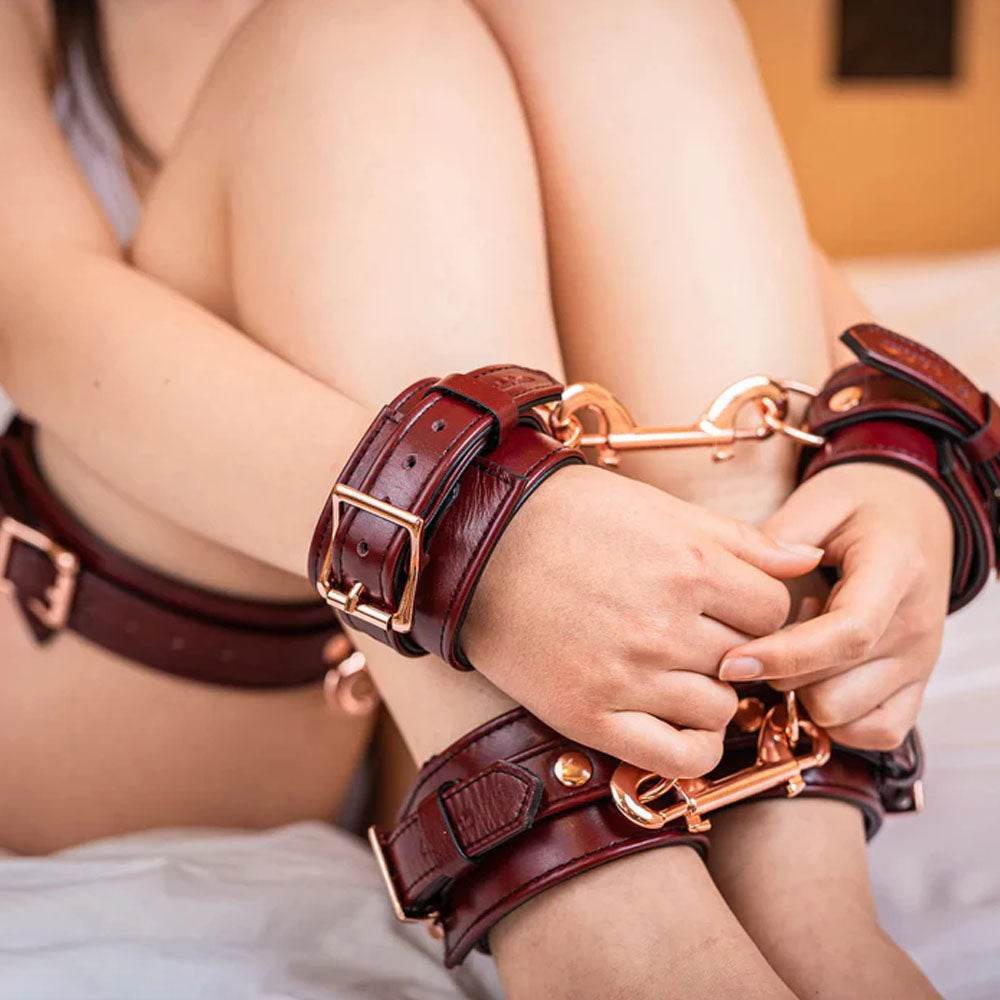
Cuffs are in direct, extended skin contact they accumulate the most oils and need the most frequent cleaning. Wipe the inner padding after every single use without exception. The outer surface can be cleaned less frequently but the inner lining should never be left unwashed between uses.
Check the stitching at the D-ring attachment point regularly. This is the highest-stress area of any cuff. Loose stitching here is a safety issue repair or replace immediately.
Collars
The inner lining of a collar sits against the neck a sensitive area. Clean the inner surface after every use with a damp cloth. For lined collars with fabric or velvet interiors, a gentle spot clean with mild soap is appropriate. Allow fully dry before wearing again.
Check the buckle or closure mechanism regularly for any signs of weakening. A collar closure that fails mid-scene is both a safety risk and a jarring interruption.
Floggers and Paddles
For floggers, clean each tail individually after use run a damp cloth down the length of each tail, removing oils and residue. Allow the tails to hang straight while drying to prevent them setting in a curled position.
For paddles, clean both the striking surface and the handle. The striking surface takes the most contact and accumulates the most residue. Condition the handle regularly dry handles become slippery.
Harnesses
Harnesses have the most surface area of any leather bondage piece and come into extended contact with the entire torso. Clean all straps and the hardware connections after every use. Hardware especially metal rings and buckles should be dried thoroughly to prevent rust or tarnishing.
For harnesses with multiple adjustment points, check every buckle and every length of strap during cleaning. Inspect each stress point for signs of stretching or wear.
Suede Items
Suede requires a completely different approach from smooth leather.
- Never wet suede directly water causes staining and can permanently alter the texture.
- Use a suede brush in gentle, uni-directional strokes to remove surface dirt and restore the nap.
- For marks or stains, use a suede eraser gentle rubbing action lifts most surface marks without water.
- If suede becomes wet accidentally, blot (do not rub) with a clean cloth and allow to dry naturally at room temperature. Brush the nap back into place once completely dry.
- Apply a suede protector spray every few months to maintain resistance to moisture and staining.
How to Store Leather Bondage Gear Correctly
Correct storage is as important as cleaning and conditioning. Leather stored incorrectly degrades even when perfectly cleaned.
Temperature and humidity: Store in a cool, dry environment. Ideal humidity is 40–55%. Too dry and leather desiccates. Too humid and mould develops. Avoid basements, lofts or anywhere with significant temperature fluctuation.
Light: Keep leather away from direct sunlight and artificial UV light. UV causes fading, drying and surface degradation faster than almost any other environmental factor.
Air circulation: Leather needs some airflow. Storing gear in sealed plastic bags traps moisture and promotes mould growth. Use breathable storage bags cotton pouches or simply a dedicated drawer or box with some ventilation.
Shape: Store restraints and cuffs lying flat or hanging. Store floggers hanging from the handle so the tails hang straight. Storing tails folded or coiled causes them to set in a curve over time. Store collars lying flat or on a rounded form not folded.
Separation: Keep leather away from latex and rubber items. These materials cause chemical degradation in leather on prolonged contact. Store them separately.
Common Leather Care Mistakes to Avoid
Over-conditioning. More conditioner does not mean better protection. Over-conditioning softens leather excessively, makes surfaces greasy and can actually weaken the fibres over time. Apply lightly and buff away excess.
Using household products. Olive oil, coconut oil, Vaseline and baby wipes all damage leather over time. They may seem to help in the short term but cause long-term degradation.
Storing before fully dry. Damp leather stored in an enclosed space develops mould within days. Always air dry completely before storing.
Ignoring hardware. Metal buckles, D-rings and snaps rust and corrode if left with moisture on them. Dry all hardware thoroughly after cleaning.
Skipping cleaning because gear “looks clean.” Invisible body oils and bacteria accumulate on leather surfaces regardless of visible appearance. Regular cleaning is hygiene-driven, not just aesthetic.
Folding flogger tails for storage. Tails stored folded develop permanent creases that affect how they move and strike. Always hang floggers from the handle.
How to Handle Mould, Mildew and Odour
Mould and Mildew
Mould on leather appears as white, green, or grey fuzzy patches usually caused by storage in a damp environment. Catch it early and it can be addressed. Left too long, mould penetrates the leather fibres and causes irreversible damage.
To treat mould:
- Take the item outside or to a well-ventilated area.
- Brush off surface mould gently with a soft dry brush do not rub it into the leather.
- Wipe the area with a cloth lightly dampened with a solution of equal parts water and white vinegar. Vinegar kills mould spores without harming most leather.
- Allow to dry fully in fresh air not in direct sunlight.
- Once completely dry, apply a leather conditioner to the affected area.
- Review your storage conditions to prevent recurrence.
Persistent Odour
New leather has a natural, pleasant smell. Persistent unpleasant odour sour, musty or chemical usually indicates bacteria build-up or poor storage conditions.
- Deep clean the item thoroughly with a leather cleaner.
- Allow to air out in a well-ventilated area for 24–48 hours.
- Place a small pouch of activated charcoal near (not directly on) the leather during storage it absorbs odours effectively.
- Baking soda lightly applied to the inside of cuffs or collars overnight and then brushed away also helps neutralise odour without damaging leather.
When to Replace Your Leather Gear
Even well-maintained leather has a lifespan. Know the signs that indicate replacement is necessary.
Replace immediately if you notice:
- Deep cracks that penetrate through the surface layer
- Delamination layers of the material separating (sign of bonded leather breakdown)
- Structural failure at any stitched point particularly at D-ring attachments or handle connections
- Any sharp edges on striking surfaces
- Hardware that no longer fastens securely or shows significant corrosion
Monitor closely and consider replacing:
- Surface crazing a network of fine cracks across the surface
- Tails that have become stiff and brittle despite conditioning
- Handles that have become slippery or have lost structural integrity
There is no safety benefit in trying to extend the life of compromised gear. Gear that fails under use a restraint buckle that gives, a flogger handle that cracks creates risk. Replace it.
Leather Care Product Comparison Table
| Product Type | Best For | Use Frequency | Suitable for Suede? | Notes |
|---|---|---|---|---|
| pH-balanced leather cleaner | All smooth leather | After deep use / monthly | ✗ No | Safer than saddle soap for regular use |
| Saddle soap | Heavy-duty clean | Occasional only | ✗ No | Can dry out leather if used too often |
| Beeswax conditioner | All smooth leather | Every 2–3 months | ✗ No | Excellent long-term protection |
| Lanolin conditioner | Soft, supple leather | Every 2–3 months | ✗ No | Great for lined or soft items |
| Suede brush | Suede / nubuck | After every use | ✓ Only | Restores nap, removes surface dirt |
| Suede protector spray | Suede / nubuck | Every 3–4 months | ✓ Only | Adds moisture and stain resistance |
| White vinegar solution | Mould treatment | As needed | With caution | Dilute 50/50 with water |
| Activated charcoal | Odour absorption | Ongoing in storage | ✓ Yes | Do not place directly on leather |
FAQ
How often should I clean leather bondage gear?
Wipe down with a damp cloth after every single use this takes two minutes and prevents build-up. Do a full deep clean with leather cleaner once a month for regularly used gear. Condition every 2–3 months. Consistent light maintenance is far more effective than occasional intensive treatment.
Can I use coconut oil or olive oil on my leather bondage gear?
No. Both oils darken leather permanently and can turn rancid inside the leather fibres over time producing an unpleasant smell that is extremely difficult to remove. Use only purpose-made leather conditioners with beeswax or lanolin as the active ingredient.
My leather cuffs smell after use. How do I remove the odour?
Clean thoroughly with a leather cleaner, allow to air out in a ventilated space for 24–48 hours, and place activated charcoal nearby during storage. For the inner lining specifically a very light application of baking soda left overnight and then brushed away can neutralise persistent odour effectively.
Is it safe to use leather gear if it has small surface cracks?
Fine surface crazing a network of tiny cracks in the surface finish does not necessarily make gear unsafe if the underlying leather is still sound and all structural points (stitching, buckles, hardware) are intact. Deep cracks that go through the leather or any cracking near high-stress attachment points do indicate the gear should be replaced.
How should I store leather restraints to keep them in the best condition?
Store in a cool, dry area with moderate ventilation. Keep away from direct sunlight, heat sources and humidity. Do not store in sealed plastic bags. Keep separated from rubber and latex items. Store flat or hanging not folded or compressed.
What is the best leather conditioner for BDSM gear?
Beeswax-based conditioners such as Leather Honey, Fiebings Leather Conditioner or Leather Master Protection Cream are widely trusted by leather care professionals. Avoid petroleum-based products and anything not specifically formulated for genuine leather. At LeatherBond, we recommend conditioning all our products with a beeswax or lanolin formula every 2–3 months.
Final Word
Leather bondage gear is built to last but only when it’s looked after. A two-minute wipe-down after every use, a monthly deep clean, conditioning every few months and proper storage will keep even hard-working pieces in excellent condition for years.
The effort involved is minimal. The difference it makes is enormous. Well-maintained leather stays supple, stays hygienic and stays safe. Neglected leather cracks, harbours bacteria and eventually fails sometimes at the worst possible moment.
At LeatherBond, every piece we sell is made from quality leather designed to age well with proper care. Browse our full range of leather restraints, collars, and bondage accessories and use this guide to keep them in the condition they deserve.