Learning how to use a flogger for the first time can feel overwhelming, especially with so much conflicting advice online. This guide breaks it down into simple, practical steps, from choosing the right grip to mastering your first strokes. Whether you are picking up a flogger for the first time or refining your technique, you will find clear, beginner-friendly guidance covering safety, positioning, and proper form. By the end, you will feel confident and ready to use a flogger the right way.
Most beginners struggle with the same issue, they buy a flogger with no idea how to use it safely or effectively. Poor technique can lead to discomfort, miscommunication, or a session that falls flat. This guide solves that problem by walking you through exactly how to use a flogger from grip and stroke technique to reading your partner’s cues in real time. You will leave with a clear, confident understanding of proper form and safety.
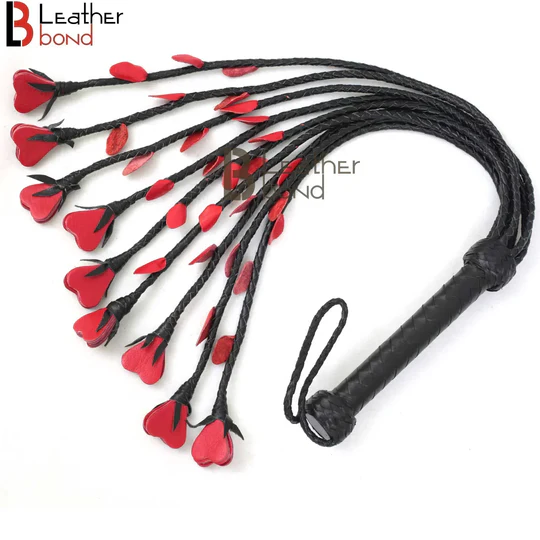
A flogger is a BDSM impact toy made up of a handle and a group of soft tails called falls, that fan out and land across the skin when swung. To define a flogger in the simplest terms, it is a multi-tailed impact tool built to spread sensation across a wide area rather than concentrate it in one spot. That is the flogger definition worth remembering and it lines up with the meaning of flogger most kink glossaries settle on. The flogger meaning changes slightly depending on who is asked but the core idea a handle plus a set of falls used to deliver rhythmic strikes, stays consistent everywhere.The tails are usually made from leather, suede or rubber and the handle can be wrapped leather, turned wood or metal. Every part of that construction changes how the flogger feels on impact, which is why understanding the anatomy matters before buying one.
Flogging sits inside a broader category called impact play which covers any BDSM activity involving repeated, controlled strikes to the body. To define impact play in a sentence, it is any activity that uses repeated physical strikes as its central sensation, and that is the impact play meaning most beginners are actually looking for. Paddles, canes, floggers and even open-hand spanking all count as impact play tools, sometimes labeled impact play toys in shops and floggers are one of the most approachable options within that category. Some dictionary sites and slang glossaries summarize the impact play meaning in blunter more clinical terms but the practical definition here is the one that matters for anyone new to the practice.
Flogging itself is often described as a gentle, entry-level flogging kink within the wider impact play kink community, largely because the wide surface area of the falls spreads out the force rather than concentrating it the way a cane or single-tail whip does. That spread-out force is what produces the sensation many describe as thuddy rather than sharp and it is part of why floggers are a common first purchase.
Yes. BDSM flogging, sometimes searched as flogging BDSM, bdsm flog, or flog bdsm, is one of the most well-known forms of impact play. A flogger is considered a flogging tool in the same category as paddles and canes, and someone who has been flogged in a BDSM context would generally describe the experience as controlled, consensual, and negotiated ahead of time rather than random or unplanned.
Sometimes. Flogging in sex, also searched as flogging sex or sexual flogging, refers to incorporating flogging into a sexual scene rather than keeping it purely as sensation play. This might mean impact play sex or impact play sexual dynamics where flogging builds arousal or marks a transition between roles, and whether that fits is a personal choice that belongs in the consent conversation covered later in this guide. Different people search for this idea as flog sex, flogger sex, or sex flogger, but the underlying question is the same: does flogging stay purely physical, or does it become part of a broader sexual dynamic? Both answers are valid, as long as they are discussed in advance.
There is a real variety of floggers to choose from, and this list of floggers covers the different types most beginners will come across while shopping.
| Flogger Type | Feel | Best For |
|---|---|---|
| Leather flogger | Warm, substantial, thuddy or stingy depending on cut | Most beginners and general use |
| Suede flogger | Soft, gentle, minimal sting | First-timers and sensation play |
| Rubber flogger | Firm, snappy, more sting | Experienced users wanting sharper sensation |
| Finger flogger | Light, playful, low intensity | Warm-ups and teasing |
| Mini flogger | Compact, easy to control | Travel, beginners, smaller hands |
| Heavy flogger | Substantial weight, deep impact | Users progressing past beginner intensity |
| Weighted flogger | Deliberately weighted falls, deep pressure | Users who prefer pressure over sting |
| Thuddy flogger | Wide, soft falls, minimal sting | Users who want sensation without sharpness |
| Exotic or custom leather flogger | Varies by hide (elk, deer, bison) | Enthusiasts wanting a unique feel or personalized piece |
A genuine leather flogger tends to be the most versatile starting point because quality flogger leather, whether cowhide, deerskin or elk, softens with use and can produce both a thuddy and a stingy sensation depending on how it is swung. A leather flogger whip is another name sometimes used for a flogger with longer, thinner falls that behave more like a single tail blurring the line between a flogger and a whip. Suede sits at the gentler end of the spectrum while rubber floggers deliver a sharper, more attention-grabbing snap. A heavy flogger or weighted flogger trades sting for deep, thuddy pressure which some users find more relaxing than stinging impact. Cushioned or padded handles add comfort during longer scenes and some makers offer custom pieces built around a specific hide, length, or fall count for a truly personalized tool.
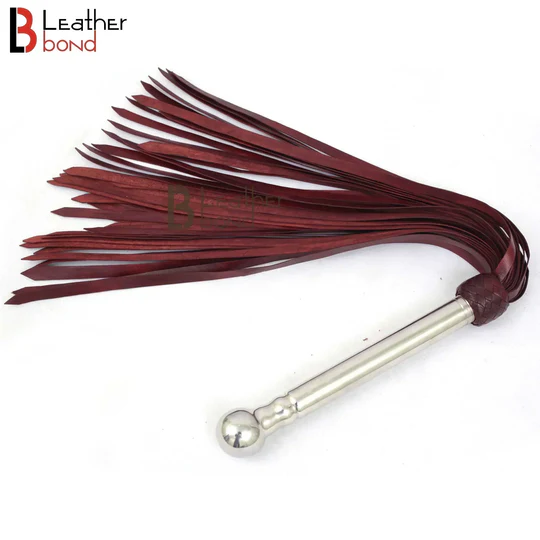
Flogger handles are just as important as the falls themselves. Wrapped leather handles offer grip and warmth turned wood handles are firm and traditional and metal handles add weight and durability but can feel cold or slippery without a wrist strap. A comfortable handle makes a real difference over a long session, since grip fatigue changes technique far more than most beginners expect.
Floggers and paddles are both common starter tools but they behave very differently. A paddle delivers one concentrated impact per strike across a flat surface, while a flogger spreads that same energy across many falls at once which is part of why floggers generally feel less sharp than paddles at a similar intensity. Assorted floggers and paddles are often sold together in beginner kits, which makes it easy to compare the two sensations side by side.
Beginners are usually better served by a flogger with a moderate number of falls (around twenty to thirty) made from soft to medium leather or suede and light enough to control with one hand. A flogger that is too heavy is harder to aim accurately and inaccurate strikes are one of the most common sources of discomfort for newcomers. It helps to physically handle a few different types of floggers, since weight and grip feel very different in person than in a product photo.
Quality matters more than price here. A well-stitched leather flogger with evenly cut falls will last for years and feel more predictable in use than a cheaply made one, where uneven falls can cause a few tails to strike harder than the rest.
Every flogging session should begin with a conversation not the flogger itself. That conversation covers what each person wants to try, which areas of the body are off-limits, what a safe word will be and how intensity should be checked in on throughout. Informed, verbal consent is the foundation of the whole practice and negotiating limits ahead of time removes the guesswork once the scene is underway. Non-verbal cues also matter here, since sounds, breathing and body language often communicate more in the moment than words do.
A comfortable, private space with good lighting, nothing sharp nearby and enough room to swing a flogger without hitting furniture makes a noticeable difference. Some people like to set the mood with music or dim lighting, others prefer a clinical, focused atmosphere. There is no single right answer only what works for the people involved.
Skin responds better to impact once it has been warmed up. Light hand-warming, a soft massage or a few gentle passes with the flogger itself before increasing intensity all help prepare the area and make the first real strikes feel far more comfortable.
Hold the handle loosely enough to let the wrist do most of the work, rather than gripping tightly and swinging from the shoulder. Standing at a slight angle to the target, with feet shoulder-width apart, gives better control and balance than standing square-on.
The most common beginner stroke is a simple over-the-shoulder swing: bring the flogger back, let the falls trail behind, and bring the wrist forward so the tails land together across the target area. The motion should come from the wrist and forearm rather than a full-arm swing, which is harder to control and easier to misjudge.
Standing roughly arm’s length plus the length of the flogger away from the target is a reasonable starting point. The falls should land flat against the skin rather than wrapping around it, which usually means adjusting the angle of the swing slightly until the sensation feels even across the tails.
Once the basic stroke feels controlled, a steady rhythm can be built by alternating sides or building a simple pattern. Reading a partner’s response, whether through sound, breathing, or body language, should guide whether to keep the same intensity, ease off, or build further.
Intensity can be increased gradually by using more wrist snap, moving slightly closer, or switching to a heavier flogger, rather than jumping straight to a hard strike. Slow, deliberate increases give the receiver time to adjust and give the person holding the flogger a much better sense of how each change lands.
Florentine flogging refers to using two floggers at once, one in each hand, moving in alternating or circular patterns. It looks impressive but takes real practice to avoid tangling the falls or losing rhythm, so it is worth mastering single-flogger technique first. Other advanced practices, such as fire flogging, involve significant additional risk and specialized training and are not something to attempt without hands-on instruction from an experienced practitioner.
Whether flogging hurts and how much, depends entirely on the flogger, the technique and the intensity chosen. This overlaps with what is sometimes called pain play, though many floggers are built specifically to minimize sharp pain in favor of deep, thuddy sensation instead. A soft suede flogger used gently produces a warm, almost massage-like sensation, while a heavier leather or rubber flogger swung with force delivers a sharp sting or deep thud. Most beginners are surprised by how customizable the sensation actually is once they understand how weight, material and technique interact. Bruising can occur with harder impact, which is one more reason to build up gradually rather than starting at full intensity.
A common myth is that flogging is inherently painful or extreme. In reality, sensation can be tuned from barely-there to intense and many people use flogging purely for the rhythmic, meditative feeling it produces. Using floggers safely comes down to a few repeatable habits: common beginner mistakes include gripping the handle too tightly, swinging from the shoulder instead of the wrist, standing too close and skipping the warm-up phase. Checking in verbally throughout a session, rather than assuming everything is fine, is one of the simplest tips for safe flogging and avoids most of the discomfort that beginners run into.
Aftercare is the period immediately following a scene, and it matters just as much as the technique itself. This can mean physical comfort, such as a blanket, water, or tending to any marks, as well as emotional check-ins to make sure both people feel grounded and secure. Flogging, like other forms of impact play, can bring up unexpected emotions even in a positive scene, so building in time afterward to reconnect is not optional, it is part of the practice.
Leather floggers last longer with basic upkeep. Wiping the falls down after use, conditioning the leather every few months, and keeping the flogger away from direct heat or damp storage all extend its life significantly. Proper flogger storage means hanging the piece by the handle, rather than folding or coiling the falls tightly, which helps it keep its shape between uses.
Local kink communities, workshops, and munches are a good next step for anyone who wants hands-on instruction rather than reading alone. Many cities have BDSM-friendly education spaces or online communities where beginners can ask questions in a judgment-free setting before trying new techniques.
A flogger is a multi-tailed BDSM impact tool made of a handle and a group of falls, used to deliver rhythmic strikes across the skin. Someone asking what is a flogger, whats a flogger, or what’s a flogger used for is really asking about this same handle-and-falls design, whether that curiosity is spelled floger, flogger, or floggers.
Flogging is the act of using a flogger to deliver rhythmic strikes to the body. Someone asking what is flogging, or more specifically what is a flogging, is usually picturing a scene where one partner is being flogged while the other holds the flogger. What is being flogged and what is flogged in practice comes down to consenting adults exploring sensation together, and the fuller question of what is flogging someone actually like depends entirely on the tool, the technique, and the people involved.
Impact play is the BDSM category that flogging belongs to, covering any activity built around repeated physical strikes. Whats impact play boils down to, in plain terms, is controlled, consensual impact for sensation, pleasure, or both, whether it happens with a flogger, paddle, or cane. What is impact play in BDSM specifically, sometimes written as impact play bdsm or impact bdsm, refers to this same category used within a broader kink dynamic.
A flogger is used to deliver rhythmic, varied sensation to the body as part of BDSM impact play, ranging from gentle warm-up strokes to more intense sensation depending on the material and technique.
A flogger has multiple soft falls that spread impact across a wider area, producing a thuddier sensation, while a whip typically has a single tail that concentrates force into a sharper, more precise strike.
It depends entirely on the flogger and the technique. A soft flogger used gently can feel closer to a massage, while a heavier one swung with force will sting or thud noticeably, and does flogging hurt is really a question of intensity choices rather than a fixed answer.
Practicing swings against a pillow or a soft target builds accuracy and control before ever using a flogger on a partner, which is one of the best ways to build confidence early on.
Anyone shopping for a first flogger will want leather that softens naturally with use and holds its shape over time. Explore handmade leather floggers and other impact essentials at LeatherBond.co.