If you have started exploring restraint play, chances are you have come across the term “arm binder” while browsing gear online. It is one of the most iconic pieces of bondage equipment, instantly recognizable and widely used, but also one of the most misunderstood by beginners.
An arm binder is a restraint device that binds a person’s arms together, typically behind the back using a sleeve or a system of adjustable straps. The goal is to immobilize the arms so the wearer cannot use their hands or reach forward, which shifts the physical and psychological dynamic of a scene toward vulnerability and control.
Most arm binders fall into two broad categories:
Sleeve-style (monoglove) binders encase both arms together in a single tapered sheath, usually made from leather or latex, closed with a zipper, laces, or both. This is the classic look most people picture when they hear “arm binder.”
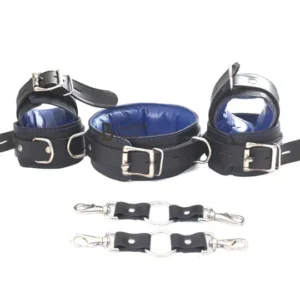
Strap-style binders use individual sleeves or cuffs for each arm connected by adjustable straps and buckles, sometimes with locks. These tend to be easier to fit and more forgiving for people with limited shoulder flexibility.
Both styles are usually paired with a harness, a set of straps that loop over the shoulders and under the arms, to keep the binder from sliding down during play.
The mechanics are simple: the device pulls the arms together and back, which naturally draws the shoulders into a retracted position. This limits the wearer’s ability to defend, reach, or interact with their surroundings using their hands. That restriction is the entire point. It removes a layer of physical autonomy and replaces it with total reliance on the partner controlling the scene.
Because the position pulls on the shoulders, elbows, and wrists, fit and flexibility matter more with an arm binder than with almost any other restraint. A binder that is too tight or held for too long can strain the rotator cuffs or restrict circulation, so this is not a piece of gear to use without preparation.
| Material | Feel | Durability | Maintenance | Best For |
|---|---|---|---|---|
| Genuine Leather | Firm, structured, molds to the body over time | Very high, lasts years with care | Needs conditioning and dry storage | Long-term use, suspension play, collectors |
| Latex | Skin-tight, glossy, very restrictive feel | Moderate, prone to tearing if mishandled | Requires powder or silicone care, avoid oils | Aesthetic-focused scenes, experienced users |
| PU (Faux) Leather | Similar look to leather, lighter and cheaper | Lower, cracks or peels over time | Wipe clean, avoid heat | Beginners testing the experience before investing |
If you are buying your first arm binder, PU leather is a reasonable low-cost entry point. If you already know you enjoy restraint play and want something that lasts, genuine leather is the better long-term investment, both for durability and for how it feels against the skin.
Safety is not optional with this piece of gear. Follow these steps every time.
1. Talk it through first. Agree on a safeword or a non-verbal signal, since an arm binder can make it hard to tap out or gesture. Many people use a verbal safeword or a dropped object as the signal.
2. Check flexibility before the scene. Not everyone can comfortably bring their elbows close together behind their back. Test the range of motion without the binder first.
3. Never leave someone unattended. A person wearing an arm binder cannot free themselves. Stay present for the entire duration.
4. Watch circulation and time limits. Check hands and fingers for color and temperature every few minutes. Numbness, tingling, or discoloration means it is time to release the binder.
5. Keep release tools within reach. If the binder uses locks, keep the key or a backup cutting tool nearby at all times.
6. Plan aftercare. Gently massage the shoulders and arms after removal to restore circulation and ease any tension from the position.
A few questions to ask before buying:
Are you new to restraint play? Start with a strap-style binder with adjustable buckles rather than a full sleeve monoglove. It is easier to fit, easier to adjust mid-scene, and less demanding on shoulder flexibility.
Do you want locking hardware? Locks add a psychological layer of “no easy escape,” but they also mean you must have the key accessible at all times. If this is your first piece of gear, buckles without locks are a safer starting point.
What is your budget? Entry-level PU leather binders are widely available at a lower price point. Genuine leather runs higher but holds up far better over repeated use.
Do you plan to use it for suspension play? If so, look specifically for binders reinforced with multiple D-rings and rated for suspension. Not all arm binders are built to bear body weight, and using one that is not rated for it is a serious safety risk.
These two are often confused. A straitjacket covers the entire torso and crosses the arms in front of the body, historically designed for institutional restraint. An arm binder is a more focused device, isolating just the arms behind the back, and is purpose-built for BDSM play rather than adapted from another use. Straitjackets tend to offer a fuller-body restrained aesthetic, while arm binders are more about the specific sensation and posture of the arms being bound.
Yes, with the right precautions. Choose an adjustable strap-style binder, keep sessions short, and always have a spotter present who is not restrained.
There is no fixed rule but most experienced users limit continuous wear to short intervals, checking circulation every few minutes and releasing well before numbness sets in.
No. Because the wearer cannot free themselves and cannot fully monitor their own circulation, an arm binder should always be used with a partner present.
Measure bicep and forearm circumference before ordering. Most adjustable strap-style binders accommodate a range of sizes, while sleeve-style monogloves are less forgiving and depend more on precise sizing.
Most are unisex and sized by arm circumference and length rather than gender, so fit depends on your measurements rather than a men’s or women’s category.
Premium BDSM gear and bondage accessories for adults. Explore thoughtfully selected restraints, cuffs, collars and accessories with a focus on quality, privacy and discreet shopping.
If you have any questions or comment for us, fill out our Contact us form with all of your details or send us direct email.