The above image outlines the basics of a traditional flogger. Floggers come in many other types and configurations, but this is one of the most common. The butt of the flogger is the top of the handle. On this piece, the butt and neck are covered in a Turk’s head knot. Other knots are sometimes used, or no knots at all. The hanging loop sits at the top. This loop is only meant to hang the flogger, not be looped around the wrist. Wrist loops can be dangerous to the top and shouldn’t be used.
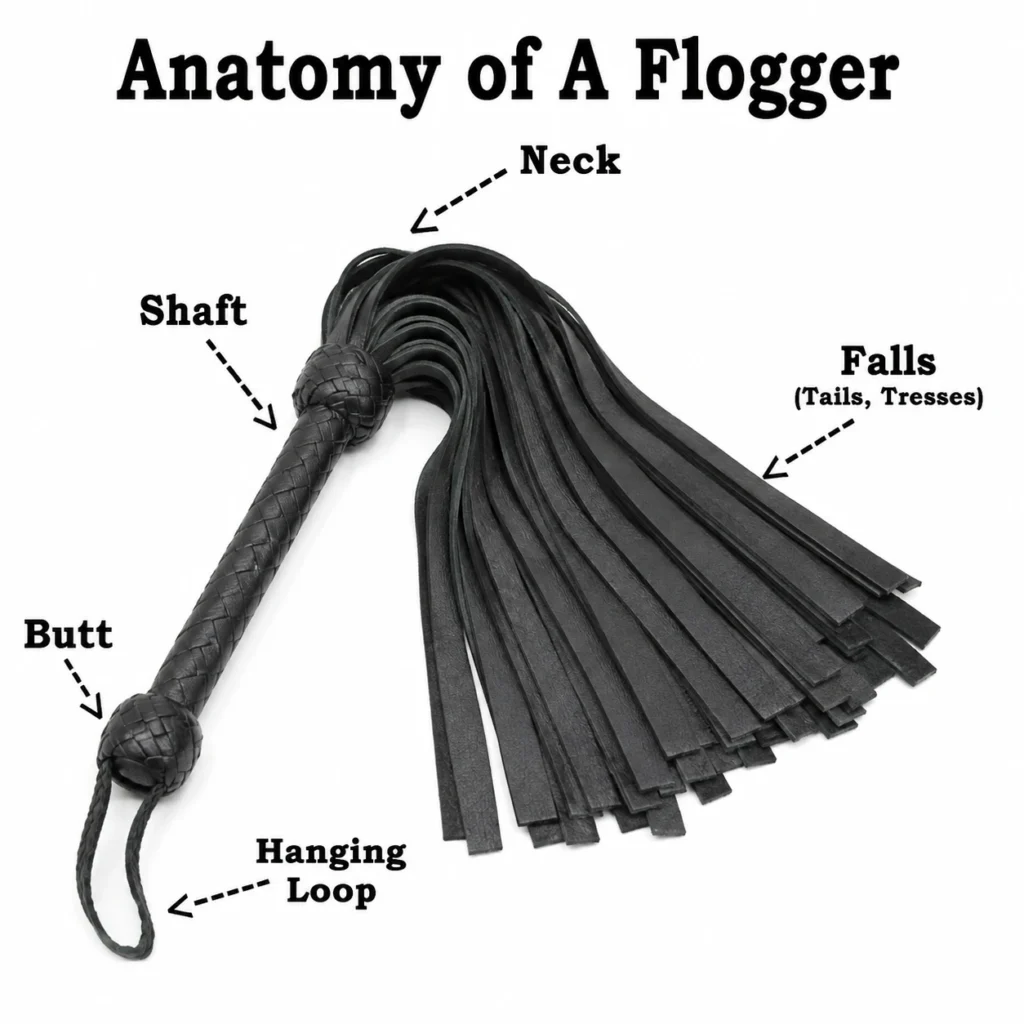
The shaft of the flogger is the long part of the handle where most people settle their grip. If a flogger is balanced the balance point should fall somewhere on the shaft. The balance point is the spot where you can balance the flogger on one or two fingers, tails to one side handle to the other.
A balanced flogger is easier to throw for longer than an unbalanced flogger since you can place your hand at the center of its centrifugal force. This means the tails will “pull” less against the person throwing it and allow them to conserve strength and accuracy.
Not all floggers can be balanced. Finger floggers or ball handle floggers have no long handle to counterweight the tails and therefore have to balance point. This is deliberate as their “pull” is what keeps them moving. The style of throwing finger floggers differs from that of throwing traditional floggers in that the top is managing continuous motion and momentum to deliver the strikes. Traditional floggers tend to be thrown with more singular strikes where each hit is its an energy cycle.
The neck of the flogger is where the tails are attached to the shaft. This is usually covered by a knot. The knot serves the purpose of choking the tails together and helping to prevent flyaway tails or tails that trail behind the pack.
The tails/tresses/falls of a flogger can be made out of a wide variety of things. It is common to define floggers by the sensations they produce on a scale from stingy to thuddy.
The sensation flogger tails produce is dependent on a few factors. The material the flogger is made out of, the way the material is shaped, the material’s density and the stiffness or softness of the material.
With the application of a little common world knowledge, you can probably tell whether a flogger is stingy or thuddy by looking at it. If a flogger has leather tails that are flexible, soft, and cut in wide strips it will most likely be on the thuddy side. If the tails are stiff and narrow they will be stingy. Stiffness contributes more to sting than the width of a flogger’s tail.
If someone were to hit you with a cloth necktie, and then a wide leather belt, the belt would most definitely be the stingier of the two due to its stiffness. The same concept applies to floggers.
Different leathers and materials will always produce different sensations, and people experienced with flogging may have their specific preferences in types of leather and cut. This is a highly personal thing and has to be cultivated individually.
The length of the tails also varies widely. For beginners trying to choose a flogger tail length, I recommend starting with a flogger that is the length of your arm from where your arm meets your shoulder to your fingertip. A few inches in either direction will not make much of a difference here so there is no need to be overly exacting. A short person will find a very long flogger more difficult to deal with and a tall person will have more difficulty with a flogger that is too short.
There is a myth that shorter floggers are “safer” than longer floggers. This isn’t necessarily true and can give tops a false sense of security. True injuries to a bottom from being flogged are fairly rare when done with sense and awareness. There are always exceptions and kinksters are rather innovative in their quest to find new ways to inflict pain, but for the most part, if you’re using a leather tailed flogger you are probably more likely to do serious injury to yourself as a top than you are to your bottom.
A top can throw out their elbow, get tendonitis and or tennis elbow and exacerbate any back injuries they may have. Using a flogger that is too short for a long length of time can cause the top to be constantly leaning forward to hit their target to have the room for wide swings. Smaller floggers also require much more strength to inflict heavy hits. This makes the top work harder and can lead to the aforementioned problems.
A flogger that is too long will be harder to control. These are more of a risk to the bottom because it is easier to wrap unintentionally. Aiming also becomes more difficult and many tops will believe they are hitting much lower than their tails are landing. This leads to the rather common symptom of a bottom having the tops of their shoulders be red from a beating while the top was aiming for their back/shoulder blades.
Both of these things can be mitigated by the top moving closer or further away from the bottom, but standing too close means you don’t have enough room to swing and standing too far away can lead to the top leaning forward awkwardly again.
Find your Goldilocks zone.
As always; there is no one true “right” way to do kinky shit. If the above doesn’t serve you then forge your path. Everyone should develop their own style that works for them. Anyone who insists they are the keepers of the One Twue Path is selling you something. Probably their ego.
Note about finger floggers– It is a common misconception that finger floggers or ball handle floggers are used by people who are less skilled at flogging than people who use traditional handles. This is elitist gatekeeping bullshit. I suspect it has a lot to do with many women preferring finger/ball handle floggers over traditional since they allow people to utilize upper body strength more effectively.
The true mark of a skilled flogger top is their ability to read their bottom and direct the scene in a manner that gets all parties to where they wanted to go. Not the ability to florentine. Not the ability to knock a fly out of the sky with a single flogger tail. You can use simple strikes and basic toys in a scene and still build a wonderful connection and experience for you and your partner. After all, isn’t that the point?
These are the strongest candidates for the main article FAQ section because they cover the broadest combination of informational, commercial, beginner, comparison, and safety-related search intent.
A flogger is an impact play tool with multiple flexible strands, commonly called falls, attached to a handle. A BDSM flogger may be made from leather, suede, synthetic materials, or other flexible materials. Depending on its design, weight, and construction, it can create sensations ranging from light brushing and warming strokes to deeper, more noticeable impact.
A leather flogger is commonly used as part of consensual BDSM impact play to create different physical sensations through controlled strikes or lighter strokes. It can also be incorporated into sensory play and dominance and submission dynamics. The experience depends on factors such as the leather type, fall width, weight, length, technique, communication, and individual preferences.
Leather floggers are often more durable and can produce a broader range of sensations depending on the leather’s thickness and construction. Suede floggers are generally softer and more flexible, making them popular for gentler contact and warming strokes. Neither is universally better; the right choice depends on desired sensation, experience level, and control.
A flogger has multiple falls that spread impact across a wider area, while a whip usually has a single striking element and concentrates force more narrowly. Because of this difference, a flogger can offer a wider range of gentle-to-moderate sensations, whereas a single-tail leather whip generally requires greater precision, technique, and experience.
A paddle has a broad striking surface that creates a more concentrated, predictable impact, while a flogger uses multiple falls that move independently and distribute contact differently. A flogger can provide brushing, warming, thuddy, or sharper sensations depending on its design. Beginners often choose based on the type of sensation and level of control they prefer.
Floggers can vary by material, fall width, fall length, weight, handle design, and overall construction. Common options include leather and suede floggers, lightweight sensory floggers, heavier thuddy floggers, and designs intended to create sharper sensations. These differences allow impact play tools to produce distinct experiences for beginners and more experienced users.
A beginner-friendly BDSM flogger is usually lightweight to medium weight, reasonably short for easier control, and made with softer or moderately flexible falls. Suede or softer leather designs can be easier to start with because they may produce gentler sensations. More important than choosing a specific material is selecting a well-made tool that feels manageable and easy to control.
Choose a flogger by considering experience level, desired sensation, weight, fall length, material, handle comfort, and build quality. Beginners often benefit from manageable lengths and lighter designs, while experienced users may prefer heavier or more specialized impact play tools. If possible, compare product specifications rather than relying only on appearance.
A beginner should generally choose a flogger that feels easy to control rather than simply selecting the longest available option. Shorter to medium-length falls can make practice and accuracy easier, while longer falls may require more technique and space. Handle length and the user’s reach also affect control, so overall usability matters more than one universal measurement.
Thud is generally a deeper, heavier sensation created when impact is distributed through wider, heavier, or more substantial falls. Sting is a sharper, quicker sensation often associated with narrower, lighter, or faster-moving falls. Construction, technique, speed, and the target area can all influence whether a BDSM flogger feels more thuddy or stingy.
A heavier flogger can carry more momentum and may create deeper, more substantial impact, while a lighter flogger can be easier to move quickly and may be better suited to lighter sensory or warming strokes. Weight alone does not determine intensity, however. Fall width, material, swing technique, speed, and control all influence the final sensation.
Safe flogger use begins with informed consent, clear boundaries, communication, and gradual intensity. Practice control and accuracy before using a flogger with another person, start lightly, and check in regularly. Avoid high-risk areas and do not rely on assumptions about pain tolerance. If unexpected symptoms or signs of injury occur, stop and assess the situation.
Avoid striking vulnerable or high-risk areas, including the head, face, neck, spine, kidneys, joints, and other areas where bones or internal organs are poorly protected. Safer target selection depends on anatomy, position, technique, and the type of impact tool. Beginners should focus on learning controlled targeting rather than experimenting with high-risk areas.
Hold the handle securely without gripping so tightly that your wrist and arm become rigid. Start with slow, controlled movements and practice accuracy on an appropriate non-person target. Learn how the falls move through the air before increasing speed or force. Consistent control comes from deliberate technique, awareness of reach, and regular practice.
Before using a flogger with another person, beginners can practice movement, distance, and accuracy on an appropriate non-person target. Begin slowly and observe how the falls travel, where they land, and how changes in wrist or arm movement affect contact. The goal should be predictable control rather than maximum force or speed.
Common mistakes include starting too intensely, choosing a tool that is difficult to control, failing to discuss boundaries, poor targeting, and assuming that one technique works for everyone. Beginners may also focus too much on force instead of accuracy. Starting slowly, communicating clearly, and practicing technique can reduce unnecessary risk.
Remove surface dust with a clean, soft cloth and follow the manufacturer’s care instructions for the specific leather. Avoid soaking leather or using harsh household chemicals. Use a leather conditioner only when appropriate for the material and product finish, and avoid over-conditioning. Regular inspection helps identify cracking, loose components, fraying, or other damage.
Store a leather flogger in a cool, dry environment away from direct sunlight, excessive heat, and prolonged humidity. Avoid tightly folding or crushing the falls, as this can distort their shape. Depending on the design, hanging or carefully laying the flogger flat can help maintain its form. Follow the manufacturer’s storage recommendations when available.
A well-made leather flogger can last for years when properly used, cleaned, conditioned when appropriate, and stored correctly. Lifespan depends on leather quality, frequency of use, environmental exposure, construction, and maintenance. Regularly inspect the handle, falls, attachment points, and leather condition, and replace or repair damaged equipment before further use.
Beginners should prioritize simple, manageable BDSM equipment that allows predictable control and gradual learning. More experienced users may prefer specialized impact play tools with particular weights, materials, lengths, or sensation profiles. Regardless of experience, quality construction, informed consent, communication, maintenance, and understanding the specific tool remain more important than choosing the most intense option.
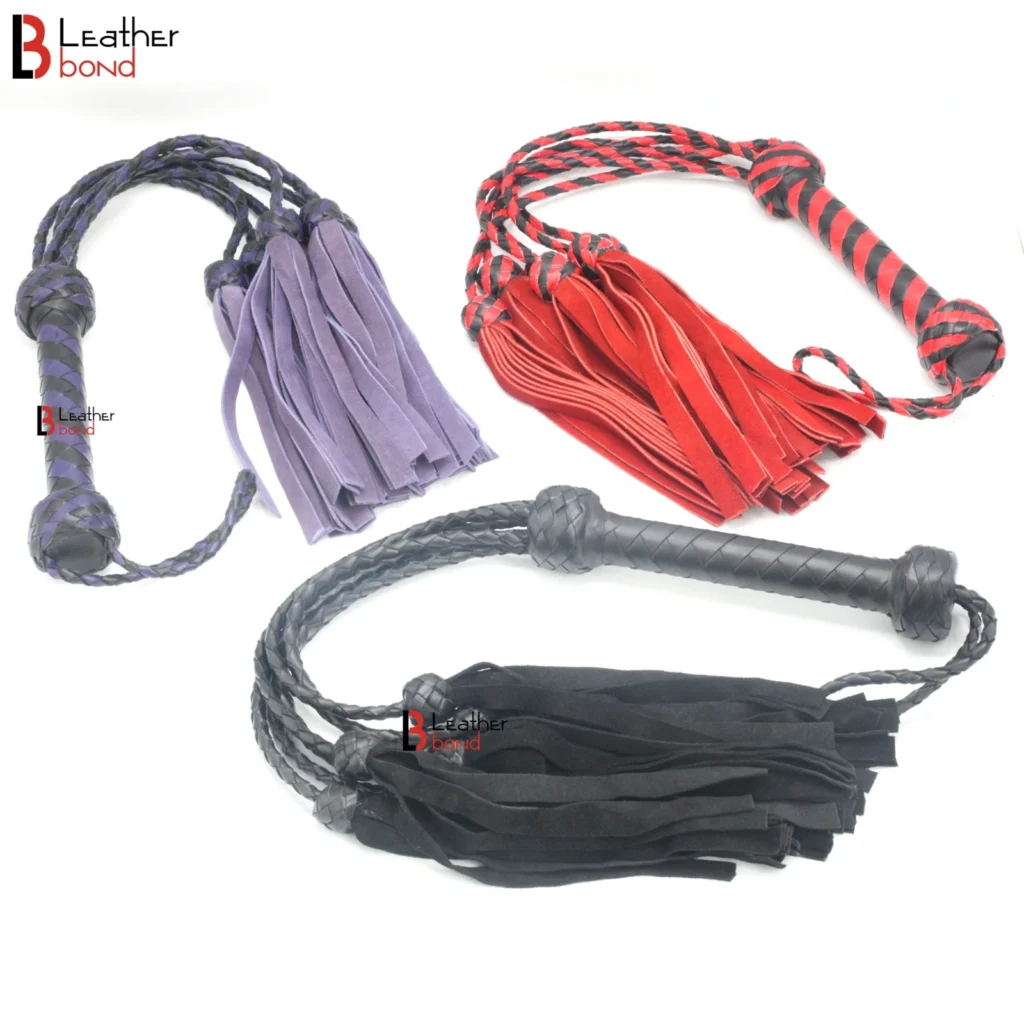
A typical flogger has a handle with multiple flexible falls attached to one end. The falls may be made from leather, suede, synthetic materials, or other flexible materials. Floggers can vary significantly in length, thickness, color, handle design, and the number of falls.
A flogger is a tool with multiple flexible strands or tails attached to a handle, designed to create a range of sensations through controlled movement and impact. In BDSM, floggers are commonly categorized as impact play tools and are available in different materials, sizes, and weights.
No. A flogger and a whip are different types of impact play tools. A flogger usually has multiple falls that spread contact across a wider area, while a traditional whip generally has a single striking element. Because of their construction, the sensation, handling, and level of precision can be quite different.
There are many types of floggers based on material, weight, length, fall design, and intended sensation. Common options include leather floggers, suede floggers, lightweight sensory floggers, heavy floggers, thuddy floggers, and designs that produce sharper sensations.
A leather flogger is a flogger made with leather falls attached to a handle. Leather can provide durability and a wide range of sensation profiles depending on its thickness, flexibility, width, and weight. Different leather floggers may feel soft, heavy, thuddy, or more intense.
A thuddy flogger is designed to create a deeper, heavier, and more diffuse sensation rather than a sharp sting. Wider, heavier, or thicker falls often contribute to a thuddier impact. The exact sensation can also depend on the flogger’s construction, weight, and the user’s technique.
A flogger may feel more thuddy when it has wider or heavier falls that distribute impact differently across the target area. Material thickness, overall weight, fall length, and swing technique can also influence the sensation. A heavier flogger does not automatically guarantee a thuddy experience.
A thuddy flogger generally produces a deeper and heavier sensation, while a stingy flogger creates a quicker and sharper feeling. Wider and heavier falls often lean toward thud, while narrower or lighter falls can create more sting. Construction and technique play an important role in both sensations.
Flogger handles are the grip section used to hold and control the tool. They may be wrapped in leather, braided, smooth, textured, rigid, or flexible depending on the design. Handle length, thickness, weight, and grip can affect comfort, balance, accuracy, and overall control.
The handle affects how comfortably and accurately a flogger can be controlled. A well-designed handle should provide a secure and comfortable grip without making the flogger difficult to maneuver. Handle length and weight distribution can also influence balance and the user’s ability to control the falls.
The best flogger handle depends on the user’s hand size, preferred grip, and experience level. Some people prefer shorter, thicker handles for a secure grip, while others prefer longer handles for additional reach. Beginners may benefit from a handle that feels comfortable and allows predictable control.
Yes. Many leather floggers feature handles wrapped or braided with leather. Leather handles can provide a traditional appearance and a comfortable grip, depending on the texture and construction. Other materials may also be used for the handle depending on the flogger’s overall design.
A leather flail is a term sometimes used to describe a multi-tailed striking tool made from leather. However, in modern BDSM and product terminology, a multi-tailed tool designed for controlled impact play is more commonly called a leather flogger. Product names can vary depending on the manufacturer or seller.
The terms can sometimes be used interchangeably, but they may also refer to different designs depending on the context. In BDSM equipment, “leather flogger” is generally the more common product term for a handle with multiple leather falls. Checking the product construction is more useful than relying only on the name.
The number of falls varies depending on the flogger’s design. Some have only a few thick falls, while others contain many narrower strands. The number, width, thickness, and weight of the falls can all influence how the flogger moves and the type of sensation it produces.
Yes. A flogger with many thin falls may create a different sensation from one with fewer, wider, and heavier falls. The overall effect depends on how the falls distribute impact, as well as the material, weight, flexibility, and technique used.
No. Although leather is one of the most popular materials, floggers can also be made from suede, synthetic leather, rubber, silicone, fabric, and other flexible materials. Each material can create different sensations and may require different cleaning and maintenance methods.
Leather floggers are often more durable and may offer a broader range of impact sensations depending on their construction. Suede floggers are generally softer and more flexible, making them a popular choice for lighter contact and gentler sensations. The best option depends on personal preference and the intended style of play.
A flogger can be suitable for beginners when the design is manageable and the user focuses on control, communication, and gradual intensity. Lightweight or medium-weight floggers with comfortable handles are often easier to practice with. Beginners should learn safe targeting and controlled technique before attempting stronger impact.
When choosing a flogger, consider the material, weight, fall length, fall width, handle design, desired sensation, and experience level. A lighter, easy-to-control flogger may be more suitable for beginners, while experienced users may prefer specialized designs that create particular thuddy or sharper sensations.
Beginners should look for a flogger that feels comfortable, balanced, and easy to control. A manageable length and moderate weight can make it easier to practice accuracy and movement. Material and fall design should also match the desired sensation rather than simply choosing the heaviest or largest option.
The right flogger size depends on the user’s reach, experience, available space, and desired level of control. Shorter or medium-length floggers can be easier to manage, while longer falls may require more practice and distance. Handle length and overall balance should also be considered.
Safe flogger use starts with consent, communication, agreed boundaries, and gradual intensity. Practice control and accuracy before using the tool with another person, and avoid vulnerable or high-risk areas. Start lightly, check in regularly, and stop if unexpected pain, numbness, dizziness, or other concerning symptoms occur.
Avoid striking vulnerable areas such as the head, face, neck, spine, kidneys, joints, and other areas where bones or internal organs are poorly protected. Safe targeting depends on anatomy, position, technique, and the type of impact tool being used. Beginners should prioritize accuracy and conservative target selection.
Clean a leather flogger by removing surface dust with a soft, clean cloth and following the manufacturer’s care instructions. Avoid soaking leather or using harsh cleaning chemicals. When appropriate for the specific leather, a suitable leather care product may help maintain its condition.
A high-quality leather flogger can last for years when properly used, maintained, and stored. Its lifespan depends on the quality of the leather, construction, frequency of use, environmental exposure, and maintenance. Regular inspection can help identify cracking, loose components, or damaged falls.
Store a leather flogger in a cool, dry place away from direct sunlight, excessive heat, and prolonged humidity. Avoid crushing or tightly folding the falls, as this can affect their shape. Depending on the design, storing it flat or hanging it carefully can help maintain its condition.
Useful search terms include “leather flogger,” “BDSM flogger,” “types of floggers,” “thuddy leather flogger,” and “flogger handle.” Adding descriptive terms such as “leather,” “suede,” “short handle,” or “long falls” can help narrow image results to a specific style
A beginner should practice slowly on an appropriate non-person target to understand distance, movement, and how the falls travel. The goal should be accuracy and predictable control rather than force. Gradual practice can help users understand how changes in wrist and arm movement affect contact.
Consistency comes from practicing distance, grip, movement, and follow-through. Start slowly and pay attention to where the falls land. Avoid focusing on maximum force, and instead develop predictable movement and accuracy before increasing speed or intensity.
Increase intensity gradually while maintaining clear communication and agreed boundaries. Begin with lighter contact, observe how the person responds, and check in regularly. Avoid sudden increases in force and stop if there are unexpected symptoms or signs of injury.
Common mistakes include choosing a tool that is difficult to control, starting too intensely, poor targeting, insufficient communication, and focusing on force instead of accuracy. Beginners may also underestimate how much the material, weight, and fall design can affect sensation.
Remove surface dust or debris with a soft, clean cloth and follow the manufacturer’s specific care instructions. Avoid soaking leather or using harsh chemicals. Inspect the falls, handle, and attachment points regularly, and use appropriate leather care products only when suitable for that type of leather.
Store a leather flogger in a cool, dry environment away from direct sunlight, excessive heat, and prolonged humidity. Avoid crushing or tightly folding the falls. Depending on its design, carefully hanging the flogger or laying it flat can help maintain its shape.
A well-made leather flogger can potentially last for many years with appropriate use, cleaning, storage, and maintenance. Its lifespan depends on leather quality, construction, frequency of use, environmental conditions, and how well the falls and attachment points are maintained.
Inspect the flogger regularly for cracked or severely dried leather, loose attachment points, damaged falls, significant fraying, or structural weakness. If the flogger’s condition could affect safe and predictable use, it should be repaired by a qualified maker when possible or replaced.
Choose a leather flogger based on your ability to control its weight, length, and movement. Beginners may prefer a manageable design that allows predictable practice, while more experienced users may choose specialized floggers for particular sensation profiles, such as thud or sting.
When buying a first flogger, consider weight, fall length, material, handle comfort, construction quality, and desired sensation. A manageable flogger that is easy to control is generally more useful for learning than simply choosing the largest or heaviest option available.
There is no single ideal length for every beginner. A manageable fall length that allows comfortable control and accurate practice is usually more important than choosing the longest possible design. Shorter or medium-length falls may be easier to learn with depending on the user’s reach and technique.
Yes. A heavier flogger may carry more momentum and create a deeper impact, while a lighter flogger may be easier to move quickly and control. However, weight is only one factor; material, fall width, thickness, flexibility, and technique also affect sensation.
Choose based on the type of sensation you prefer. A thuddy flogger is generally associated with deeper and heavier impact, while a stingy flogger tends to create a sharper, quicker sensation. Reading product specifications and understanding the fall design can help you choose more effectively.
A handmade leather flogger may offer advantages such as specialized craftsmanship, material selection, and unique construction. However, quality depends on the maker and product rather than the word handmade alone. Check the leather quality, attachment points, handle construction, finishing, and overall durability.