Walk into almost any dungeon, public or private and there’s a good chance you’ll spot an X-shaped frame bolted to a wall or standing on its own in the corner. That’s a St. Andrew’s Cross. It’s probably the single most recognizable piece of bondage furniture around and versions of it show up in everything from real playrooms to movie sets trying to look authentic.This article covers what it actually is, where the name came from and how people use it. It also gets into materials, pricing and a few things worth checking before you buy one.
At its simplest, a St. Andrew’s Cross is an X-shaped frame. A person gets secured near each of the four points, usually with cuffs, rope or straps, arms and legs pulled apart into the shape of the frame itself. People also call it a bondage cross, an X cross or just “the X,” and none of those names are wrong.Builds vary a lot. Some bolt flat to a wall. Some stand freestanding on a weighted base. A handful fold down small enough to fit in a duffel bag, which is where the nickname “dungeon in a bag” comes from. You’ll sometimes see the more formal spelling too, “Saint Andrew’s Cross,” same piece of equipment either way.What doesn’t change is the function. Someone gets positioned against the frame, restrained at the wrists and ankles, fully open and accessible to their partner. Simple mechanic, which is probably why it’s stuck around as a staple piece of gear for decades.
A St. Andrew’s Cross is an X-shaped piece of BDSM furniture used to restrain a person by the wrists and ankles. Versions are wall-mounted, freestanding, or foldable, and the frame is used for bondage, sensation play, and impact scenes.
The name is older than the kink scene by centuries, and it has nothing to do with sex at all. Saint Andrew, one of the twelve apostles, was said to have been executed on an X-shaped cross rather than the upright style used for Jesus. That X shape became linked to his name, and it still shows up today on flags, the Scottish flag being the obvious one, plus parts of the Union Jack.
The BDSM community adopted the shape for practical reasons. An X naturally spreads someone’s limbs into a stable, secured position. That’s it, that’s the whole appeal, no symbolism required beyond geometry doing exactly what it’s supposed to do.
Some people call the same frame a Judas Cross instead, tied to a different apostle legend entirely. Both terms describe an identical X-shaped setup. “St. Andrew’s Cross” just happens to be the one that stuck in most kink communities.
Once a person is strapped in, their arms and legs are fixed in place. Movement gets limited fast, and that loss of mobility is really the entire point of the piece.
Typical uses:
Communication has to happen before any of that. A safeword, a quick rundown of limits, a check that nothing is cutting off circulation. Miss that step and things go sideways fast.
Cross mounting is the act of bolting a frame to a wall instead of letting it stand on its own. Carriage bolts into wall studs, usually, sometimes a metal mounting plate depending on the model.
A mounted cross holds more weight and feels more solid during rougher scenes, since the wall itself is doing part of the work. It also frees up floor space. The downside is obvious: once it’s in the wall, it’s staying there, so this only makes sense for a room you’re not planning to reconfigure anytime soon.
Three main categories exist, and picking between them mostly comes down to your room and how often you’ll actually use the thing.
Wall-mounted models bolt into studs for maximum stability and can generally take more weight and rougher use. Installation is permanent, and you’ll need at least basic tools to get it up.
Freestanding crosses skip the wall entirely, relying on a heavy base or floor anchors instead. Renters tend to prefer these, since nothing gets drilled into the wall. To compensate for the missing wall support, freestanding frames usually end up bulkier and heavier than wall-mounted versions of similar capacity.
These fold flat, sometimes down to the thickness of a large book, and pack away in a bag or under a bed. Couples who travel or just don’t want gear sitting out tend to gravitate toward this style.
Stability takes a hit compared to a mounted frame. Fine for lighter scenes, less ideal if you’re planning something intense. A lot of beginners start here before eventually upgrading.
Material determines weight capacity, comfort, and how long the thing lasts.
| Material | Pros | Cons | Best For |
|---|---|---|---|
| Solid wood | Strong, classic look, ages well | Heavier, higher price | Permanent dungeon setups |
| Metal (steel) | Very durable, often adjustable | Can feel cold, may need padding | Frequent, intense use |
| PVC or reinforced plastic | Lightweight, affordable, easy to clean | Lower weight capacity | Beginners, portable setups |
Most st andrews cross dimensions land around 60 to 72 inches tall and 40 to 55 inches wide, roughly the span of an adult standing with arms out. Weight ratings vary more than people expect between otherwise similar-looking models, so check the actual number before buying instead of assuming.
Built well and used correctly, a St. Andrew’s Cross is safe equipment. Most problems trace back to a frame that wasn’t rated for the weight on it, or restraints left on too long, not the cross itself.
Mistakes that cause problems:
What actually helps:
The National Coalition for Sexual Freedom puts out ongoing guidance on risk-aware kink practices. It’s a decent baseline if you want something more detailed than a blog post.
Portable PVC frames usually start around 80 to 150 dollars. Wood or steel mid-range models run 200 to 500 dollars. Custom, dungeon-grade builds can climb past 800 dollars without much trouble.
A low price doesn’t automatically mean a bad frame. It does mean you should read actual reviews and check the weight rating before assuming it’ll hold up.
Plenty of other restraint furniture exists besides the cross.
| Furniture Type | Best For | Mobility Restriction | Space Needed | Typical Price Range |
|---|---|---|---|---|
| St. Andrew’s Cross | Full-body display, impact play | High | Medium to large | $80 to $800+ |
| Spanking bench | Focused access to hips and backside | Medium | Small to medium | $150 to $600 |
| Bondage stand or rack | Standing restraint, versatility | Medium to high | Medium | $200 to $700 |
| Y-stand | Standing spread-eagle position | High | Small to medium | $150 to $500 |
“Bondage stand” and “rack” get used interchangeably a lot, though technically a rack refers to a stretching frame, not an X. If floor space is tight and you want something with fewer parts than a full cross, a Y-stand covers similar ground with a smaller footprint.
Search terms like “the cross sex position” or “sex cross” pop up occasionally, and it’s a reasonable point of confusion. Inside most kink communities, “the cross” means the furniture, full stop, not a specific act or position. What happens once someone’s restrained on it varies scene to scene. The term just names the equipment.
A few practical questions before buying:
Pros:
Cons:
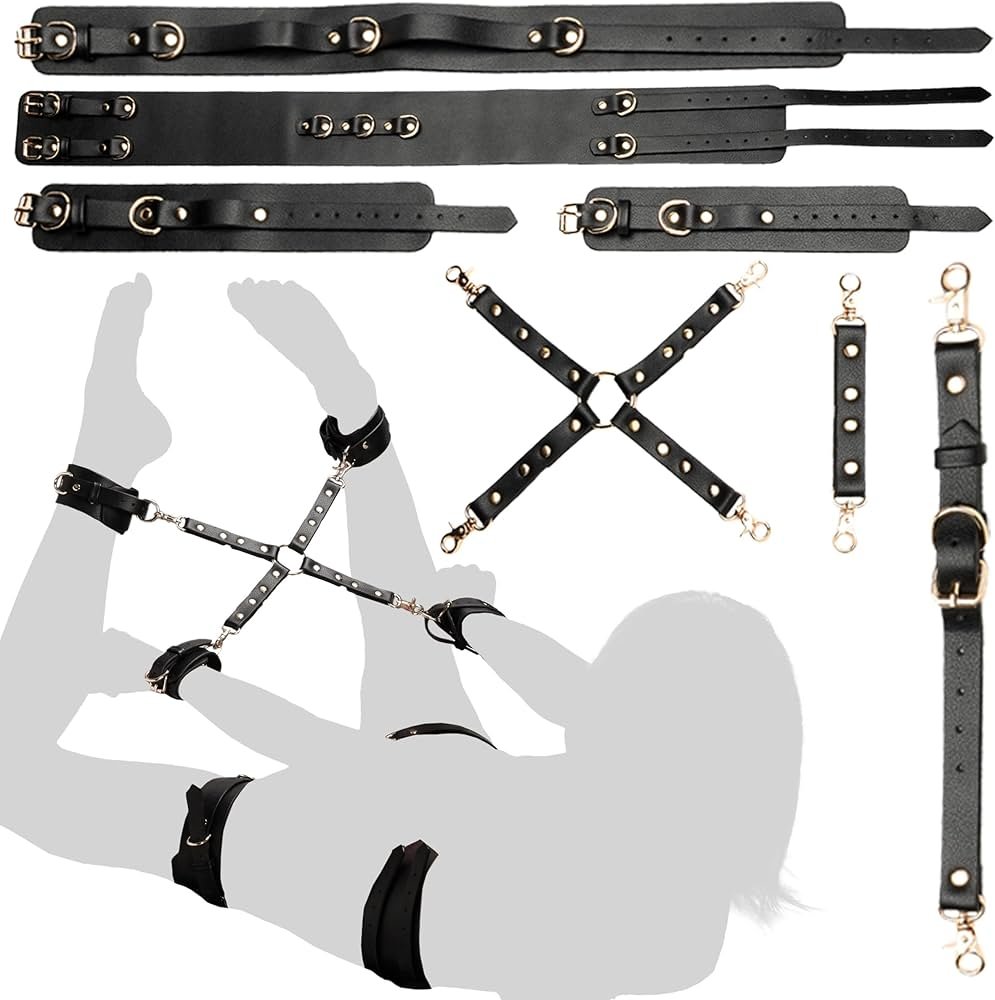
Cuffs, straps, and leather accessories to go with your cross are worth checking out at LeatherBond.co.
What is a St. Andrew’s Cross used for in BDSM? Restraining a person’s wrists and ankles in an open, X-shaped position. That setup works for bondage, sensation play, and impact play, with one partner holding full access and control.
Why is it called a St. Andrew’s Cross? Named after Saint Andrew, said to have been executed on an X-shaped cross by tradition. The BDSM community kept the shape for its practical restraint design, not for the religious history behind it.
What is the difference between a St. Andrew’s Cross and a Judas Cross? Nothing structurally. Same X-shaped frame under two different names, each tied to a separate apostle legend. “St. Andrew’s Cross” is just the more common term today.
What is cross mounting? Bolting the frame to a wall instead of letting it stand freely on the floor. Adds real stability, but the setup becomes permanent once it’s done.
How much weight can a St. Andrew’s Cross hold? Depends entirely on the model. PVC frames often top out around 150 to 200 pounds. Steel or wall-mounted wood frames can handle 250 pounds or more. Check the manufacturer’s rating rather than guessing.
Can you use a St. Andrew’s Cross without wall mounting? Yes. Freestanding and portable models use a weighted base or floor anchors instead, so no wall installation is required at all.
What is a Y-stand, and how is it different from a cross? A standing restraint that raises the arms into a Y shape rather than spreading into an X. It generally needs less floor space than a full cross.
Is a St. Andrew’s Cross safe for beginners? Yes, with a safeword, a frame rated for the right weight, and regular circulation checks. Portable, lower-capacity models are a common starting point.
What materials are best for a St. Andrew’s Cross? Wood and steel hold up best under regular or intense use. PVC and reinforced plastic work fine for beginners or anyone who wants something lighter and easier to move.
How much does a St. Andrew’s Cross cost? From around 80 dollars for a basic portable model up to 800 dollars or more for a custom, dungeon-grade build. Most mid-range wood or steel frames sit between 200 and 500 dollars.
Strip away the branding and the different price points, and a St. Andrew’s Cross comes down to one shape doing one job: an X-shaped frame that holds someone’s wrists and ankles open and secure. Everything past that basic function, wall-mounted or freestanding, wood or steel, portable or permanent, is really just a question of your space, your budget, and how often it’ll actually get used.
Check the weight rating, read reviews from people who’ve actually used the model, and think about how it fits your room rather than just how it photographs. Once you’ve got the frame sorted, cuffs and leather straps from LeatherBond.co round out the rest of the setup.