
Kink shows up everywhere now. A plotline on a TV drama. An offhand joke in a podcast. Somebody’s book club picking a title with a leather cover on the front, half-joking about it in the group chat. So yeah, it gets talked about. Understood? Most of what gets said in passing skips right past the part that actually matters what makes this stuff safe, ethical and meaningful for the people actually doing it.
But strip away the drama and what’s underneath is something almost boring to describe and genuinely hard to pull off well consent, communication, trust, all three working at once, none of them optional.So that’s what this is. A walkthrough of what BDSM looks like in practice, the frameworks people lean on to keep things consensual, and a few decent places to actually learn this stuff instead of picking it up secondhand from wherever.
Some “light” BDSM practices may include:
Using its abbreviation, BDSM can be divided into these categories:
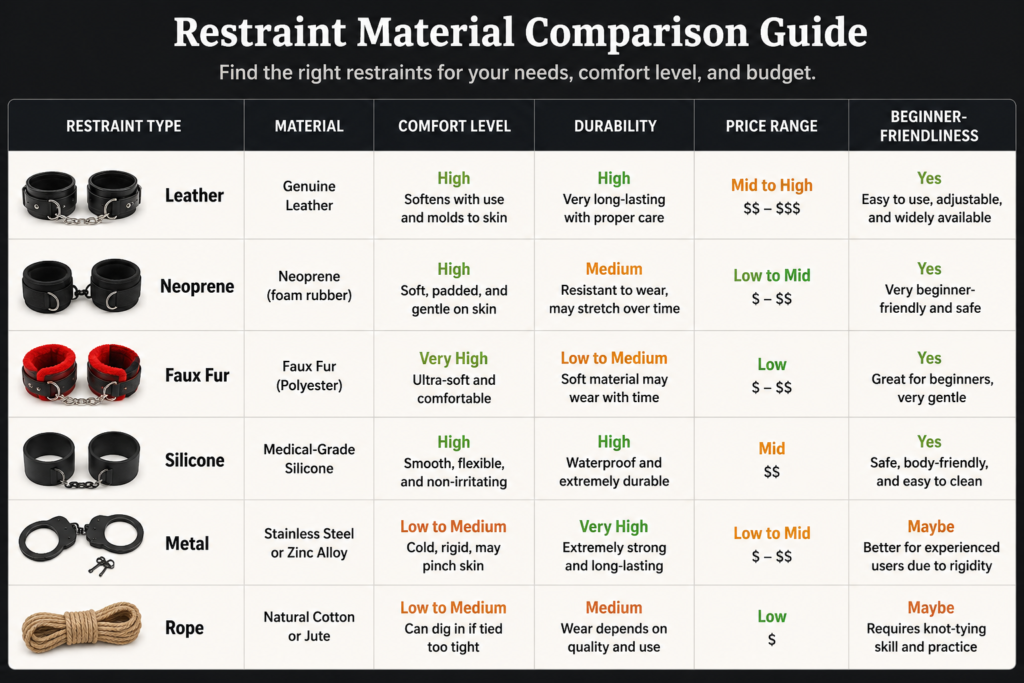
Bondage. This involves limiting a partner’s freedom of movement with, for example, ropes, handcuffs, or other restraints.
Discipline. Through agreed-upon rules and punishments, a dominant partner can exercise control over a submissive partner.
Dominance. This is showing authority over a physical partner, either during sex or outside of the bedroom.
Submission. A submissive partner shows obedience to the dominant partner’s actions and wishes.
Sadism and masochism (or sadomasochism). This involves pleasure that a partner may feel from either inflicting pain (sadism) or receiving pain (masochism) either physical or emotional.
While these are the broader categories, there is no one way to practice BDSM. Different types can include power play, role-playing, pain play, bondage, wax play, edging, sensory deprivation, or humiliation.
It’s important to remember in BDSM that these dynamics or actions during play should be agreed upon in advance. You also should have clear ways to tell your partner to stop at any time.
Other words you might use in BDSM refer to the roles you might play, including dominants, tops, masters, mistresses, or sadists. You may play different roles in particular scenes you act out or play together.
Other terms may include:
Practicing BDSM sex in a relationship may be enjoyable for both people. You may see BDSM as a form of release, an exploration of trust, or a space to act out fantasies of submission, vulnerability, and control.
As long as everyone involved wants to do it, you may find it increases intimacy and sexual satisfaction. You should remember that not everyone will experience BDSM, pleasure, and pain the same way.
It’s possible for abuse to happen when you’re in a BDSM relationship, just as in any other type of sexual relationship.
The most important part of BDSM sex is the act of consent. You should always make sure everyone gives enthusiastic consent and outlines clear boundaries in advance. These boundaries can be laid out in a formal contract, a verbal agreement, or a more casual conversation about desires and limits.
Two acronyms keep coming up in kink education. They’re not identical philosophies, even though people use them interchangeably half the time.
SSC — Safe, Sane, Consensual. The older one. Activities should be physically safe, done with a clear head, fully consensual. Straightforward enough.
RACK Risk-Aware Consensual Kink. Newer, and it pushes back a bit on the word “safe,” since really, nothing’s ever fully risk-free. Instead it asks people to go in knowing the risks and consenting anyway, eyes wide open.
Neither one wins. Different people, different communities, lean one way or blend both doesn’t much matter. What stays constant underneath either framework is the same requirement: consent that’s informed, ongoing, enthusiastic. Not implied. Not assumed. Actually given.
Few things worth sitting with here. Consent isn’t a box you check once and forget about saying yes to a scene last week doesn’t carry over automatically. Most encounters get their own conversation, every time. It can also get pulled back mid-scene, even minutes after being given enthusiastically, and that’s not a betrayal, that’s the system working. And it needs a clear head to mean anything being significantly impaired makes real consent shaky at best, which is exactly why a lot of practitioners skip the heavy drinking before a scene.
Ask around, and experienced people tend to say the same thing: the real work happens before anything starts, not during. A negotiation conversation usually ends up covering what’s on the table, what’s a hard no, what each person’s actually hoping to get out of it, anything physical or mental health-wise worth flagging, how check-ins will go, and what aftercare looks like once it’s done. Sounds like a lot to cover. In practice it’s just a conversation.
A safeword is agreed on ahead of time and it means one thing: stop, now, no discussion needed. Exists because “no” and “stop” are sometimes literally part of the roleplay itself, so you need a word that can’t get confused for anything else.
Traffic-light system is the most common setup. Green, keep going. Yellow, slow down or check in. Red, stop, full stop, no exceptions.
Some scenes don’t allow for talking certain gags, breath play, that kind of thing. So people set up non-verbal signals instead. Dropping something. A set number of taps. Whatever’s been worked out beforehand.
It’s not a box you tick before things start and forget about. Experienced partners keep checking in the whole way through, out loud or through whatever cues they set up earlier, paying attention to what’s said and, honestly, what isn’t.
Aftercare is just the care partners give each other once a scene wraps up physical, emotional, whatever’s needed. Even a scene that went exactly to plan takes something out of people. Aftercare is how everyone gets back to solid ground.
Looks different depending who you ask. A blanket, some water, quiet cuddling. Talking through what just happened. Sometimes it’s the opposite — being left alone in a quiet, low-stimulation space for a bit. Sometimes it’s just tending to a mark or a scrape, nothing deep about it.
Newcomers skip this way more than they should, usually because nobody warned them about drop a dip in mood or energy that shows up hours later, sometimes the next day even. Aftercare’s a big part of what keeps that landing soft instead of rough.
Myth: it’s just abuse with better branding. Not really the line between the two is consent, full stop. Abuse is control without agreement and no real way out. BDSM done right, is basically the opposite of that: boundaries negotiated ahead of time, enforceable by either person, anytime.
Myth: anyone into this has some trauma or something “off” going on. Clinical research keeps pushing back on this one. People land in kink for all sorts of reasons stress relief, deeper intimacy, curiosity, plain physical sensation and there’s no single profile behind any of it.
Myth: it’s only for a certain kind of person. Nope. Every age bracket, every career, every gender and orientation shows up in these spaces. Way more ordinary than the stereotype lets on.
Myth: submissives don’t hold any power. Often the opposite, actually. In a lot of healthy D/s setups, the submissive sets the limits and holds the safeword meaning they can end the whole thing instantly if they want to. A lot of people describe submission as something actively chosen, not something that happens to them.
Curious? Learn before you try anything, not after. A few decent starting points.
Books, for one plenty of solid introductory ones out there written by actual educators, covering negotiation and technique and the safety basics you’d want to know first. Workshops, often run through local kink orgs, teaching specific stuff like rope safety or negotiation practice in a setting that’s low-pressure by design. Munches casual, non-sexual meetups, usually somewhere public like a restaurant, where new people can just show up and meet others without any expectations attached.
And online communities, the established ones with real moderation, the kind with an actual track record on safety and consent rather than just claiming one.
Red flags worth knowing: anyone pushing to skip negotiation entirely, brushing off safewords like they’re optional, dodging any talk of aftercare, or treating “no” like a starting bid instead of an actual boundary.
The partner directing the power-exchange dynamic “Master” or “Mistress” in some relationships, “Dom” in most others. Their authority exists only within whatever limits the submissive partner actually agreed to. Nothing beyond that.
No, not always. D/s involves defined roles, sure, but plenty of BDSM sensation play, bondage on its own happens without anyone taking on a formal role at all.
It’s not a piece of the foundation, it is the foundation. Take away ongoing, informed, freely given consent and what’s left isn’t BDSM anymore it’s just harm wearing a costume. Every credible source treats it as completely non-negotiable, no exceptions.
Yes. That’s the entire point of books, workshops, munches, reputable communities learning fundamentals before doing anything, not after.
Strip away the stereotypes and what’s actually left is kind of unglamorous, honestly clear communication, negotiated boundaries, consent that gets checked again and again, real care for each other afterward. Stuff that would probably help most relationships, kink or not. None of it’s exotic. It’s just said out loud instead of left unspoken, which is more than you can say for a lot of relationships that never get near a safeword.
Curious about this personally, trying to understand a partner, or just done with the stereotypes doesn’t really matter which. Same advice either way. Learn first. Keep talking, even when it’s awkward. Treat consent as the floor everything else gets built on, not a formality you get past.