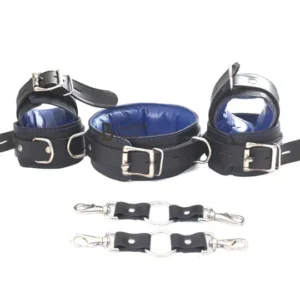
BDSM collars are one of the most recognizable symbols in power exchange relationships. A BDSM collar is a consensual symbol of ownership, submission, or commitment used within Dominant/submissive (D/s) dynamics. In collar BDSM, the collar signals an agreed power exchange and shared responsibilities. Many people treat it like a wedding ring because it represents trust, exclusivity, and ongoing consent.
This guide explains what a BDSM collar means, how collaring works, and how different collar types fit into real D/s relationships. It covers protocols, etiquette, safety, and common mistakes. It reflects widely used BDSM community practices and modern consent-based frameworks.
A BDSM collar is a neck-worn item that communicates a consensual power exchange dynamic. It can represent submission, dedication, protection, training, or long-term ownership, depending on what partners agree it means. The collar matters because it is a visible reminder of the relationship structure and the responsibilities attached to it.
In BDSM, the collar is not defined by the material alone. The meaning comes from negotiated consent, shared rules, and the context in which the collar is worn.
In BDSM, a collar refers to a symbolic marker of relationship status inside a power exchange dynamic. It signals that the wearer is submitting or committing to a Dominant under agreed terms. Some collars are lockable, but a lock is not what creates consent. Consent and protocol create the meaning, not the hardware.
A fashion choker is worn for style and has no agreed relationship meaning. A BDSM collar is worn to represent a consensual D/s dynamic, even when it looks like normal jewelry. The key difference is intent and agreement. If the collar represents protocol, commitment, or ownership between partners, it is a BDSM collar regardless of how discreet it looks.
At its core, a BDSM collar is a symbol of a specific type of relationship structure built on a consensual exchange of power. Understanding these foundational concepts is critical to understanding the collar’s significance.
Power exchange is a relationship model where a submissive voluntarily gives a Dominant certain forms of control under negotiated limits. It is structured, consensual, and based on trust, communication, and accountability. A BDSM collar often acts as the primary symbol of this agreed power imbalance.
Consent in BDSM is enthusiastic, informed, specific, and revocable. It must exist before any collar is placed, and it must continue throughout the relationship. In collaring, consent covers the collar’s meaning, who can touch it, when it must be worn, and how it can be removed for safety, health or relationship changes.
A D/s relationship is a Dominant/submissive relationship built on a consensual power exchange. The Dominant holds agreed authority and responsibility. The submissive gives agreed obedience and service. A BDSM collar is commonly used to signal and reinforce this structure.
Protocol is the set of agreed rules and behaviors that structure a D/s relationship. It can include forms of address, daily routines, behavior standards and rules for wearing a collar. Protocol turns the collar from a symbol into a working agreement.
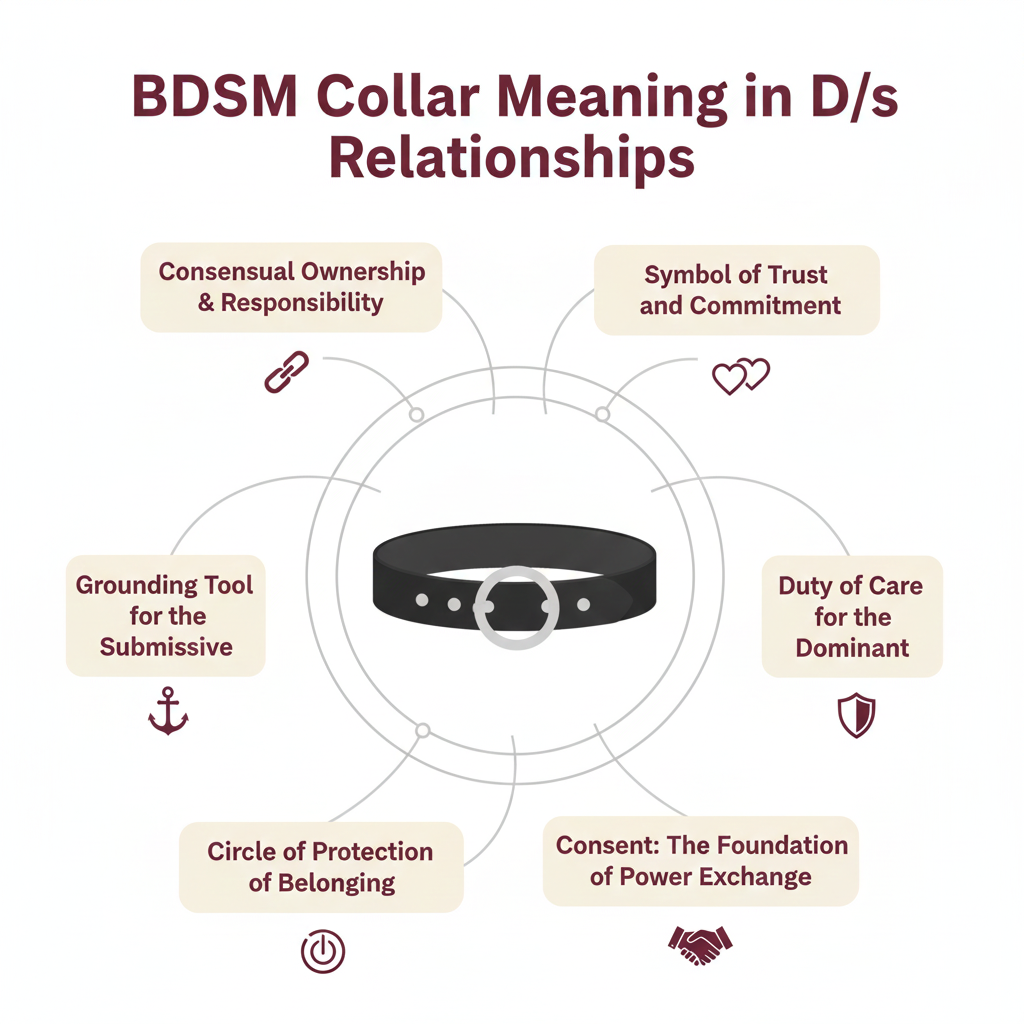
The BDSM collar meaning centers on consensual ownership, responsibility, and long-term power exchange. The collar represents belonging, but it also represents obligations on both sides. The Dominant accepts duty of care and ethical leadership. The submissive accepts agreed service, behavior standards, and relationship limits.
Psychologically, the collar acts as a grounding tool for the submissive. Feeling the weight of the collar around the neck provides a constant, tactile reminder of their role and their submission. For the Dominant, seeing their partner collared reinforces their authority and their duty of care. It solidifies the mental shift required to maintain a power exchange dynamic long-term.
Symbolically, the collar represents a circle of protection and possession. It creates a boundary around the relationship, signaling that the submissive has surrendered a portion of their will to the Dominant.
A collaring ceremony is a deliberate ritual where a Dominant places a collar on a submissive to mark a defined relationship step. It often signals a shift from exploration to training, protection, or long-term ownership. Some ceremonies include spoken commitments, written agreements, or private rituals. The format does not matter as much as the consent and clarity behind it.
In social settings, a collar signals unavailability. It informs other community members that the submissive is spoken for and is not open to play or solicitation without the Dominant’s explicit consent. It validates the relationship within the broader BDSM community, serving as proof of a vetted and established dynamic.
A collar is not just a claim of ownership; it is a pledge of responsibility. By collaring a submissive, a Dominant accepts the obligation to guide, protect, and care for them. Consent is the foundation of this exchange. A collar should never be forced; it is a gift of submission given freely by the submissive and accepted with gravity by the Dominant.
There are distinct types of collars, each serving a specific function within the lifestyle. Understanding these distinctions is vital for selecting the right symbol for your dynamic.
A BDSM submissive collar is a general-purpose collar used to denote a submissive role.
A BDSM slave collar indicates a deeper, often more total exchange of power.
While similar to the category above, the specific term “slave collar BDSM” often refers to heavy-duty, aesthetic gear designed to look industrial or inescapable.
A leather BDSM collar is the traditional standard for durability and comfort.
A BDSM posture collar is a rigid, wide collar, often made of leather or metal, that restricts neck movement.
What is a day collar? It is a discreet piece of jewelry that symbolizes the D/s bond in public settings where a traditional collar would be inappropriate.
Collaring is rarely the first step. It follows a progression of trust-building and negotiation.
Throughout these stages, consent must be reaffirmed. A collar should never be placed on a submissive who has not explicitly agreed to the responsibilities it entails.
Understanding the functional differences between collar types ensures safety and social discretion. The table below compares day collars, play collars, and permanent collars by visibility, use, and commitment.
| Feature | Day Collar | Play Collar | Permanent Collar |
| Visibility | Discreet, looks like jewelry | Obvious, often bulky or fetishistic | High quality, distinct, often locked |
| Material | Silver, gold, thin leather, silicone | Heavy leather, steel, rubber | Precious metals, high-grade leather |
| Durability | Light to medium | Heavy duty (D-rings for pulling) | High durability for 24/7 wear |
| Context | Work, family, public | Dungeon, bedroom, private scenes | 24/7 wear (often locked) |
| Comfort | High priority | Low priority (short term) | High priority |
Day collars protect the privacy of the couple. Wearing a heavy slave collar BDSM style piece in a corporate office is not only unprofessional but violates the consent of non-participating bystanders. Play collars allow for the inclusion of O-rings and D-rings for attaching leashes, which are necessary for functionality but inappropriate for the grocery store.
Safety dictates that a collar worn 24/7 must be comfortable and hypoallergenic. Permanent collars are investments. Conversely, play gear focuses on sensation and aesthetics. A submissive must be able to remove a day collar in an emergency (like an MRI or medical issue), even if it “symbolically” locks.
Respecting the collar is respecting the relationship.
Only the Dominant in the established dynamic generally gifts the collar. It is a top-down transmission of authority. A submissive buying their own collar without direction is seen as “self-collaring” (discussed in FAQs), which carries a different meaning.
Before a collar is locked, a “collaring contract” or verbal agreement should outline what the collar means. Does it mean 24/7 service? Does it mean sexual exclusivity? These terms must be clear.
Never touch another person’s collar without explicit permission. In many BDSM communities, touching a collar is treated as an intimate boundary violation and a direct disrespect to the relationship. If a safety issue requires intervention, ask the Dominant first when possible and act only within consent.
Removing a collar is a significant event. If done by the Dominant during play, it may simply be for cleaning or changing collars. If done during a breakup, it is a formal dissolution of the bond. If a submissive removes a locked collar without permission, it is often viewed as a serious breach of trust or “safewording” out of the relationship entirely.
This is a common source of anxiety for submissives. The keyword here is vulnerability.
Ensure you have established a stable D/s dynamic. Asking for a collar after one date is premature. You should have already negotiated limits, desires, and the general trajectory of the relationship.
Ask yourself: Do you want the aesthetic of the collar, or the responsibility? Are you ready to explain the collar to friends or hide it diligently? Are you ready to accept the Dominant’s claim over you publicly (in approved spaces)?
Use direct, honest language.
A “no” is often a “not yet.” A responsible Dominant may feel they are not ready for the responsibility of owning a submissive. Respect their boundary. It protects you both from entering a contract you cannot fulfill.
Newcomers often treat the collar as a starter kit item. This “Instagram BDSM” approach dilutes the meaning. A collar earned over six months holds more weight than one bought on Amazon on day one.
Buying a spiked choker at a mall does not make one a submissive. The object is inert; the relationship infuses it with power. Wearing a collar without the dynamic is often called “costuming.”
Wearing a collar changes how you see yourself. Some submissives experience “collar anxiety” or claustrophobia. Others feel a heavy drop if the collar is removed. Ignoring these psychological side effects can lead to burnout.
Distinguishing between the two prevents social embarrassment and misunderstandings.
Punk, Goth, and E-girl aesthetics heavily utilize chokers and O-ring accessories. This creates overlap.
Assuming a woman in a spiked choker at a bar is a submissive soliciting a Dominant is predatory and incorrect. Always assume a collar is fashion unless you are in a designated BDSM space or have been given explicit cues otherwise.
Context is king.
The Dominant must recognize the weight of the collar. It is a symbol of the submissive’s trust. Neglecting the submissive while they are collared can cause deep emotional wounding.
The collar makes the power imbalance visible. This requires the Dominant to be hyper-aware of ethical treatment. You are not just owning a person; you are caretaking their wellbeing.
No, a BDSM collar is not legally or ethically permanent. It is only valid while consent and the relationship exist and can be removed when the dynamic ends.
Yes. A submissive can always remove a BDSM collar to revoke consent or protect their safety. Protocol may require asking first, but consent overrides protocol. If a collar design prevents safe removal, partners should change the setup.
Yes, self-collaring is a valid practice for submissives without a partner. It symbolizes a commitment to one’s own submissive identity or personal journey of service.
They are primarily symbolic, representing a relationship dynamic and commitment. While they can be incorporated into sexual activity, their core function is psychological and relational.
No, not all submissives desire to be collared. Many prefer to engage in power exchange without the specific symbol of ownership that a collar represents.
The BDSM collar is a profound tool for connection, grounding the abstract concepts of D/s relationships into physical reality. Whether it is a heavy leather BDSM collar worn in the dungeon, a restrictive posture collar for training, or a delicate day collar worn in the office, the object itself is secondary to the agreement it represents.
True ownership is not found in the locking mechanism of a collar, but in the trust, communication, and consensual exchange of power between the Dominant and the submissive. Prioritize clear negotiation and emotional safety, and the collar will become a powerful testament to your unique bond.c.