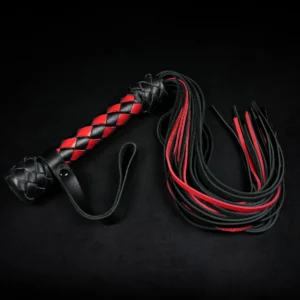
A leather flogger is a versatile BDSM accessory available in different materials, designs, sizes, weights, and tail configurations. Whether someone is exploring floggers for the first time or looking for a different style to add to an existing collection, understanding the available options can make choosing the right product easier.
Not all floggers offer the same experience. Some have soft, flexible tails designed for gentler sensations, while others feature wider, heavier, or firmer tails that produce a deeper, more pronounced impact. Material, tail width, tail length, tail count, weight, and handle construction all contribute to how a flogger feels and performs.
Leather and suede are among the traditional materials used in flogger construction. However, synthetic alternatives, including silicone, nylon, rubber and faux leather, also offer different characteristics.
Choosing a leather flogger is not simply about selecting the largest design or the product with the most tails. It involves understanding the relationship between construction, comfort, balance, and personal preferences.
This guide explores the different types of leather floggers, their materials, important design features, thuddy and stingy sensations, beginner considerations, and essential safety factors. It also explains what to look for when comparing products so buyers can make a more informed decision.
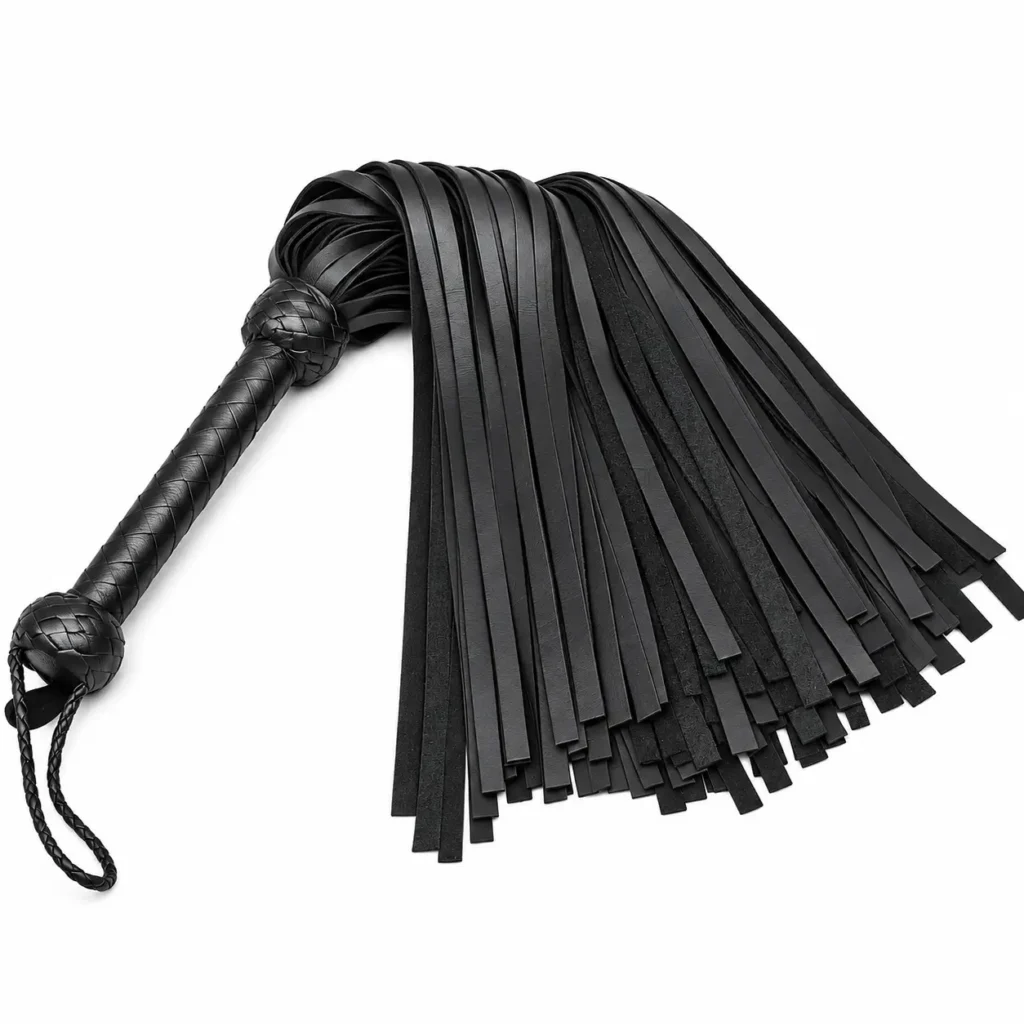
A leather flogger is an impact-play accessory generally constructed with a handle and multiple flexible tails, commonly called falls. These tails extend from the handle and may vary in number, length, width, thickness, and material.
The overall design influences the flogger’s weight, balance, flexibility, and sensation.
Some leather floggers have relatively few wide tails, while others feature dozens of narrower leather strips. Certain designs use braided handles, woven grips, wrist straps, or decorative elements.
Common construction features include:
A leather flogger can be designed around different preferences. Some emphasize wider, fuller contact, while others provide more distinct contact points.
The number of tails alone does not determine how intense a flogger feels. A lightweight suede flogger with many tails can behave very differently from a heavier leather design with the same number of falls.
Understanding these differences is an important part of choosing the right flogger.
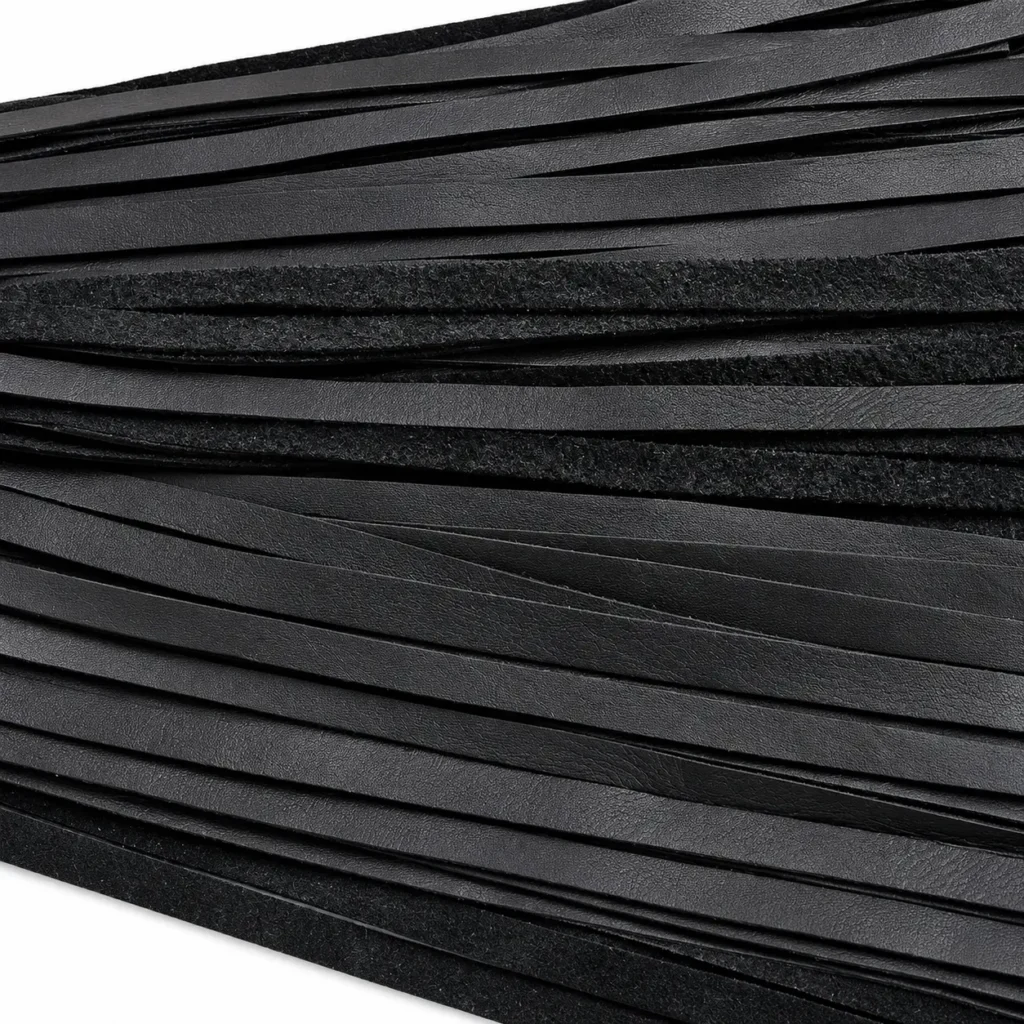
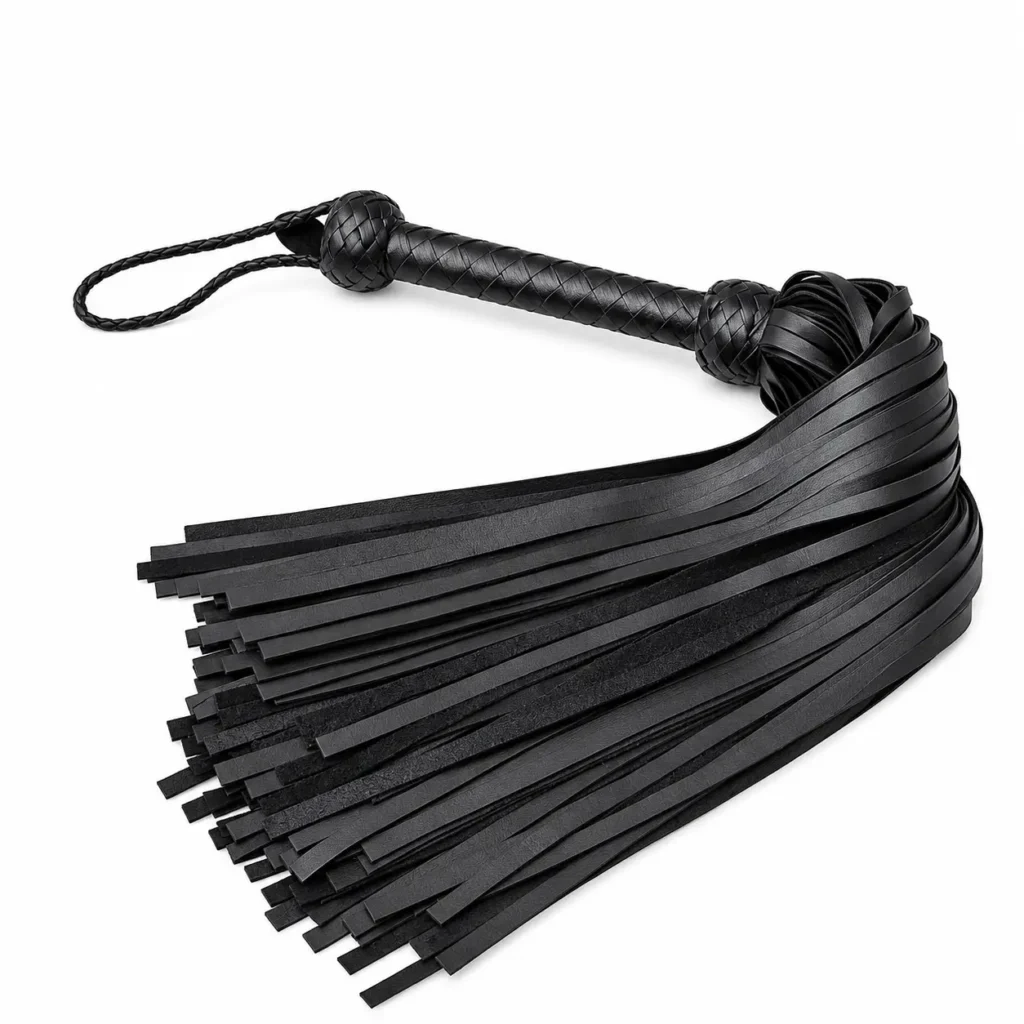
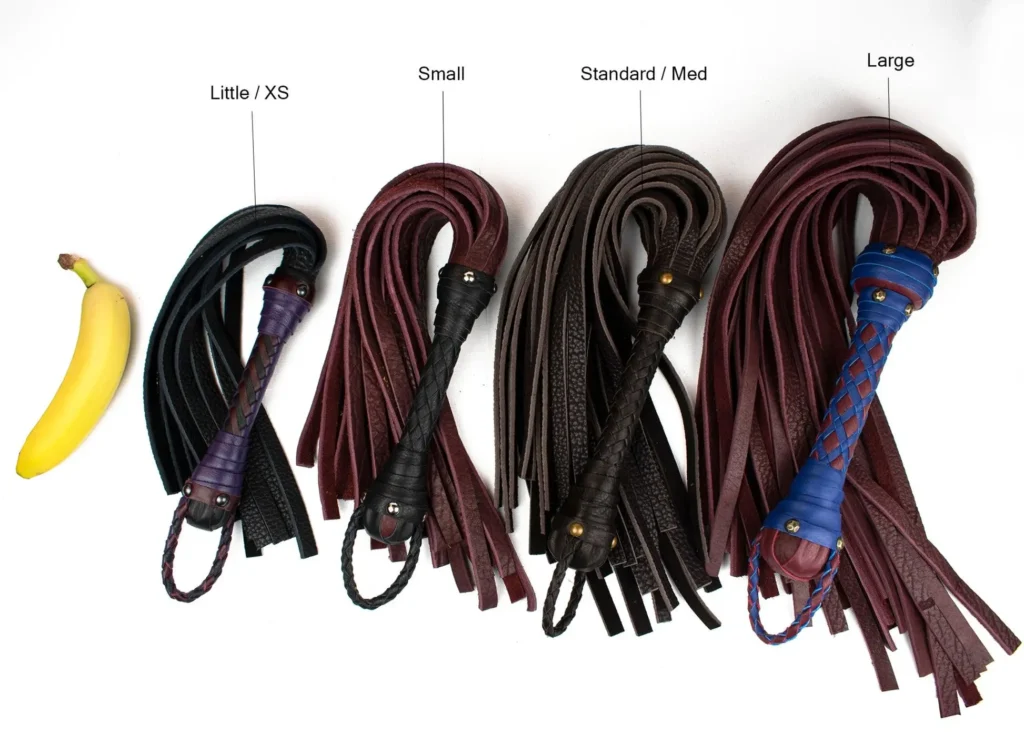
Leather floggers come in several designs, ranging from lightweight options to heavy and rugged constructions. Understanding these categories helps buyers compare products based on their physical characteristics rather than appearance alone.
Traditional leather floggers use leather falls attached to a handle. Their construction can vary significantly depending on leather thickness, tail width, length, and overall weight.
For example, the Mr Thuddy Original is listed with 36 rich-grain leather tails measuring approximately 21 inches. Its handle measures 9 inches and features a woven leather grip and wrist strap. The product weighs nearly one pound.
Another example is the Super Thuddy, which features 100 grain leather tails measuring approximately 18.5 inches long and 1/4 inch wide.
These examples demonstrate how different leather floggers can have very different constructions even when they belong to the same general product category.
When comparing traditional leather designs, consider:
Suede floggers are another popular option. Their soft, flexible tails can provide a different experience from firmer leather falls.
Light suede designs are often considered approachable for people exploring floggers for the first time. However, suede should not automatically be considered mild.
A heavier suede flogger with longer and more substantial tails can still produce a significant impact.
Examples from the competitor catalog include:
The Green Hornet: A 100% suede design featuring 36 tails measuring approximately 20.5 inches and a 9-inch handle with a braided suede grip.
Turquoise Bomber: A suede flogger featuring 36 tails measuring approximately 20.5 inches and an 8.5-inch handle.
The Gentle Emperor: A design featuring 35 suede tails measuring approximately 18 inches and 5/16 inch wide, with a 7-inch metal handle.
These examples show that suede floggers are available in different sizes, handle styles, and constructions.
Heavy leather floggers are generally associated with substantial construction and greater overall weight.
Some designs feature wide tails, thick materials, or a larger number of leather falls. These characteristics can contribute to a fuller, deeper impact sensation.
The competitor catalog includes several examples:
These products demonstrate that heavy floggers are not defined by one particular design.
Some use many narrow tails, while others use fewer but considerably wider falls.
Weight, flexibility, material, and balance should all be considered when comparing these designs.
Lightweight floggers have a different construction approach from heavier models. They may feature shorter tails, lighter materials, smaller handles, or fewer substantial components.
The competitor catalog includes several lightweight examples.
The Napoleon
The Magic Mini
Dragon’s Tongue I
Mighty Mini
These examples show that lightweight floggers can have very different designs. A smaller overall size does not necessarily mean every product will feel identical.
Some floggers use unusual materials, decorative construction, or distinctive tail designs.
Examples in the supplied product catalog include:
These designs demonstrate how floggers can differ beyond traditional straight leather falls.
Buyers interested in specialty designs should pay attention to their construction, materials, handle characteristics, and intended use.
Leather and suede are two important materials to understand when comparing floggers.
Both materials can be used in different constructions, and neither automatically determines how intense a flogger will feel.
Leather floggers are available in different weights, thicknesses, finishes, and tail configurations.Depending on their construction, they can produce broader, deeper sensations or more defined contact.
For example, a design with wider and heavier leather falls may feel considerably different from a lightweight leather flogger with narrower tails.
Leather floggers are also available with different handle constructions, including braided leather grips and polished leather handles.
Suede floggers generally feature soft and flexible tails.
Lightweight suede designs are often considered approachable for beginners because of their flexible construction.
However, weight and tail dimensions remain important. A heavy suede flogger with long tails can still deliver a strong impact.
Suede also requires consideration when it comes to care and maintenance.
There is no universal answer.
The better choice depends on the desired sensation, product weight, flexibility, and comfort.
| Feature | Leather | Suede |
|---|---|---|
| Available weights | Different weights | Different weights |
| Tail flexibility | Depends on construction | Often soft and flexible |
| Sensation | Broad or defined, depending on design | Often associated with softer sensations |
| Tail configurations | Multiple designs | Multiple designs |
| Beginner suitability | Depends on weight and control | Lightweight options can be approachable |
| Care considerations | Depends on material and finish | Can require particular care |
The most important consideration is the complete construction rather than the material name alone.
One of the most important factors when choosing a leather flogger is understanding the difference between thuddy and stingy sensations.
These terms describe different types of impact sensations.
A thuddy sensation is generally described as broader and deeper.
Floggers with wider, heavier, and flexible tails often lean toward this type of sensation.
The impact is distributed across a broader area rather than being concentrated into narrow contact points.
Several construction features can contribute to a thuddier feel:
However, these are contributing characteristics rather than guarantees.
A stingy sensation is generally sharper and more concentrated.
Narrower or firmer tails can create more focused contact points.
Some synthetic materials and narrow tail configurations may produce particularly sharp sensations.
For example, the Sportsheets Saffron in the competitor review uses thin polyurethane and nylon falls. The reviewer describes its sensation as light and sharp or stingy.
This illustrates why material and tail construction matter when evaluating a flogger.
Yes. Many floggers fall somewhere along a spectrum rather than fitting into only one category.
A flogger can be used in ways that create different sensations, and its construction contributes to the result.
For this reason, product descriptions that explain material, tail dimensions, and weight are more informative than a simple thud or sting label.
The competitor product catalog uses a Thud vs. Sting Meter on its product pages.
This type of feature helps customers compare products based on their intended sensation characteristics.
Rather than relying only on product names, buyers can consider the stated characteristics alongside:
A comparison tool is most useful when supported by clear product specifications.
Tail width is an important design characteristic.
Wider tails generally distribute impact over a broader area and are associated with fuller, thuddier sensations.Narrower tails concentrate contact into smaller areas and can produce sharper sensations.However, width should never be considered separately from the other construction features.For example, a narrow but flexible tail may behave differently from a narrow and firm tail.
Similarly, wider tails can vary significantly depending on their weight, thickness, and material.
The supplied product catalog includes several examples of different tail widths.
| Product | Tail width |
|---|---|
| Super Thuddy | 1/4 inch |
| Gentle Emperor | 5/16 inch |
| Silicone Master | 3/8 inch |
| Big Max | 3/4 inch |
| Master Blaster | 4 braided tails |
These specifications demonstrate the range of available designs.
When buying a leather flogger, compare tail width with the complete product description instead of assuming that wider always means better.
Tail length affects the working radius, movement, and handling characteristics of a flogger.Longer tails provide a larger working radius, but they can also make distance more difficult to judge.For someone learning to handle a flogger, a manageable length is generally more important than choosing the longest available design.Standard-length floggers are often easier to manage in smaller spaces and can provide a closer more intimate handling experience.
Longer designs may have different handling characteristics and require more attention to control.
Standard-length floggers are often considered practical when working in smaller spaces.Their more manageable length can make it easier to judge distance and reduce the challenges associated with longer falls.
Longer floggers have a greater working radius.
However, the additional length can make control more challenging, particularly for someone who is still learning.
Examples in the competitor catalog include:
These examples demonstrate how much tail length can vary between flogger designs.
Yes, but tail count should not be treated as an intensity rating.
The number of falls affects coverage, weight distribution, and the number of distinct contact points.Floggers with more tails may provide broader coverage, while designs with fewer tails may create more distinct contact points.However, two floggers with the same tail count can behave very differently.
For example, consider two hypothetical comparisons:
Although both have the same number of falls, their material, weight, and flexibility are different.
The competitor catalog also demonstrates considerable variation in tail counts.
| Flogger | Number of tails |
|---|---|
| Mr Thuddy | 36 |
| Super Thuddy | 100 |
| The Enforcer | 72 effective tails |
| Loving Roses | 9 |
| The Gentle Emperor | 35 |
| Green Hornet | 36 |
| The Napoleon | 20 |
| The Magic Mini | 70 |
| Mighty Mini | 60 |
The right way to compare tail counts is to consider them alongside tail dimensions and total product weight.
A higher number of tails does not automatically indicate a more intense flogger.
Weight and balance are essential considerations when selecting a leather flogger.A heavier flogger carries more momentum and may require more physical effort to handle.It can also become tiring during extended handling.A very lightweight flogger offers a different handling experience and may feel quicker, but lightweight construction does not automatically make a product easier to control.
Balance is equally important.
A well-balanced flogger should feel comfortable in the hand, with a handle and tail construction that work together.
Before choosing a product, consider:
Holding a flogger before purchasing can help buyers understand its physical characteristics.
The handle is an important part of the overall flogger design.Even when two floggers have similar tails, differences in handle construction can affect comfort and handling.A good handle should feel comfortable and provide a secure grip.
Flogger handles come in different lengths.The competitor catalog includes handles ranging from approximately 6 inches to 12 inches.Shorter handles can be found on mini designs, while other models feature longer handles.
Grip thickness and surface texture influence how the handle feels in the hand.Some floggers use braided leather grips, while others have polished leather, suede, wood, or metal handles.Buyers should consider which construction feels comfortable.
The relationship between handle weight and tail weight is another important consideration.A handle that feels uncomfortable or poorly balanced can make a flogger difficult to manage.
Some floggers include wrist straps or hanging loops.Examples in the competitor catalog include Mr Thuddy and Mr Mega Thuddy, both of which feature wrist straps.A secure construction and comfortable grip should remain important considerations when comparing products.
Choosing a first leather flogger does not require purchasing the smallest or most intimidating-looking product.The most useful starting point is finding a design that feels comfortable, manageable, and controllable.Lightweight floggers with soft and flexible tails can be approachable starting options.However, product labels such as beginner-friendly should not replace an examination of actual specifications.
Consider the following features:
1. Manageable Weight
A lighter product may be easier to handle, although weight alone does not determine control.
2. Comfortable Handle
Choose a handle that feels secure and comfortable in your hand.
3. Flexible Tails
Soft and flexible tails can provide a different experience from firm or narrow falls.
4. Practical Tail Length
A manageable tail length can make distance easier to judge.
5. Clear Product Specifications
Look for descriptions that explain the material, tail dimensions, weight, and handle construction.
The competitor review includes the Bondage Boutique Advanced Extra Long Suede Flogger as its beginner pick.
Its listed specifications include:
The review describes its falls as long, thin, and lightweight, with a soft and sensual feel.
It also mentions some limitations, including the possibility that the design may feel too soft for people seeking heavier impact sensations.
The suede-wrapped handle may also be uncomfortable for some users, and suede requires particular care.
These details demonstrate why product comparisons should include both advantages and limitations.
When comparing leather floggers, looking at product photographs alone is not enough.
Two products can appear similar but have different specifications.
A useful comparison should consider the following characteristics.
| Buying factor | What to examine |
|---|---|
| Material | Leather, suede, synthetic alternatives |
| Tail count | Number of individual falls |
| Tail width | Broad or narrow construction |
| Tail length | Standard or extra-long |
| Weight | Lightweight, medium, or heavy |
| Handle | Leather, wood, metal, or suede |
| Grip | Braided, woven, or polished |
| Accessories | Wrist strap or hanging loop |
| Construction | Tail attachment and overall quality |
| Intended sensation | Thuddy, stingy, or mixed characteristics |
Comparing these details can help buyers understand the differences between available products.
Customer reviews can provide additional perspectives about a product.
The competitor catalog includes customer reviews and video links associated with several reviewers and demonstrations.
A review can help customers examine product characteristics beyond the basic specifications.
However, buyers should still compare the actual product details rather than relying on a single opinion.
Product videos can provide a visual reference for construction and movement.
The competitor catalog includes Florentine flogging videos and other product-related demonstrations.
These can help customers understand how different designs appear in use.
Safety, communication, and control are essential considerations when discussing impact-play accessories.
The supplied competitor sources emphasize that equipment alone does not determine safety.
Consent, communication, knowledge of anatomy, and control are more important than selecting a particular product.
Before any activity, participants should discuss their expectations and boundaries.
Important topics include:
Both participants should understand and agree to the boundaries.
A traffic-light system is one communication method mentioned in the competitor material.
It uses three signals:
A clear communication system helps participants express how they feel and communicate when something needs to change.
The competitor sources identify the buttocks and fleshy upper thighs as learning target areas.
They also advise avoiding sensitive and vulnerable areas, including:
The supplied material also emphasizes that people should not assume they understand anatomy simply because they own a flogger.
The competitor guidance recommends beginning lightly and increasing gradually only with consent.
Participants should communicate throughout the experience and stop if something feels wrong.
One competitor recommends practicing with a pillow or folded blanket.
This provides an opportunity to become familiar with the flogger’s reach and landing pattern.
Particular attention should be given to wrapping, which can occur when tails move around the target area rather than landing as intended.
Control and awareness should remain priorities.
The competitor review also recommends keeping an initial session brief, maintaining communication, and checking for unexpected bruising or numbness.
A flogger should never be considered automatically safe simply because it has multiple soft tails.
Choosing a flogger based only on its appearance can lead to a poor purchasing decision.
Here are several common mistakes highlighted by the differences and buying considerations in the supplied competitor material.
Tail count is not an intensity rating.
A flogger with 100 lightweight suede tails may have very different characteristics from one with fewer heavy leather falls.
Always compare material, weight, and tail dimensions.
Longer tails increase the working radius but can make distance more difficult to judge.
A manageable length can be a more practical choice than the longest product.
Weight influences momentum and handling.
A heavier flogger may require more effort and can cause fatigue.
Buyers should consider how comfortable the product feels in their hands.
Suede is often associated with soft and flexible tails.
However, weight, thickness, and length still matter.
A substantial suede flogger can deliver a much different experience from a lightweight design.
The handle is not just a decorative component.
Grip thickness, texture, length, balance, and construction all influence comfort.
A beginner label does not guarantee that a particular flogger will feel comfortable or manageable.
Buyers should examine the actual specifications.
Material care and storage are also worth considering before purchasing a flogger.
The supplied competitor sources specifically identify storage and care as factors buyers should research.
Suede, for example, is described in the competitor review as harder to care for.
Different materials and finishes may have different care considerations.
Before purchasing, examine the manufacturer’s care information and storage recommendations for the particular product.
This is especially important when comparing leather, suede, synthetic, and specialty constructions.
Rather than assuming every flogger requires identical maintenance, follow the care guidance provided for its material.
Flogger products are not limited to the main handle-and-tail construction. The supplied catalog also includes several accessories and customization options.
The competitor catalog lists a leather personalization option.
Its stated specifications include:
The catalog also states that braided tails cannot be branded.
The catalog includes leather and suede flogger earrings.
Their listed characteristics include:
Flogger key chains are another listed accessory.
Their specifications include:
The Emperor Handle is listed as an accessory for DIY flogger construction.
The catalog describes it as an approximately 7-inch metal handle with a 1.5-inch ball and a weight of 8–9 ounces.
These accessories demonstrate the variety of related products available alongside traditional floggers.
A single flogger is enough to begin exploring different designs.
The House of Dasein buying guide notes that one flogger is sufficient as a starting point, while a pair can be considered later for more advanced techniques and rhythms.
Choosing one or two should depend on the buyer’s preferences and experience.
A single product also allows buyers to concentrate on its weight, construction, handling, and characteristics before considering additional equipment.
There is no single leather flogger that is right for everyone.
The best choice depends on individual preferences, physical comfort, construction, and the intended experience.
Before purchasing, consider these questions:
What type of sensation are you interested in?
Think about whether you prefer broader, deeper sensations or sharper, more concentrated contact.
Which material do you prefer?
Compare leather, suede, and synthetic options based on their construction and characteristics.
How much weight feels comfortable?
Consider whether the product feels manageable in your hand.
What tail length do you need?
Compare standard and extra-long designs based on the working space and control requirements.
Are the tails wide or narrow?
Tail width influences how contact is distributed.
Does the handle feel comfortable?
Grip thickness, texture, length, and balance should all be considered.
Is the construction secure?
Look for clearly described tail attachment and overall product construction.
Have you reviewed the product information?
Read the specifications, customer reviews, and available product demonstrations before making a decision.
Answering these questions can make the buying process more straightforward.
A leather flogger is an impact-play accessory used in BDSM activities. It generally consists of a handle and multiple flexible leather tails. Different designs offer different construction characteristics and sensations.
Leather and suede differ in material characteristics and construction. Suede designs often feature soft, flexible tails, while leather floggers are available in different weights, thicknesses, and finishes. Neither material automatically determines intensity.
Some lightweight leather and suede floggers may be approachable for beginners. However, suitability depends on the complete design, including weight, length, flexibility, balance, and handling comfort.
Thuddy describes a broader and deeper impact sensation. Wider, heavier, and flexible tails are generally associated with this characteristic.
Stingy describes a sharper and more concentrated sensation. Narrower or firmer tails are generally associated with this characteristic.
Not necessarily. Tail count is not an intensity rating. Material, width, length, thickness, weight, and flexibility all contribute to how a flogger behaves.
Longer floggers provide a greater working radius, but they can also make distance more difficult to judge. A manageable length may be more practical for someone learning to handle a flogger.
Heavier floggers carry more momentum and may produce a different impact sensation. However, overall construction, tail dimensions, flexibility, and handling also matter.
Consider handle length, grip thickness, surface texture, balance, construction quality, and the security of the tail attachment. A comfortable grip is an important part of choosing a flogger.
Synthetic floggers can differ significantly depending on the material. Faux leather, nylon, rubber, and silicone may have different characteristics. Synthetic does not automatically mean mild.
The competitor buying guide notes that many floggers can be used for different sensations. The material, construction, and handling all contribute to the experience.
Yes. One flogger is enough to start exploring different designs. A pair can be considered later by people interested in more advanced techniques and rhythms.
Florentine is a technique referenced in the competitor catalog, which includes products and demonstrations associated with Florentine flogging. Certain catalog products are specifically described as being intended for Florentine use.
Reading customer reviews can help buyers compare product characteristics and understand different experiences. Product specifications should still be reviewed carefully.
Storage and care should be considered before purchasing. Follow the manufacturer’s recommendations for the specific material and construction, particularly when comparing leather and suede products.
Choosing the right leather flogger involves more than selecting a product based on its appearance, price, or number of tails.
Material, tail width, tail length, weight, balance, flexibility, and handle construction all influence the characteristics of a flogger.
Leather designs offer a variety of constructions, from lightweight options to heavy models with substantial falls. Suede alternatives provide another range of flexible designs, while synthetic materials offer additional choices.
There is no universal best flogger. A suitable choice should match personal preferences, comfort, handling ability, and an understanding of the product’s construction.
Take time to compare specifications, read reviews, examine available demonstrations, and understand the differences between thuddy and stingy sensations.
Most importantly, prioritize consent, communication, control, and safety when considering any impact-play accessory.
A well-informed buying decision starts with understanding what makes each flogger different.