For anyone who carries daily the difference between Leather gun belt a holster that performs and one that lets a shooter down often comes down to a single overlooked item: the belt. A soft, thin strap might hold up a pair of jeans but it rarely keeps a holster steady through a full day of movement. This guide walks through what separates a dependable leather gun belt and holster pairing from a disappointing one, covering construction, thickness, fit and style. Readers will come away understanding how to match a belt to their setup, whether they carry for duty, concealed carry or everyday use so the belt supports the gear instead of working against it.
Most department store belts are built for looks not load-bearing work. Once a holster, a firearm and a spare magazine pouch get added to the mix a typical belt sags, twists, or curls at the edges within hours. Many people search for a leather belt gun setup without realizing the two terms are often used interchangeably online both pointing to the same purpose-built accessory rather than an ordinary belt pulled from a regular wardrobe. A true gun belt is engineered stiffer and denser specifically so it resists bending under concentrated weight, keeping the holster level and predictable no matter how much the wearer moves.
Full-grain leather keeps the natural fiber structure of the hide intact, which is what gives a full grain leather gun belt its strength and rigidity. Because the surface has not been sanded down or corrected the material holds its shape under pressure instead of stretching out over time. Buyers who want a belt that still looks sharp after years of daily wear should look for full-grain leather listed explicitly in the product description since lower grades are often marketed with vaguer terms like “genuine leather.”
A thick leather gun belt, generally in the 12 to 15 ounce range, resists the sag that thinner belts cannot avoid. Many premium options add a center layer, sometimes referred to as a reinforced leather gun belt, which sandwiches an additional material between two leather layers for extra stiffness without adding excessive bulk. This construction matters most for anyone carrying a full-size handgun, since a thinner belt will visibly bow under that kind of weight by midday.
Belt clips, loops, and paddle attachments are designed around a specific width range, usually between 1.5 and 1.75 inches. Before buying, it helps to check the holster’s listed belt-width compatibility, since a belt that is too narrow allows the holster to shift, while one that is too wide simply will not thread through the loops.
What works best for one person is not always the right setup for another. A duty officer carrying a full rig needs maximum rigidity and width while someone carrying a compact pistol under a t-shirt needs something slimmer that still holds its shape. Matching belt stiffness to holster weight rather than buying the thickest belt available, tends to produce the most comfortable long-term result.
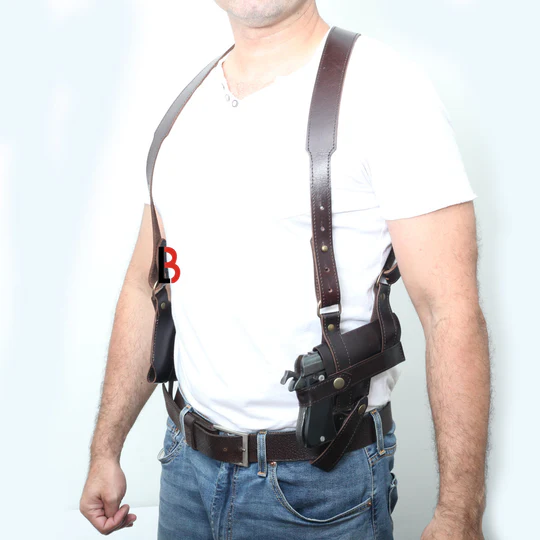
A leather gun belt western in design typically features wider proportions, decorative stitching and sometimes tooled leather patterns, echoing traditional ranch and rodeo belts. A cowboy leather gun belt is built with the same heritage aesthetic but is increasingly reinforced with modern stiffening techniques so it performs as well as it looks making it a popular choice for range days, western events or anyone who simply prefers the classic look.
For those drawn to a more rugged, old-world silhouette, a leather gunslinger belt often includes wider hardware, heavier stitching and a slightly rougher finish than a standard dress-style gun belt. It suits open carry and outdoor use particularly well.
Not everyone wants their belt to announce what it is doing. Sometimes referred to as an everyday carry belt, a leather edc belt is typically built slim enough to pass for a regular dress or casual belt while still offering the stiffness needed for holster support underneath a shirt. Similarly, a concealed carry dress belt is designed to sit comfortably with slacks or tailored pants, letting the wearer move between an office and daily carry without switching belts.
Someone shopping in this category should prioritize a few specific traits over general leather quality alone.
Shoppers researching conceal carry belts broadly including concealed carry belts for women, will find that the core requirements do not change much by gender. What often differs is belt width and overall bulk, since a belt built for a smaller waist and different clothing silhouette benefits from a slightly narrower cut while keeping the same stiffness standards.
Searching this category quickly surfaces well-known names. A kore essentials leather gun belt uses a ratchet-style buckle system rather than traditional holes which some shoppers prefer for its fine-tuned adjustability. A kore leather gun belt is not the only ratchet-style option on the market though it is among the most recognized. Buyers researching a bullbelt or similar branded products should compare the leather grade and stitching method just as carefully as they would with any handmade alternative, since brand recognition alone does not guarantee construction quality.
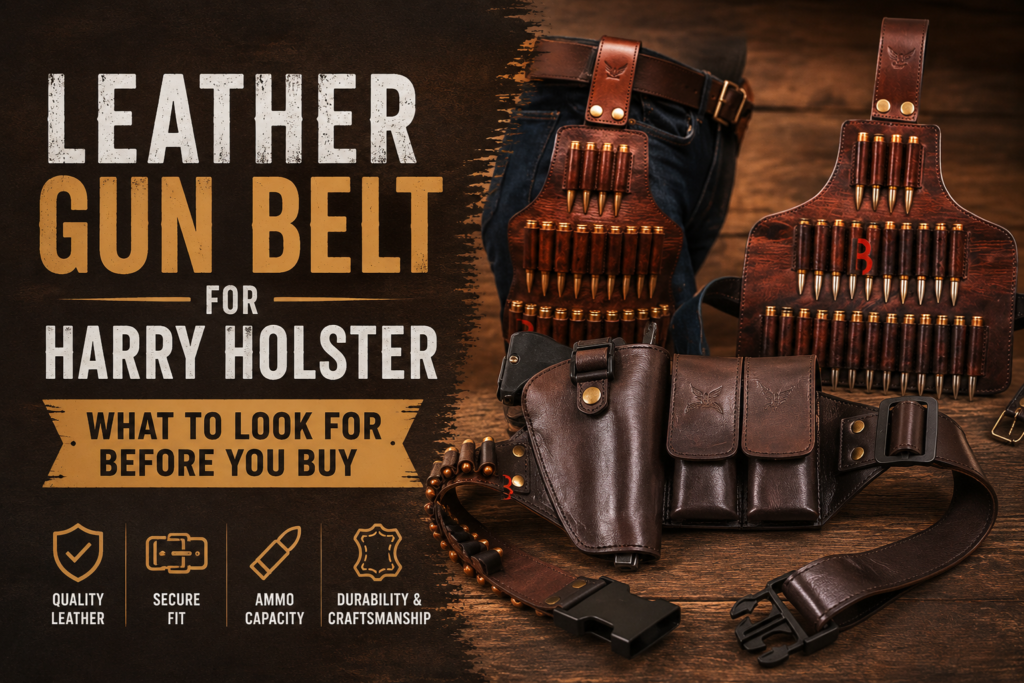
A men’s leather gun belt should typically be sized two inches larger than the wearer’s pants size, since it needs to sit slightly looser to accommodate a holster and clear the belt loops without excessive pressure. Sizing too tight forces the leather to stretch unevenly around the load-bearing area, while sizing too loose defeats the purpose of a stiff belt altogether.
| Pants Size | Recommended Belt Size |
|---|---|
| 32 | 34 |
| 34 | 36 |
| 36 | 38 |
| 38 | 40 |
| 40 | 42 |
A best leather gun belt is not defined by price alone. The strongest options combine full-grain hide, a stitched or bonded reinforcement layer, a buckle rated for daily use, and stitching dense enough to survive years of friction against a holster. Anyone comparing the best gun belt concealed carry shoppers recommend most often will notice the same handful of construction details repeated across nearly every top pick, which is a reliable signal of what actually matters versus what is just marketing language.
Reviews and forums that rank the best gun belts for concealed carry, along with lists of the best belts for concealed carry more broadly, tend to agree on one point: leather quality and stitch density matter far more than logo recognition or price point alone.
For some buyers, a belt is also a statement. A 2nd amendment belt, whether marked with subtle stitching or a discreet emblem, lets a wearer express that value without it being obvious to a casual observer. Functionally, it still needs to meet the same standards as any other option on this list. Likewise, an arms belt built for daily belt carry should never sacrifice comfort for symbolism, since a belt worn every day needs to disappear into a routine rather than become a daily irritation.
What is the difference between pairing a gun belt with a holster versus buying each separately?
Buying a belt and holster from the same brand does not guarantee compatibility. What matters is matching belt width and stiffness to the holster’s actual attachment hardware, regardless of who made either piece.
Is a thicker belt always better for concealed carry?
Not necessarily. Extra thickness adds rigidity, but past a certain point it becomes uncomfortable and harder to conceal under lighter clothing. Matching thickness to the firearm’s weight is more useful than maximizing thickness alone.
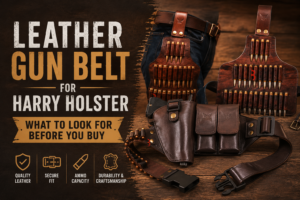
What should someone look for if they search for a leather gun belt harry holster combination online?
That kind of search usually reflects an interest in pairing a sturdy leather belt with a specific holster brand or style rather than a single named product. The safest approach is still to check belt width against the holster’s listed compatibility before buying either piece.
Do slim carry belts work for larger firearms?
This style is generally built for slimmer profiles and lighter carry setups. Full-size firearms usually call for a wider, stiffer option instead.
Choosing the right belt is less about finding the flashiest option and more about matching construction, width and stiffness to what is actually being carried day to day. A well-built leather option whether a rugged western style or a slim dress belt should disappear into daily life while quietly doing its job. For handmade options built from full-grain hide with reinforced stitching, LeatherBond offers a range of belts designed specifically to support a holster through daily wear.