Whips and floggers are two of the most iconic tools in impact play, yet plenty of beginners couldn’t say what actually separates one from the other. Both fall under the broader umbrella of BDSM gear but they create very different sensations, require different handling and suit different comfort levels. This guide walks through what whips and floggers actually are, how they differ, the safety basics every beginner should know and how to choose gear that matches experience and comfort. For mature audiences curious about impact play, this is the practical starting point.
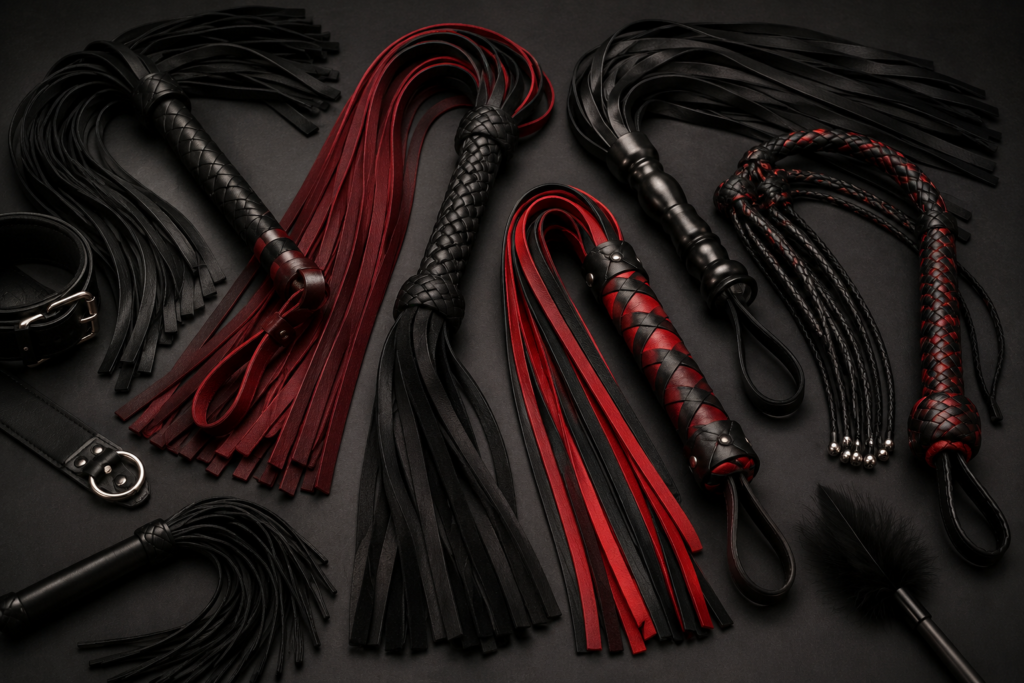
A flogger is made up of multiple soft or semi-firm falls (the individual strands) attached to a single handle, designed to spread sensation across a wider area of the body with each strike. A whip, by contrast is typically a single long tapered strand built to deliver a more precise, targeted sensation and generally requires far more skill to use safely. Both belong to the broader category of impact play tools, alongside things like paddles and crops and both can range from beginner-friendly to genuinely advanced depending on design.
A lot of newcomers assume whips and floggers are only about pain but for most people who enjoy impact play, it’s really about heightened sensations, rhythm, and the emotional connection built through trust between partners. There’s also a common assumption that a whip and a flogger are interchangeable. In reality, they behave completely differently in the hand, and mixing them up as a beginner is one of the fastest ways to end up with an unpleasant first experience.
The appeal varies from person to person. For some, it’s the psychological side, tied to dynamics like dominance and power exchange. For others, it’s purely the physical sensation, the difference between a soft flogger’s dull thud and a firmer crop’s sharper sting. Impact play can also build genuine excitement and anticipation within a scene, especially when paired with open communication about intensity and pace.
Every impact play session should start with a clear conversation about limits, intensity, and any areas of the body that are off the table. Open communication before, during, and after a scene, alongside a simple check-in system, keeps both partners aligned and comfortable throughout.
Pain tolerance varies enormously from person to person, and even session to session for the same person. What feels exciting on a good day might feel like too much on a stressful one, so it’s worth checking in rather than assuming yesterday’s intensity still applies today.
A few safety habits matter from the very first session:
None of this is about dampening the experience. Good technique and basic precautions are exactly what let both partners relax into it and actually enjoy the sensation.
Floggers are the most beginner-friendly option in this category, thanks to their wide, spread-out impact. Genuine leather falls tend to offer a satisfying thud with a softer edge, while stiffer materials deliver a sharper sensation. Fall count, length, and weight all affect how a flogger feels, so trying a few styles (or starting with a versatile mid-weight option) is a smart way to figure out personal preference.
True whips, including single-tail designs, demand real skill and practice before they’re used on a partner. A poorly aimed whip can easily cause injury, so this category is best approached only after building solid experience with easier tools like floggers or crops.
The cat o’ nine tails is a multi-strand whip with historical roots as a punishment tool, now more commonly used within consensual kink as a sharper, more intense alternative to a standard flogger. It sits firmly in intermediate-to-advanced territory rather than a true first purchase.
While technically their own category, crops and paddles are often grouped alongside whips and floggers as impact play tools. Crops deliver a sharp, precise sting similar to a light whip strike, while paddles spread impact more like a flogger but with a firmer, flatter sensation.
Some experienced hobbyists build their own gear at home, but DIY whips carry real risk if the materials or construction aren’t done properly, since uneven weighting or rough edges can cause injury. Beginners are almost always better off starting with a well-made, purpose-built piece from a reputable maker before attempting anything homemade.
Material. Genuine leather remains the gold standard for durability and feel, while cruelty-free or synthetic options offer a comparable experience for anyone who prefers non-toxic, vegan materials.
Weight and fall count. Lighter floggers with more falls tend to spread sensation gently, making them the easiest starting point. Heavier or fewer-fall designs concentrate impact more intensely and are better suited to users with some experience.
Grip and handling. A comfortable, secure handle matters more than people expect, especially during longer sessions, since a slipping grip can throw off aim and control.
Budget. A single well-made flogger covers most beginner scenarios. There’s no need to buy a full kit of whips, crops, and paddles before knowing which sensation actually suits personal preference.
Shop LeatherBond’s genuine leather floggers and impact play accessories for a comfortable, beginner-friendly starting point.
For couples exploring this together for the first time, starting with a soft flogger on a fleshy area like the upper back or thighs is the easiest way to gauge interest before investing in more advanced gear. Slowing down, checking in often, and building up intensity gradually tends to lead to a far better first experience than jumping straight to something intense.
Anyone planning to use a whip eventually should practice technique solo first, ideally with instructional videos or guidance from someone experienced, before ever using it on a partner. Floggers are more forgiving to self-teach with, but whips genuinely require supervised practice to use safely.
Beyond one-on-one scenes, some people connect with impact play through workshops or local kink community events, where experienced practitioners demonstrate proper flogging techniques and handling in a low-pressure setting. These spaces are a great way to build real skill before trying anything more advanced at home.
If anything feels like too much, physically or emotionally, stopping immediately is always the right call.
What’s the difference between a whip and a flogger? A flogger has multiple soft falls that spread impact across a wider area, making it more beginner-friendly. A whip is typically a single tapered strand that delivers a sharp, precise strike and requires far more skill to use safely.
Are floggers safe for beginners? Yes, floggers are generally considered the safest starting point in impact play, especially soft, wide-fall designs used on fleshy areas like the upper back or thighs.
What materials are best for a first flogger? Genuine leather is a popular choice for its balance of durability and sensation, while synthetic or cruelty-free materials offer a similar feel for anyone avoiding animal products.
Can whips and floggers cause injury? Yes, especially whips, if used incorrectly or aimed at bony areas like the spine or joints. Sticking to soft floggers, safe target areas, and proper technique significantly reduces this risk.
How do I know which intensity is right for me? Start light and build up gradually, checking in with a partner throughout. Pain tolerance varies by person and even by session, so what worked last time isn’t always the right intensity today.
Whips and floggers open up a huge range of sensation once the basics are in place. What matters most isn’t the gear itself, it’s starting slow, communicating clearly, and building skill before intensity. A quality, beginner-friendly flogger and a bit of patience go a long way toward a positive first experience.
Browse LeatherBond’s full collection of handcrafted floggers and impact play gear to find a comfortable place to start.