
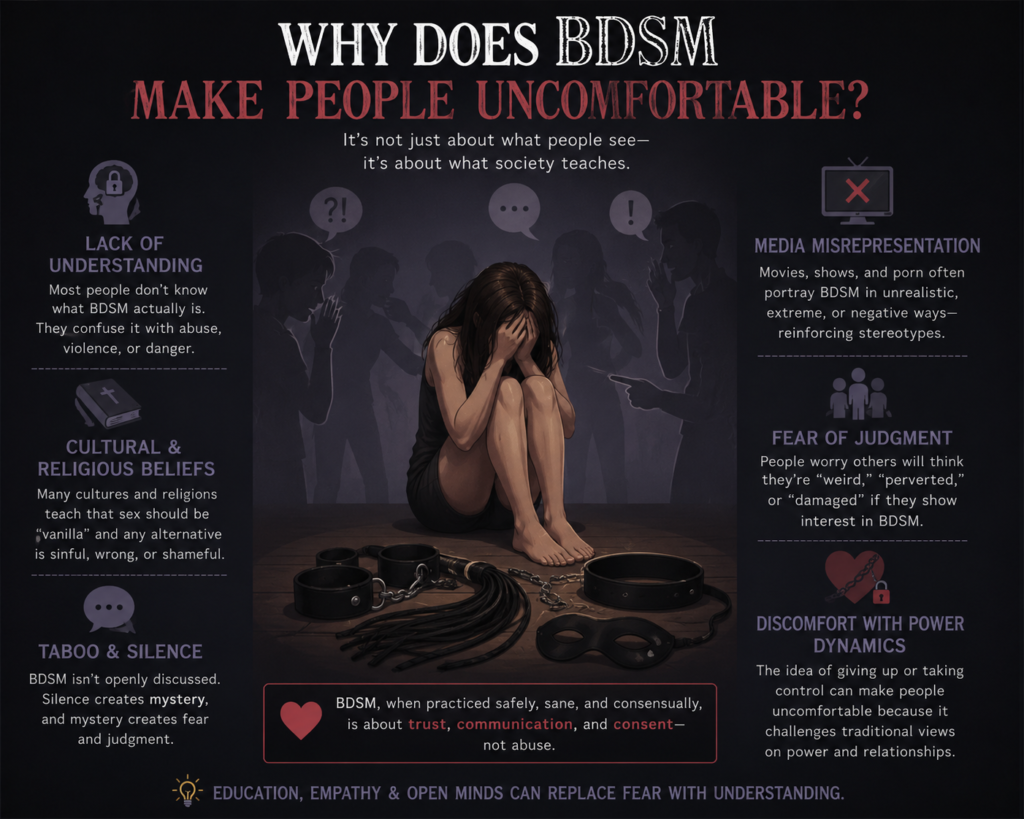
BDSM still makes a lot of people squirm, even in 2026 when conversations about sex and relationships are more open than ever. If you have ever brought up the topic at a dinner table or noticed someone change the subject the moment kink comes up, you already know this discomfort is real. But why does it happen? The answer is not as simple as “people are prudish.” It involves psychology, culture, media misrepresentation and even personal trauma. In this article, we break down the real reasons behind this discomfort and explain why understanding BDSM properly can remove a lot of unnecessary stigma.
BDSM stands for Bondage and Discipline, Dominance and Submission, Sadism and Masochism. It covers a wide range of consensual practices built around power exchange, trust and sensation play. Despite popular belief, BDSM is not about abuse or chaos. It is rooted in clear communication, negotiated boundaries and mutual consent between partners.
The confusion starts when people equate BDSM with violence or non-consensual harm, which could not be further from the truth. Most experienced practitioners follow strict safety protocols, including safe words, aftercare and detailed discussions before any scene begins.
Most people learn about BDSM through movies, internet jokes or secondhand rumors rather than honest, factual sources. This creates a skewed picture filled with extremes, leaving little room for the nuanced, consent-driven reality of the practice.
The idea of intentionally giving or receiving pain or surrendering control to another person, naturally triggers discomfort in people who have never experienced these dynamics. Our brains are wired to associate pain with danger, so even consensual pain play can feel alarming to an outsider.
Many cultures and religious upbringings frame sex as something private, vanilla and reproduction focused. Anything outside that narrow definition, including BDSM can trigger a deep sense of moral discomfort, even if the person logically understands it is consensual.
People often feel uneasy not because BDSM itself bothers them but because they worry about being judged for showing curiosity or interest. This fear keeps the topic taboo which in turn keeps people uninformed creating a cycle of discomfort.
Films and TV shows often dramatize BDSM in unrealistic or even harmful ways, skipping over consent, communication and aftercare. This gives audiences a distorted view that emphasizes shock value over the actual emotional and physical safety that real practitioners prioritize.
For some individuals, discomfort with BDSM stems from past trauma, abusive relationships or negative associations with control and submission. This is a deeply personal reason and should always be respected without judgment.
| Myth | Reality |
|---|---|
| BDSM is abusive | BDSM relies on consent, communication and safety, unlike abuse which lacks all three |
| Only “damaged” people are into BDSM | People from all backgrounds and mental health profiles practice BDSM safely |
| It is always painful | Many BDSM activities focus on sensation, control or psychological dynamics rather than pain |
| There are no rules | Most practitioners follow strict negotiated boundaries, safe words and aftercare routines |
| It is the same as what’s shown in movies | Mainstream media rarely shows realistic communication or safety practices used in real BDSM |
The biggest difference between BDSM and abuse is consent. Every scene, every activity and every power exchange in healthy BDSM is discussed and agreed upon beforehand. Partners use safe words to pause or stop activity instantly and aftercare is a standard part of any session to help both partners reconnect emotionally and physically.
Once people understand that consent and communication form the backbone of BDSM, much of the discomfort starts to fade. It becomes less about shock and more about respecting personal boundaries and exploring trust in a structured way.
Comfort with BDSM is not a fixed trait. It depends on someone’s upbringing, past relationships, exposure to accurate information and personal values. Just as some people are naturally more open to trying new foods or travel experiences, others need time, education and trust before feeling comfortable with unconventional intimacy practices. None of these reactions are wrong, they are simply different starting points.
If you are exploring BDSM for the first time, starting with quality, body safe gear designed for beginners can make the experience far more comfortable and confidence building. Browsing trusted resources like LeatherBond.co can help you understand different types of gear, from soft restraints to introductory impact toys, all designed with safety and comfort in mind.
Discomfort around BDSM usually comes from misinformation, not the practice itself. Once people understand the emphasis on consent, communication and safety, the topic becomes far less intimidating. Whether you’re personally curious or just want to understand it better, approaching BDSM with an open and educated mindset is the best way to move past outdated stereotypes.
1. Is BDSM considered normal or healthy?
Yes, when practiced with full consent and clear communication, BDSM is considered a normal and healthy form of intimacy by many sex therapists and researchers.
2. Why do people feel embarrassed talking about BDSM?
Social stigma, lack of education and fear of judgment are the biggest reasons people feel embarrassed discussing BDSM openly.
3. Does liking BDSM mean someone has psychological issues?
No, multiple studies show no direct link between BDSM interest and psychological disorders. In fact, some research suggests practitioners often have strong communication skills and high self-awareness.
4. What is the difference between BDSM and abuse?
Consent is the core difference. BDSM is always negotiated and consensual, while abuse involves control without consent or respect for boundaries.
5. How can beginners start exploring BDSM safely?
Beginners should start with research, open communication with their partner, and beginner-friendly gear such as soft restraints or blindfolds before progressing further.
6. Why does BDSM make some people physically uncomfortable to watch or hear about?
This reaction often comes from the brain’s natural response to perceived danger, even when the activity is consensual and safe.
7. Can BDSM improve trust in a relationship?
Yes, many couples report that BDSM, when practiced safely, increases trust and emotional intimacy due to the high level of communication required.