So you’re curious about BDSM welcome. Whether you’ve done hours of research or just stumbled across the term, this BDSM beginner’s guide is exactly where you need to start.
BDSM can feel overwhelming at first. There’s new vocabulary, unfamiliar dynamics and a lot of noise online from people who either over-romanticize it or completely misrepresent it. The truth? BDSM is more accessible and more grounded in communication and trust than most beginners expect.
This guide is written specifically for people who are new to BDSM. We’ll walk you through the core concepts, explain Dom and Sub roles clearly, cover the rules every beginner must know, and give you practical first steps so you can explore safely and confidently.
Before diving into the how-to, here’s the short version: BDSM stands for Bondage, Discipline, Dominance, Submission, Sadism, and Masochism. It’s an umbrella term for a wide range of consensual adult practices involving power exchange, sensation play, and agreed-upon roles.
The single most important thing to understand from day one, BDSM is always consensual. Every activity, every role, every boundary is negotiated openly between partners before anything begins. That communication is what separates BDSM from harm.
If there’s one concept every BDSM beginner needs to understand first, it’s the Dom/Sub dynamic also written as Dom and Sub, Dominant and Submissive, or D/s.
The Dom (Dominant) is the partner who takes the leading role. In BDSM, the Dom:
Being a Dom is not about being aggressive or controlling outside of a negotiated dynamic. A good Dom is attentive, communicative and deeply responsible. The Dom’s power only exists because the Sub gave it to them.
The BDSM Sub (Submissive) is the partner who willingly gives up control. In BDSM, the Sub:
A common misconception is that being a Sub is passive or weak. It’s the opposite. Submission is a deliberate, powerful choice that requires enormous trust. Many people find subbing deeply freeing — a relief from everyday responsibility and decision-making.
A Switch is someone who enjoys both Dom and Sub roles. Many BDSM beginners discover they’re switches once they start exploring and that’s completely normal. Preferences often evolve over time.
Before you try anything, there are rules. Not suggestions rules. Every person in the BDSM community, from total beginner to seasoned practitioner, follows these.
Every single activity in BDSM must be explicitly agreed upon before it happens. This means talking actually talking about what you want to try, what you don’t want, and where your hard limits are. Consent in BDSM is:
A safeword is a pre-agreed word or signal that stops everything immediately. The most widely used system is the traffic light system:
Choose a safeword before every session. Use it without hesitation if you need to. Respect it instantly if your partner uses it.
A scene is a BDSM session or encounter. Before every scene especially as a beginner you and your partner should discuss:
This conversation is called negotiation, and it’s one of the most important skills in BDSM.
Aftercare is the care both partners give each other after a BDSM scene. Intense experiences even very pleasurable ones can cause an emotional or physical comedown (called “sub drop” in submissives, “dom drop” in dominants). Aftercare might look like:
Skipping aftercare is one of the most common mistakes BDSM beginners make. Don’t skip it.
Ready to explore? Here’s a practical, low-pressure path for BDSM starters.
Read. Watch educational content from reputable BDSM educators. Understand the vocabulary, the ethics, the risks. This guide is a great starting point but go deeper before you dive in physically.
Ask yourself: what draws you to BDSM? Is it bondage? The Dom/Sub power dynamic? Sensation play? Role-play? Having a clear sense of your own interests helps you communicate honestly with a partner.
If you’re exploring BDSM with an existing partner, bring it up honestly and without pressure. Share what interests you, ask what interests them, and make space for them to think about it. Don’t spring a scene on someone negotiate it.
If you’re new and unpartnered, the BDSM community (online and at local events like munches) is a great place to learn and eventually meet like-minded people.
For BDSM beginners, starting small is the right move. You don’t need an elaborate setup on day one. Consider starting with:
The goal of a first scene isn’t to push limits. It’s to build communication, trust, and a shared vocabulary with your partner.
After your scene and aftercare, when you’re both feeling settled, talk about it. What felt good? What didn’t land the way you expected? What would you change? This debrief is how BDSM beginners grow quickly and build a stronger dynamic together.
Here’s an overview of beginner-friendly BDSM activities, from lowest intensity to more involved:
| Activity | Type | Beginner-Friendly? |
|---|---|---|
| Blindfolds | Sensory | ✅ Yes |
| Light restraints (cuffs) | Bondage | ✅ Yes |
| Role-play / D/s dialogue | Power exchange | ✅ Yes |
| Light spanking | Impact play | ✅ Yes (negotiated) |
| Rope bondage (simple ties) | Bondage | ⚠️ Learn first |
| Floggers | Impact / Sensation | ⚠️ Learn first |
| Strict Dom/Sub protocols | Power exchange | ⚠️ Build up to it |
| Full bondage scenes | Bondage | ⚠️ Requires experience |
Start in the green zone. Work toward the amber zone as your communication, trust, and experience build.
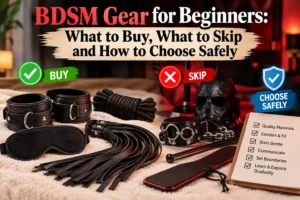
You don’t need much to get started but having quality gear makes a real difference in safety and experience. Here’s what most BDSM beginners consider first:
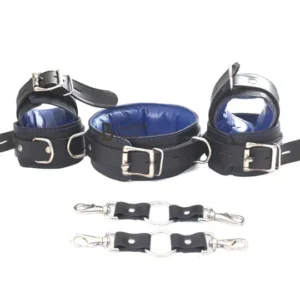
Leather wrist and ankle cuffs are one of the most popular beginner bondage tools. Unlike rope, they’re adjustable, easy to remove quickly, and much gentler on skin. Look for cuffs with a D-ring for versatile positioning and a quick-release buckle for safety.
A simple blindfold instantly changes the sensory experience of any encounter and costs almost nothing. Removing one sense heightens all the others, making it a perfect first step for beginners exploring sensation.
In BDSM, a collar is more than an accessory it’s a symbol. For beginners in a Dom/Sub dynamic, a collar represents the Sub’s chosen connection to their Dom. Many couples start with a simple leather collar as a meaningful first gesture of their dynamic.
If impact play interests you, a soft leather flogger is one of the gentler entry points. Used correctly on the fleshy areas of the body (thighs, buttocks, upper back), a light flogger creates sensation without serious risk. Always learn proper technique before using any impact tool.
Non-negotiable. If you’re doing any bondage, keep safety scissors (EMT shears) within reach at all times. In any situation where a restrained partner needs to be freed quickly, you need to be able to cut restraints instantly.
For BDSM beginners stepping into a Dom/Sub relationship, here’s what makes the difference between a dynamic that thrives and one that struggles.
Communicate constantly. The Dom/Sub relationship is not a performance it’s an ongoing, evolving conversation. Check in with each other regularly, not just during scenes.
The Dom’s job is care, not just control. A Dom who doesn’t prioritize their Sub’s wellbeing — emotional and physical is not a good Dom. Dominance is a responsibility.
The Sub is never powerless. The Sub holds the safeword. The Sub negotiated the limits. The Sub chose this dynamic. Submission is power in a different form.
Start with small protocols. Many beginners in Dom/Sub dynamics enjoy starting with simple, low-stakes protocols how the Sub addresses the Dom, a small daily ritual — before building to more involved dynamics.
Take breaks from the dynamic when needed. Especially in longer-term D/s relationships, both partners need time as equals outside of the dynamic. This is healthy and normal.
The BDSM world, like any community, has people who misuse its frameworks. As a beginner, watch out for:
Healthy BDSM looks like: open communication, respected limits, honored safewords, genuine aftercare, and two people who both feel good about what they’re doing.
| Term | Meaning |
|---|---|
| Scene | A BDSM session or encounter |
| Dom / Dominant | The partner who leads and controls within the dynamic |
| Sub / Submissive | The partner who willingly surrenders control |
| Switch | Someone who enjoys both Dom and Sub roles |
| Safeword | A pre-agreed word that stops all activity immediately |
| Hard limit | An absolute boundary — never crossed |
| Soft limit | Something a person is uncertain or cautious about |
| Negotiation | Pre-scene discussion of boundaries, interests, and consent |
| Aftercare | Post-scene emotional and physical care for both partners |
| Sub drop | Emotional low a submissive may feel after an intense scene |
| Munch | A casual social meetup for the BDSM community |
| Collar | Symbolic BDSM item representing a Dom/Sub relationship |
| Impact play | Using tools (hands, floggers, paddles) to create sensation |
| Bondage | Restraining a partner with cuffs, rope, or other tools |
| SSC | Safe, Sane, Consensual — core BDSM ethics framework |
Q: How do I know if I’m a Dom or a Sub?
A: Most people have an intuitive pull toward one or the other a desire to lead or a desire to surrender. If you’re unsure, that’s completely fine. Many beginners start by exploring both sides before settling into a preference. You might also be a Switch.
Q: Do I need special equipment to start BDSM?
A: No. The most important tools are communication and consent both are free. A blindfold and an honest conversation can go a long way as a first experience.
Q: Is BDSM safe for beginners?
A: Yes, when practiced with proper negotiation, safewords, and aftercare. Like any new physical or emotional experience, there are risks but education and communication reduce those risks dramatically.
Q: What if I try something and don’t like it?
A: That is completely normal and expected. BDSM is a process of discovery. Your limits and interests will shift over time. Trying something, deciding it’s not for you, and communicating that to your partner is a healthy part of the journey.
Q: Do I need to join a BDSM community as a beginner?
A: No but it can be genuinely helpful. Local munches (casual social meetups) and reputable online communities offer education, support, and connection with experienced practitioners who are happy to answer beginner questions.
Q: Can BDSM strengthen a relationship?
A: Many couples find that the deep communication BDSM requires discussing desires, limits, and emotions openly actually strengthens their relationship overall. Honesty and trust are the foundation of both good BDSM and good relationships.
Getting started in BDSM is less about gear and more about mindset. If you walk in with open communication, genuine respect for your partner’s limits, and a willingness to learn you already have the most important things.
Take it slow. Talk a lot. Negotiate everything. Use your safeword. Take care of each other after. And give yourself permission to be curious without pressure.
The BDSM journey is a long one and it gets richer the more honestly you show up to it.
Premium BDSM gear and bondage accessories for adults. Explore thoughtfully selected restraints, cuffs, collars and accessories with a focus on quality, privacy and discreet shopping.
If you have any questions or comment for us, fill out our Contact us form with all of your details or send us direct email.